

Gold selling prices UK shift every few seconds, but most sellers never understand the calculation chain that determines what ends up in their pocket.
Key Takeaways:
• The LBMA fixes gold price twice daily at 10:30am and 3pm, setting the benchmark that determines all UK gold selling prices
• UK buyers typically pay 85-95% of spot price for scrap gold, with the exact percentage varying by purity, weight, and buyer margins
• A single gram of 18ct gold worth £52.40 at spot price will typically net you £44.54-£49.78 depending on which buyer you choose
What Is the LBMA Gold Fix and How Does It Work?
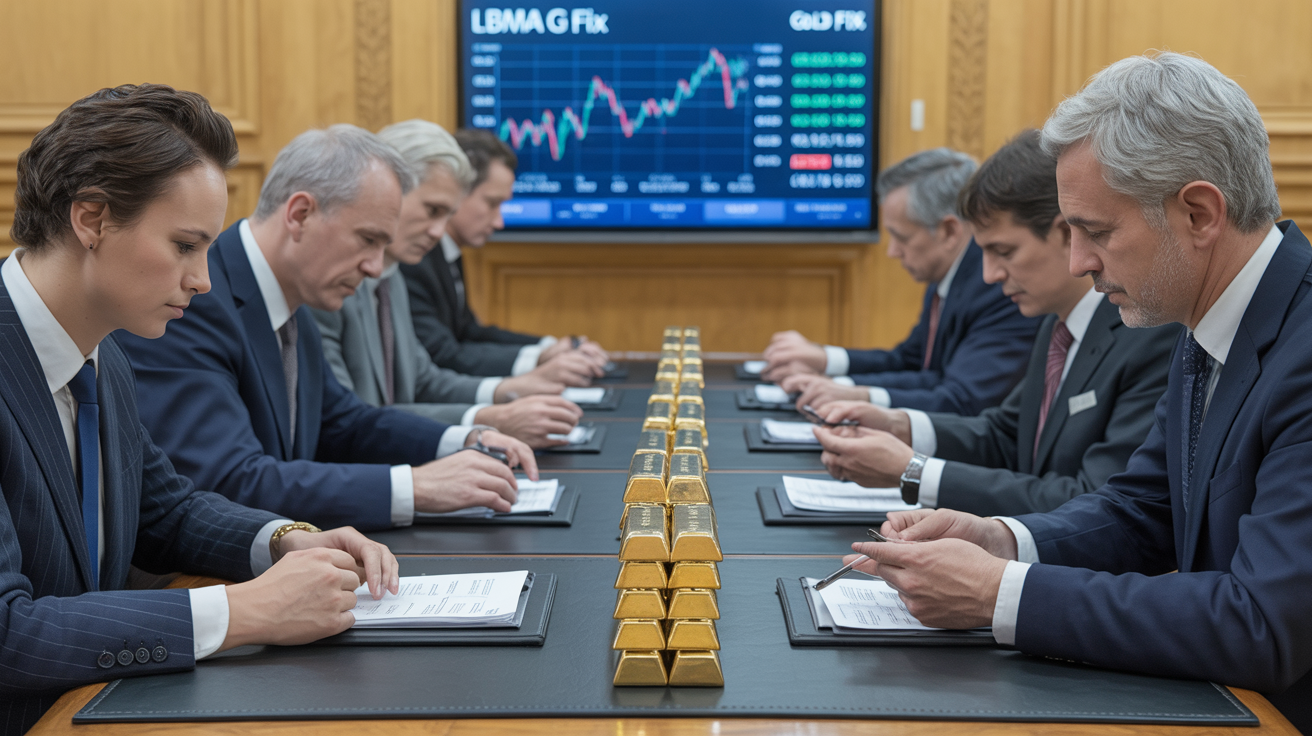
The LBMA gold fix is the twice-daily price-setting process that establishes the global benchmark for gold trading. This means every legitimate UK gold buyer bases their quotes on these official prices rather than making up their own valuations.
The London Bullion Market Association fixes gold price at 10:30am and 3pm GMT daily. Five participating banks submit buy and sell orders until they reach equilibrium. The process takes about 10 minutes and produces the official gold price in US dollars per troy ounce.
UK buyers convert this dollar price to pounds using the current exchange rate. They then work backward from this benchmark to calculate what they’ll pay you for your gold. No buyer quotes above the LBMA fix because they need margin to cover refining, testing, and profit.
Most buyers update their rates within 30 minutes of each fixing. Some freeze rates between fixes to avoid currency fluctuation risk. Others use live spot prices that track moment-by-moment, but these still reference the LBMA benchmark as their foundation.
The thing most guides miss: weekend and bank holiday pricing. When the LBMA doesn’t fix, buyers use the last official price or switch to futures markets. This creates gaps where your quote on Friday might differ from Monday’s by several pounds per gram, even if nothing fundamental changed.
Every calculation you see for sell my gold starts with this LBMA foundation. Understanding this benchmark gives you the reference point to evaluate any buyer’s offer.
How Do You Convert Gold Prices from Troy Ounces to Grams?
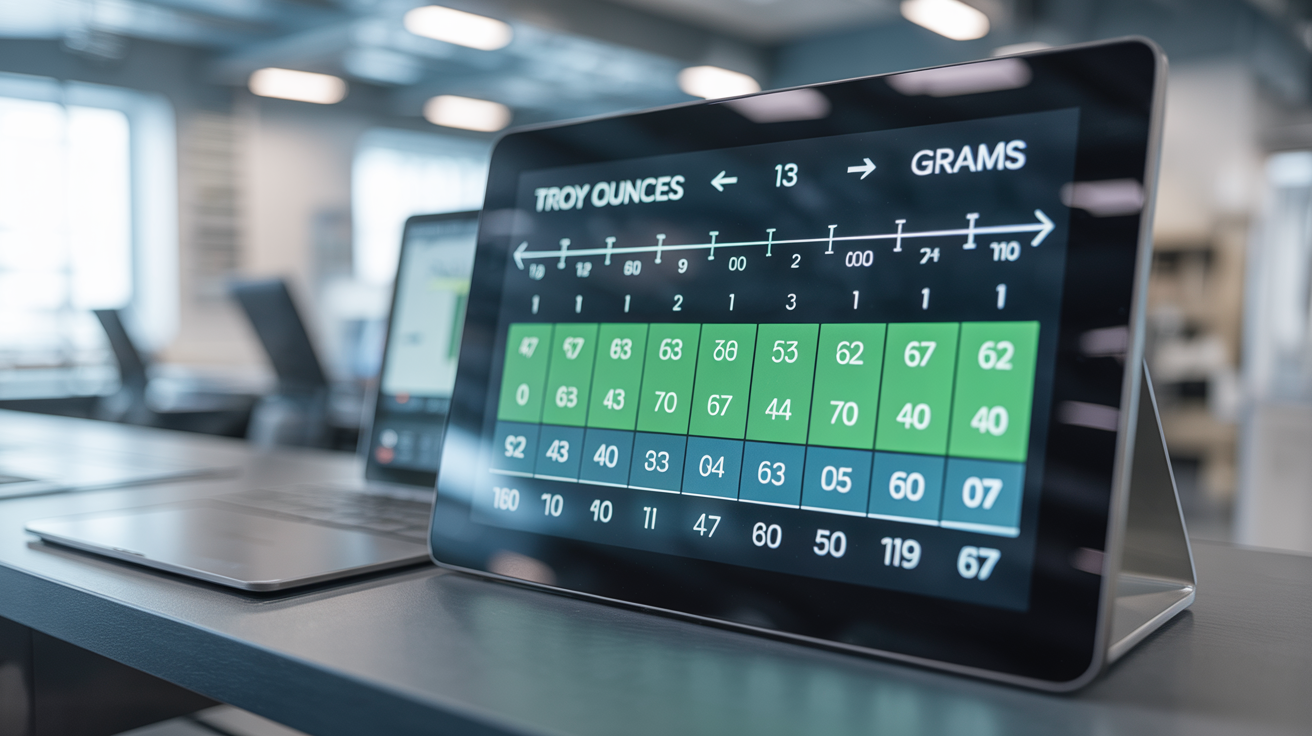
Troy ounce conversion determines your gold’s base value before purity adjustments. One troy ounce equals exactly 31.1035 grams.
Here’s the step-by-step conversion process:
Take the LBMA gold fix in dollars per troy ounce. Find this on financial websites or the LBMA website directly.
Convert dollars to pounds using the current exchange rate. Most buyers use the interbank rate, not tourist rates.
Divide the pound price by 31.1035 to get price per gram. This gives you the pure gold value per gram in pounds.
For example: If gold fixes at $2,000 per troy ounce and the exchange rate is $1.25 to £1, you get £1,600 per troy ounce. Divided by 31.1035 grams equals £51.44 per gram of pure gold.
Gold trades in troy ounces because this system predates modern metric measurements by centuries. The troy ounce weighs 31.1035 grams compared to the standard ounce at 28.35 grams. This 10% difference explains why gold seems “expensive per ounce” until you account for the heavier troy measurement.
Most UK buyers show you this per-gram calculation on their quotes. The price per gram becomes your baseline before they apply purity multipliers and their payout percentage. Without understanding this conversion, you can’t verify whether their starting number matches the actual LBMA benchmark.
What Is the Gold Purity Multiplier and How Is It Calculated?
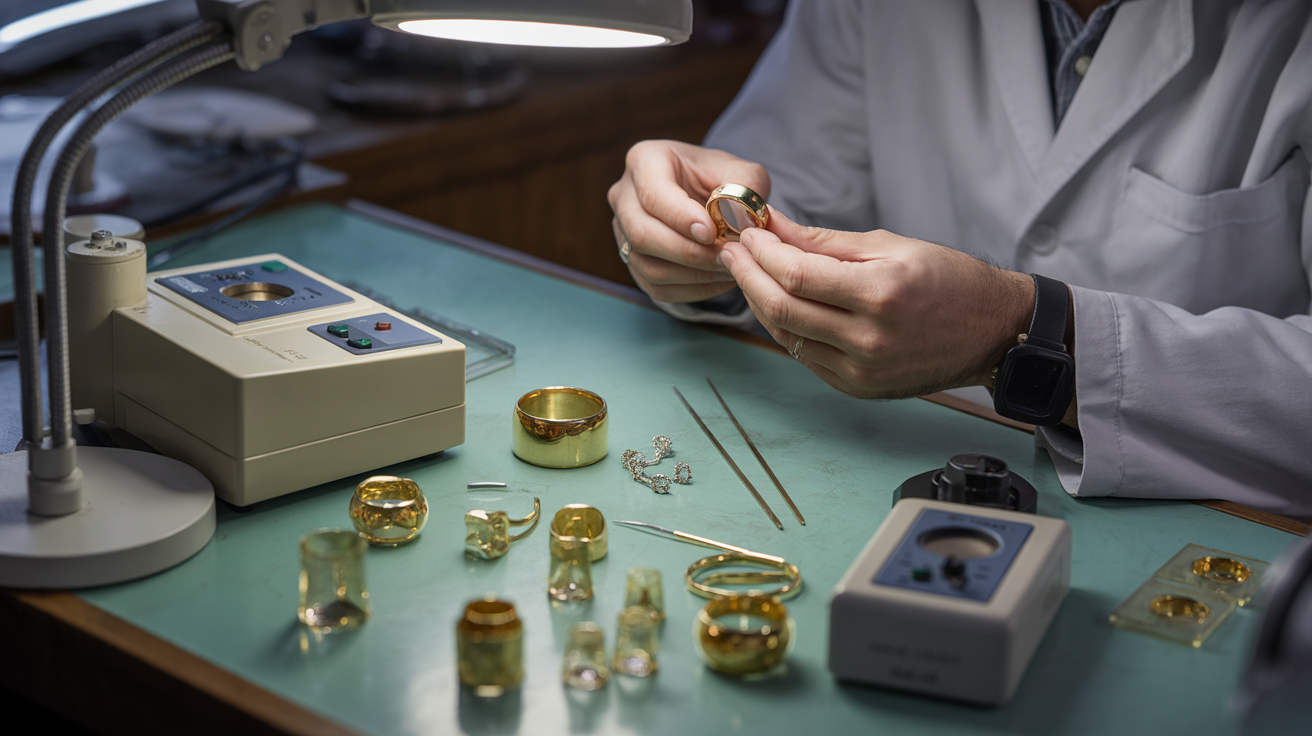
Gold purity determines what percentage of your item’s weight counts as sellable gold. This multiplier directly impacts your final selling price.
| Carat Rating | Fineness | Pure Gold Content | Multiplier |
|,,,,,,,|,,,,,|,,,,,,,,,|,,,,,,|
| 9ct | 375 | 37.5% | 0.375 |
| 14ct | 585 | 58.5% | 0.585 |
| 18ct | 750 | 75.0% | 0.750 |
| 22ct | 916 | 91.6% | 0.916 |
| 24ct | 999 | 99.9% | 0.999 |
The calculation works by multiplying your item’s total weight by the purity multiplier. If you have 10 grams of 18ct gold, you multiply 10 × 0.750 = 7.5 grams of pure gold content.
18ct gold contains exactly 75% pure gold content. The remaining 25% consists of alloy metals like copper, silver, or palladium that add strength but have minimal value. Buyers only pay for the pure gold fraction.
Most UK jewellery carries hallmarks showing carat rating or fineness numbers. The hallmark 750 means 750 parts per 1,000 are pure gold, equivalent to 18ct. Without hallmarks, buyers test the gold chemically or electronically to determine purity.
The purity multiplier creates the biggest confusion in gold selling. Sellers see their 20-gram gold chain and expect payment for 20 grams. But 9ct gold means only 7.5 grams count as pure gold. The other 12.5 grams add weight but not value.
Buyers apply this multiplier before calculating your payout. Your final price equals: (weight × purity multiplier × price per gram × payout percentage). Missing any step gives you wrong expectations about what you’ll receive.
Why Don’t You Get the Full Spot Price When Selling Gold?

Gold buyers deduct 5-15% from spot price to cover their operating costs and profit margins. You receive 85-95% of calculated spot value depending on which buyer you choose.
Buyers face several unavoidable costs. Refining turns your gold into pure bullion, costing £2-5 per transaction regardless of weight. Testing equipment and chemicals cost money. Staff wages, insurance, and premises add overhead. Currency hedging protects against price swings between purchase and resale.
Market risk creates the biggest deduction. Gold prices move constantly. A buyer purchasing your gold at 10am might see the price drop 2% by 3pm. They build margin to absorb these fluctuations without losing money on every transaction.
Different buyer types offer different payout percentages. High-street pawn shops typically pay 70-80% because they have expensive shopfront costs. Online buyers pay 85-90% with lower overheads. Specialist precious metal dealers pay 90-95% but often require minimum quantities.
The calculation gap explains why comparing buyers matters. On £1,000 worth of gold, the difference between 85% and 95% payout equals £100 in your pocket. That gap covers the effort of checking multiple quotes.
Some buyers advertise “spot price guaranteed” or “100% of gold value.” These claims hide deductions elsewhere – typically inflated testing fees, postage charges, or insurance requirements that eat the same margin through different line items.
UK gold buyers typically pay 85-95% of calculated spot value. Anything below 85% suggests high costs or excessive profit-taking. Anything above 95% deserves scrutiny for hidden fees or unrealistic promises.
How Do Daily Gold Price Fluctuations Affect Your Sale?

Gold prices fluctuate throughout trading day, creating timing considerations for sellers. The LBMA fixes gold price twice daily, but live spot prices move continuously between these benchmarks.
Gold prices can swing 2-3% during a single trading day based on economic news, currency movements, or market sentiment. On a £1,000 gold sale, this equals £20-30 difference depending on timing. Major news events can trigger larger moves.
Most UK buyers offer price locks for 24-48 hours once you request a quote. This protects both parties from adverse price movements. You get the quoted price even if gold falls before your items arrive. The buyer avoids losses if gold rises after committing to purchase.
Weekend pricing creates gaps because gold markets close Friday evening and reopen Sunday night UK time. Buyers either freeze Friday’s price through Monday or apply weekend premiums to cover the extended risk period. Monday morning quotes might differ significantly from Friday’s levels.
Holiday periods extend these pricing gaps. UK bank holidays don’t always align with global gold trading schedules. US holidays affect pricing because gold trades in dollars. Christmas and New Year create the longest frozen periods.
Timing strategy depends on market conditions. Rising gold prices favor waiting for higher fixes. Falling prices favor immediate sales before further drops. Most sellers lack the market knowledge to time perfectly, making consistent comparison shopping more valuable than timing attempts.
The twice-daily LBMA fix provides reference points, but understanding live price movement helps you decide whether to accept immediate quotes or wait for the next fixing period.
What Does a Complete Gold Price Calculation Look Like?
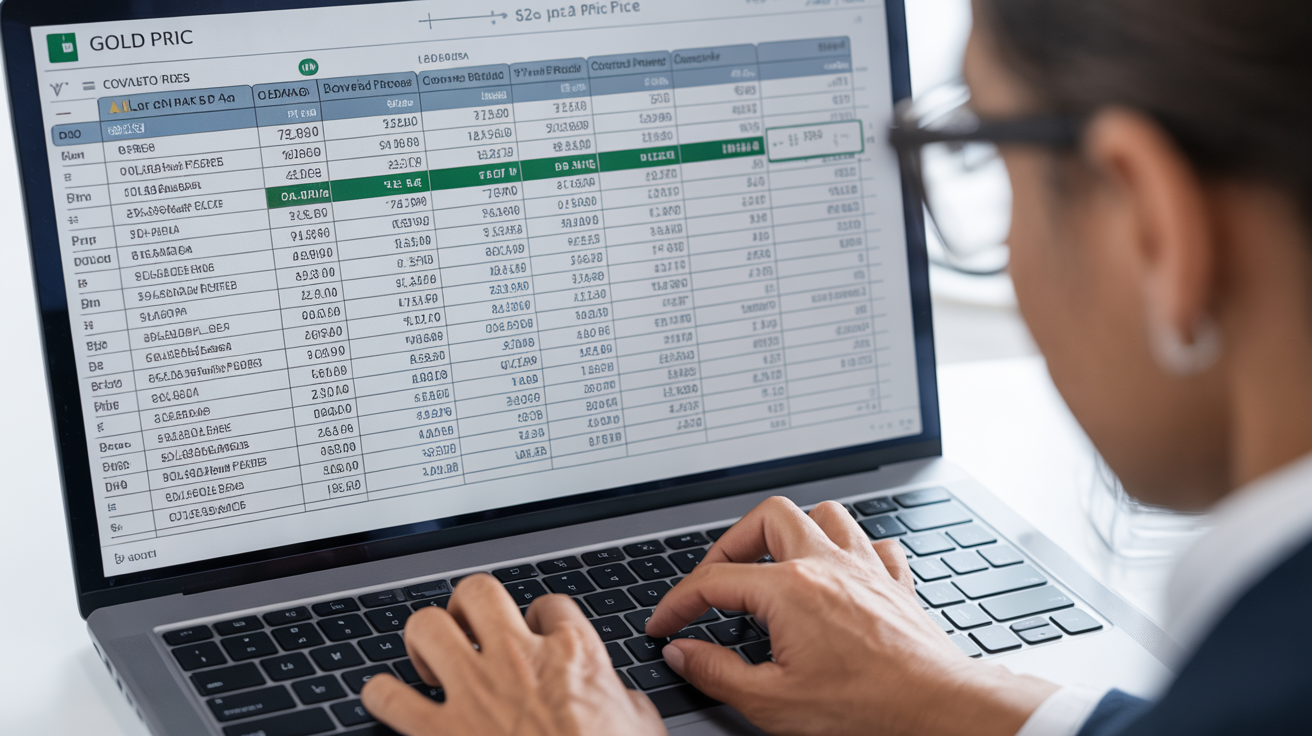
A gold price calculator produces final selling estimates by combining LBMA fix, troy ounce conversion, purity multipliers, and buyer margins. Here’s the complete calculation process:
Start with current LBMA gold fix. Example: $2,000 per troy ounce at today’s 3pm fixing.
Convert to pounds using exchange rate. $2,000 ÷ $1.25 per £1 = £1,600 per troy ounce.
Calculate price per gram. £1,600 ÷ 31.1035 grams = £51.44 per gram of pure gold.
Apply purity multiplier. For 18ct gold: £51.44 × 0.750 = £38.58 per gram of 18ct gold.
Multiply by actual weight. 10 grams × £38.58 = £385.80 theoretical value.
Apply buyer payout percentage. £385.80 × 90% = £347.22 final payout estimate.
This example shows how £51.44 per gram of pure gold becomes £34.72 per gram of 18ct gold in your pocket after realistic buyer margins.
Common calculation mistakes include using standard ounces instead of troy ounces, applying purity percentages incorrectly, or expecting 100% payout rates. Each error compounds through the chain, creating unrealistic expectations.
Buyers who skip steps or use vague “market rates” make verification impossible. Legitimate buyers show their calculation breakdown so you can verify each step against current market data.
The complete calculation reveals why gold selling prices UK vary between buyers despite using the same LBMA benchmark. Different payout percentages create the final price gaps that make comparison shopping worthwhile.
Frequently Asked Questions
What time of day do gold prices update in the UK?
Gold prices update continuously during trading hours, but the LBMA sets official benchmark prices twice daily at 10:30am and 3pm GMT. Most UK gold buyers base their quotes on these official fixing prices rather than live spot prices.
Do all UK gold buyers use the same price calculation method?
All legitimate UK gold buyers start with the same LBMA benchmark price and apply the same purity calculations. However, they differ significantly in their payout percentages, with some paying 85% of calculated value while others pay up to 95%.
Why is gold priced per troy ounce instead of regular grams?
Gold has been traded in troy ounces for over 500 years, and this remains the global standard for precious metals pricing. One troy ounce equals 31.1035 grams, which is about 10% heavier than a standard ounce.