What Counts as Scrap Gold? Types and What Buyers Accept
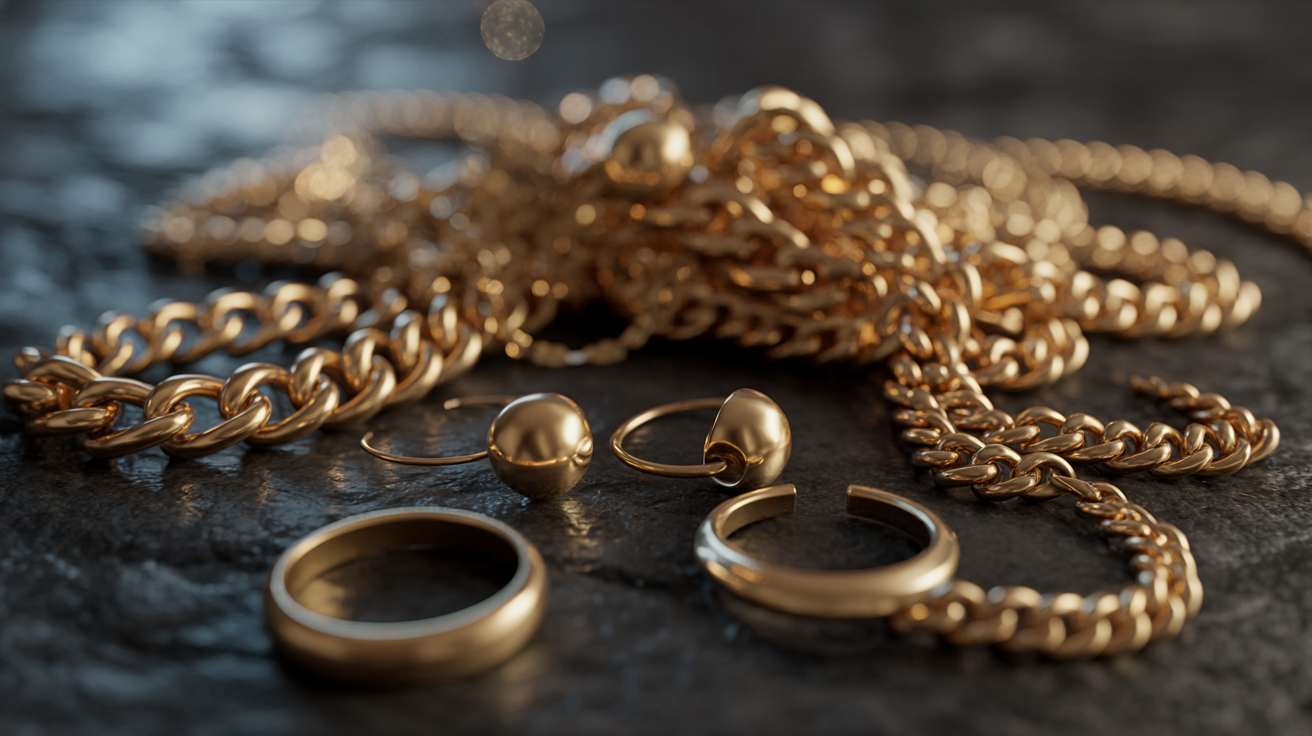
What is scrap gold and why do damaged pieces often outperform pristine ones? Most gold sellers don’t know that damaged, incomplete, or unfashionable items often fetch better prices than pristine pieces when you sell my gold or sell scrap gold near me.
Key Takeaways:
• Scrap gold buyers accept items as light as 0.5 grams — even single earrings qualify
• Broken chains and damaged clasps sell for 85-95% of spot gold price regardless of condition
• Items with gemstones attached still count as scrap gold if stones have minimal value
What Is Scrap Gold and Why Does Condition Not Matter?
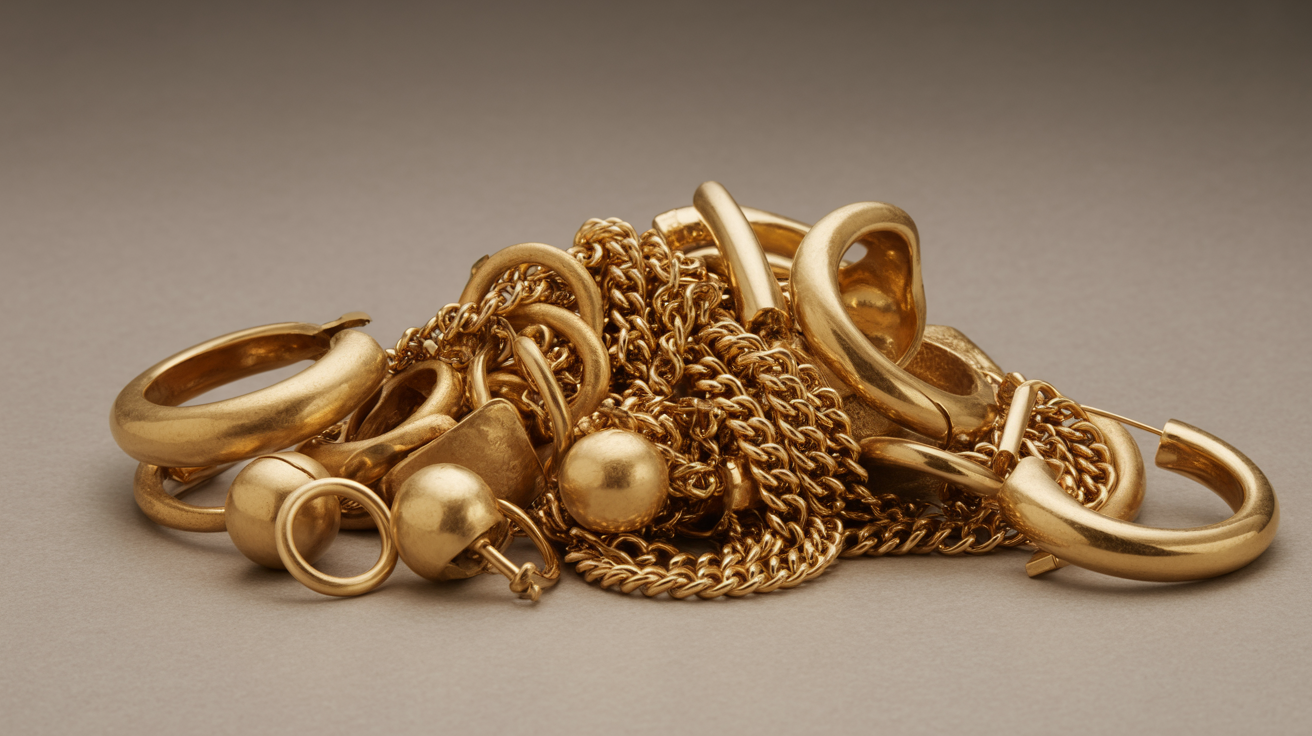
Scrap gold is any gold item sold for its metal content rather than its design, craftsmanship, or collector value. This means broken chains, damaged rings, single earrings, and unfashionable pieces all qualify as scrap gold regardless of their physical condition.
The condition doesn’t affect scrap gold value because buyers melt these items down for gold purity extraction through scrap gold refining. A twisted chain contains the same amount of gold as a perfect one. UK buyers pay 85-95% of spot price for scrap gold regardless of condition.
This differs from selling items for their design or collector value. A vintage Cartier bracelet might fetch thousands based on brand and craftsmanship. The same bracelet sold as scrap gold gets valued only by weight and purity. Most sellers don’t realize this distinction costs them money when they assume damaged items are worthless.
Scrap gold buyers focus on three factors: weight, gold purity (9ct, 14ct, 18ct, 22ct), and current spot gold prices. Scratches, dents, missing stones, or broken clasps don’t reduce the metal content. A mangled wedding ring weighing 5 grams at 18ct purity contains exactly 3.75 grams of pure gold whether it’s pristine or crushed.
What Types of Gold Items Qualify as Scrap?
| Item Type | Condition Examples | Buyer Acceptance | Notes |
|---|---|---|---|
| Broken chains | Missing links, damaged clasps, tangled | Always accepted | Weight matters, not function |
| Single earrings | Lost pairs, broken posts, missing backs | Always accepted | 23% of UK submissions |
| Damaged rings | Bent bands, missing stones, worn settings | Always accepted | Setting damage irrelevant |
| Old dental work | Crowns, bridges, fillings | Usually accepted | Requires dental gold alloy verification |
| Watch cases | Broken movements, missing parts | Case only accepted | Movement typically worthless |
| Costume jewelry | Gold-plated items | Rejected | No gold content to refine |
| White gold items | Discolored, scratched | Always accepted | Rhodium plating doesn’t affect value |
| Scrap findings | Broken clasps, damaged settings | Usually accepted | Minimum weight applies |
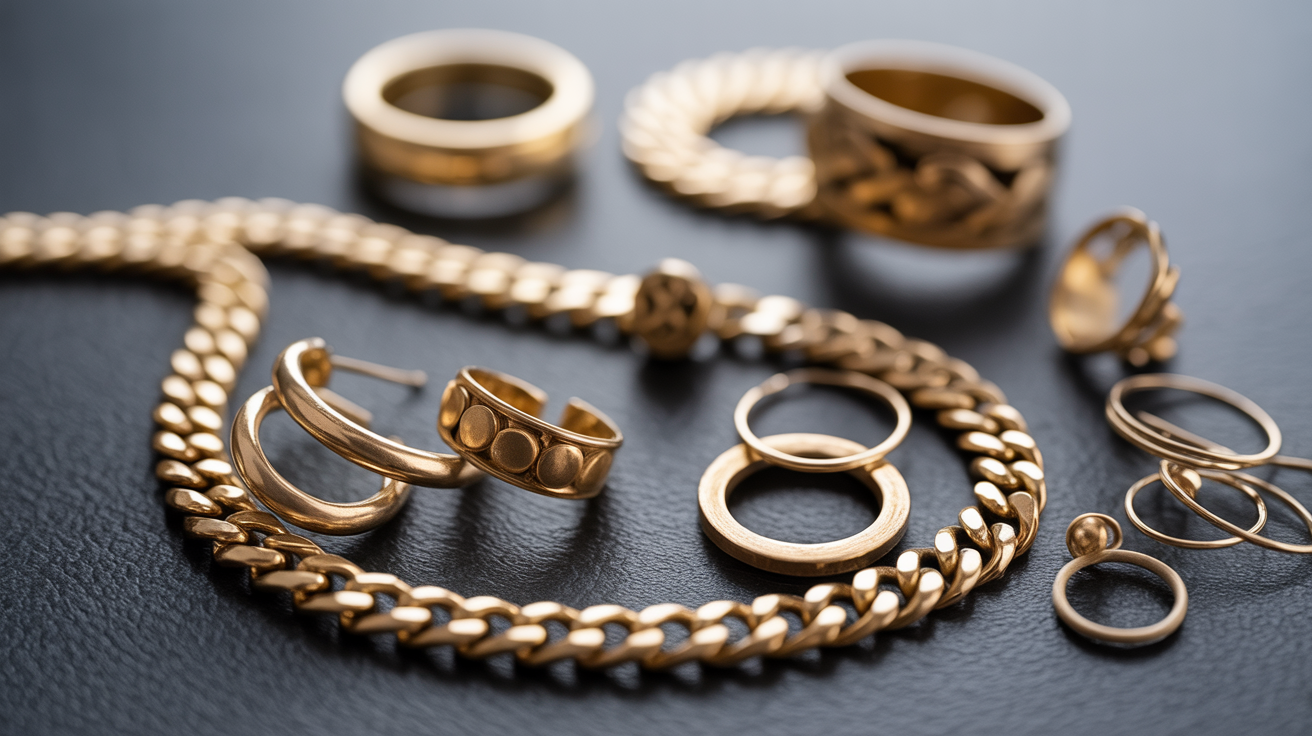
Gold buyers accept multiple categories of damaged and unwanted gold items. Single earrings from pairs account for 23% of UK scrap gold submissions. Many sellers assume these items are worthless without their matching pieces.
Broken chains represent the most common scrap gold category. Missing links, damaged jump rings, and faulty clasps don’t reduce gold content. The same applies to rings with bent bands or worn settings. Even severely damaged pieces qualify as scrap gold if they contain sufficient gold content.
Items most sellers don’t realize qualify include old dental work (crowns and bridges contain dental gold alloy), watch cases without movements, and jewelry findings like broken clasps. White gold items often surprise sellers — discoloration from worn rhodium plating doesn’t affect the underlying gold content.
Do Gold Buyers Accept Items with Gemstones Attached?
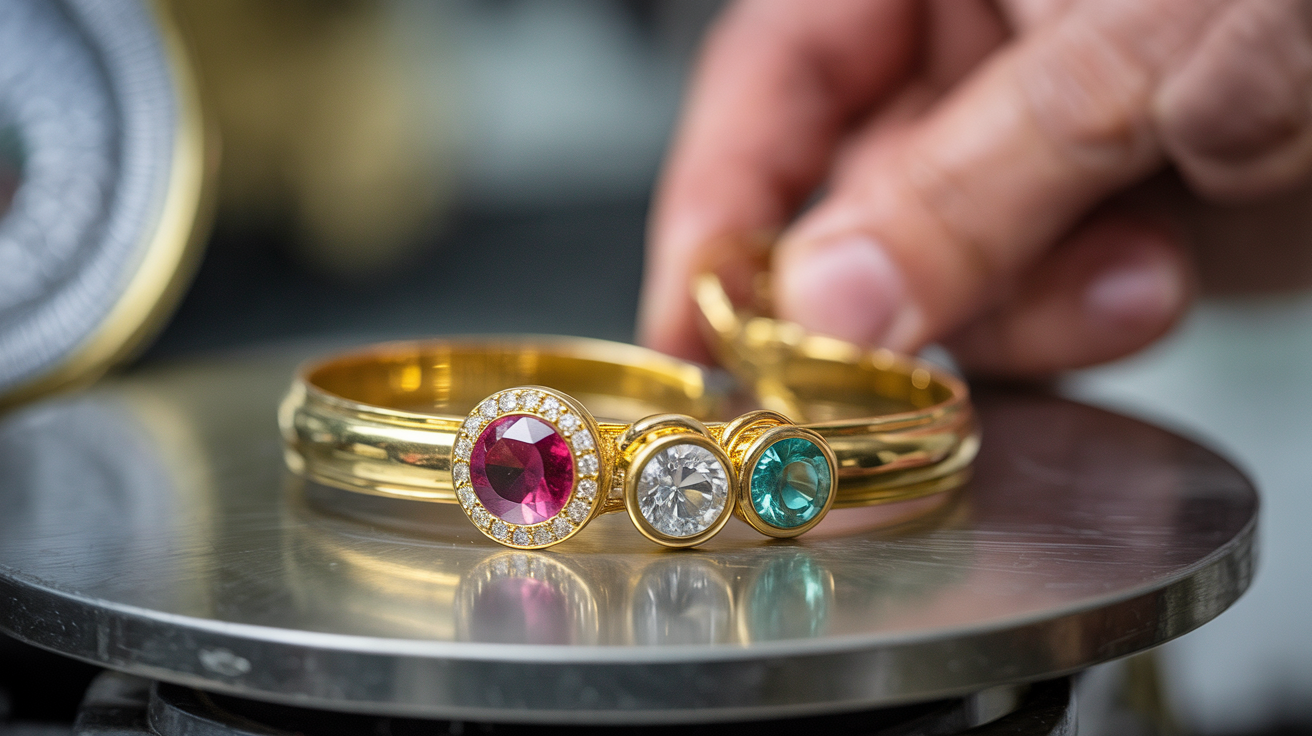
Gold buyers evaluate items with attached stones based on stone removal cost versus value. Stones worth under £20 typically get ignored during scrap gold valuation. The gold gets weighed and priced with stones still attached.
High-value diamonds and precious stones (rubies, sapphires, emeralds) get removed before weighing. Buyers either return these stones to sellers or offer separate valuations. This process adds time but protects valuable stones from the melting process during scrap gold refining.
Semi-precious stones like garnets, amethysts, or cubic zirconia rarely justify removal costs. These stones have minimal resale value compared to removal labor. Most buyers ignore them entirely and price the piece based purely on gold weight and purity.
The attachment method affects buyer decisions. Stones in prong settings come out easily. Stones in flush or channel settings require more labor to extract. Some buyers refuse items where stone removal might damage the gold significantly. Others factor removal costs into their offered prices.
Common misconception: sellers think gemstones always add value to scrap gold. The opposite often happens. Stones add weight without gold content, reducing the price per gram when buyers can’t remove them economically.
What Are the Minimum Weight Requirements for Scrap Gold?
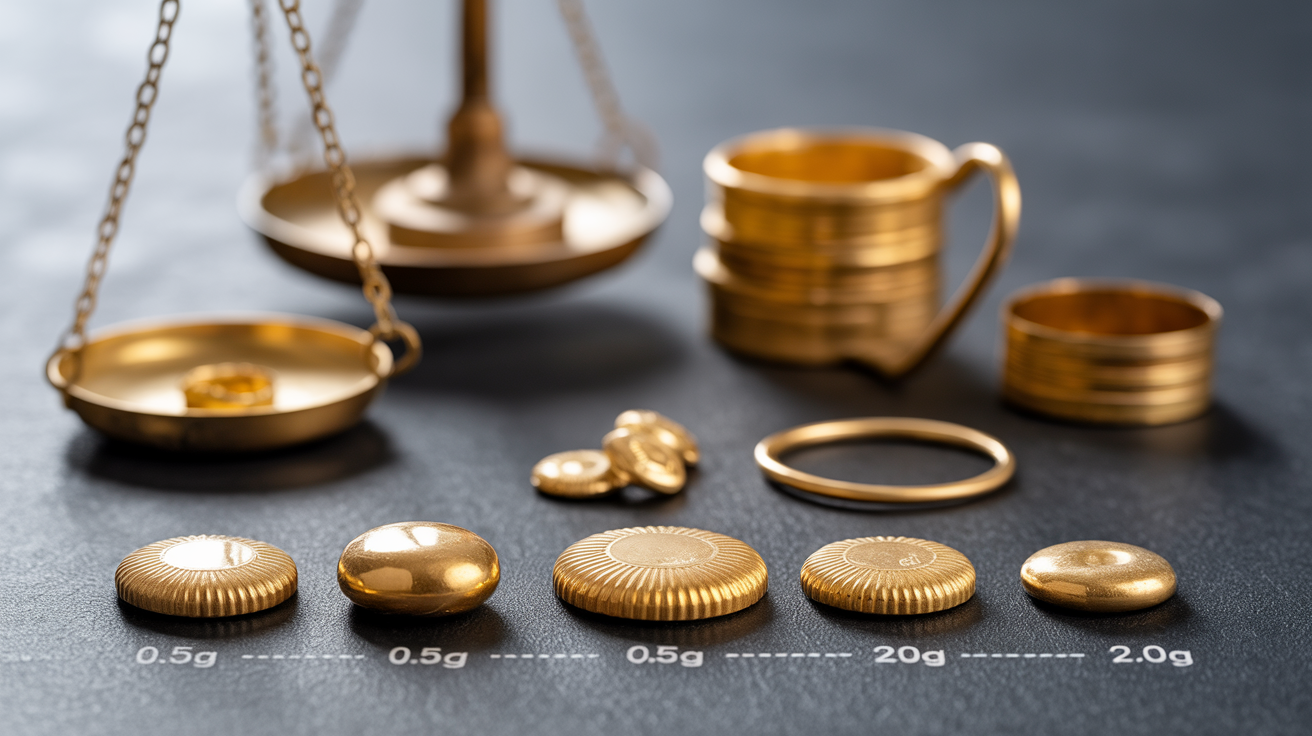
UK gold buyers enforce minimum weight thresholds between 0.5g and 2g depending on purity. These minimums exist because processing costs exceed profit on tiny items.
9ct gold items: Most UK buyers set 1g minimum due to lower gold content (37.5% pure gold)
14ct gold items: Typically 0.8g minimum as higher purity (58.5%) makes smaller quantities profitable
18ct and higher: 0.5g minimum for 18ct, 22ct, and 24ct gold due to high gold content (75%+ pure gold)
Postal vs in-person: Mail-in buyers often require higher minimums (2-5g total) to justify postage and processing costs
Some buyers reject tiny items like small earring studs or thin chains under their weight thresholds. Others combine multiple small items to meet minimums. Ring sizing can push lightweight rings below buyer thresholds — size L rings often weigh 30% less than size T equivalents in identical designs.
Weight verification happens during buyer assessment, not seller estimation. Kitchen scales lack the precision for accurate small-item weighing. Professional gold buyers use calibrated scales accurate to 0.1g for gold buyer verification.
How Do Buyers Test and Verify Scrap Gold Quality?
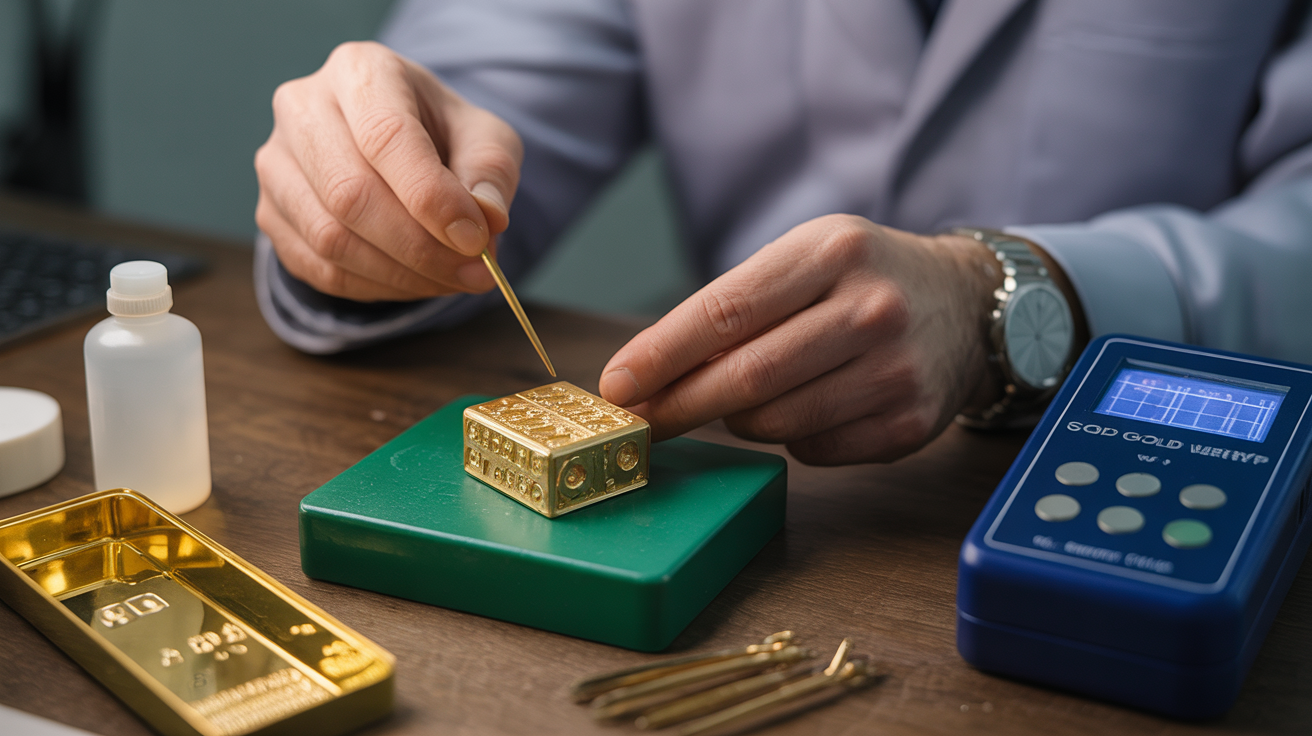
Gold buyers use acid testing and electronic verification to determine purity before purchase. This process ensures accurate scrap gold valuation and protects both parties from errors.
Visual inspection: Buyers examine hallmarks, color, and obvious damage to estimate purity and identify non-gold items
Electronic testing: XRF analyzers or electronic gold testers measure purity without damaging items, accurate to within 1% for most scrap gold items
Acid testing: Buyers scratch small samples onto testing stones and apply nitric acid solutions of different strengths to verify purity
Weight verification: Calibrated scales measure exact weight after cleaning to remove dirt, lotions, or debris that affect accuracy
Final calculation: Buyers multiply verified weight by confirmed purity percentage and current spot gold price to determine offer
Hallmarks affect testing by providing purity guidance, but buyers verify independently. UK hallmarks indicate expected purity, but acid testing confirms actual gold content. Some older items test below hallmarked purities due to manufacturing tolerances.
Items without clear hallmarks need more intensive testing. Buyers may need to read gold hallmarks using magnification or perform multiple acid tests on different areas. Destructive testing becomes necessary when electronic methods can’t penetrate thick plating or when purity varies throughout the item.
The entire verification process takes 5-15 minutes per item depending on complexity. Buyers explain their findings and show test results before making final offers. This transparency helps sellers understand scrap gold refining valuations and builds trust in the transaction.