

Your broken gold jewellery, dental work, and damaged pieces aren’t worthless, they’re part of the UK’s £2.3 billion scrap gold market. The search “sell scrap gold near me” reveals hundreds of buyers across Britain accepting everything from single teeth to industrial offcuts, but knowing which items qualify and what they’ll actually pay requires understanding the industry’s testing methods, weight thresholds, and refining losses that determine your final payout.
Key Takeaways:
- Scrap gold buyers accept items from 1 gram minimum weight with any gold content from 9ct upward
- Dental gold typically contains 16ct-22ct gold and pays 85-92% of melt value compared to 75-85% for jewellery
- Refining losses reduce your payout by 3-8% depending on item condition and gold purity
What Actually Qualifies as Scrap Gold?

Scrap gold is any gold-containing item valued primarily for its metal content rather than craftsmanship or design. This means broken chains, damaged rings, dental work, industrial components, and electronic parts containing gold all qualify if they meet basic weight and purity standards.
The UK scrap gold market operates on weight and gold content alone. A snapped 18ct chain worth £50 as jewellery might fetch £45 as scrap gold because buyers ignore the broken clasp and focus on the 75% gold content. This distinction separates scrap from items that might be worth more than their metal value, vintage pieces with maker’s marks or collectible significance.
Most UK buyers enforce a 1 gram minimum weight threshold for economic reasons. Processing costs for acid testing, XRF analysis, and refining make smaller quantities unprofitable. Some postal services accept items under 1 gram but charge handling fees that often exceed the gold value.
Gold purity requirements start at 9ct (37.5% gold content) for most buyers. Lower purities exist in industrial applications, but consumer items below 9ct cannot legally be sold as gold in the UK under hallmarking laws. Items with gold plating or gold-filled construction get rejected unless the base metal can be separated economically.
What qualifies as scrap gold differs from the broader category when you want to sell my gold. Scrap focuses on damaged, broken, or purely industrial items, while intact jewellery might command premiums for design or brand recognition. The boundary matters because it determines which buyers you approach and what valuation method they use.
Which Items Do UK Scrap Gold Buyers Actually Accept?
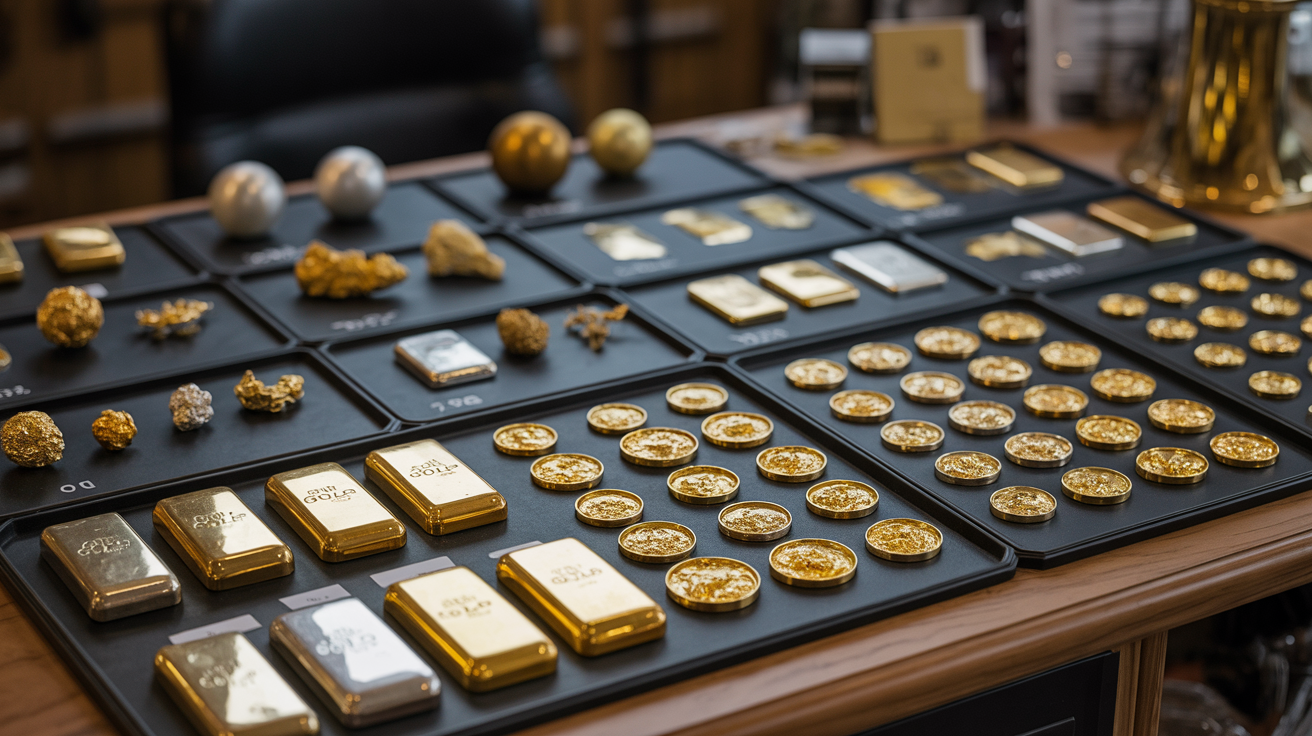
UK scrap gold buyers maintain specific acceptance criteria based on gold content, processing costs, and market demand. The categories break down by typical purity levels and handling requirements.
| Item Category | Typical Gold Content | Buyer Acceptance Rate | Special Requirements |
|---|---|---|---|
| Broken jewellery | 9ct-18ct (37.5%-75%) | 100% of buyers | None – standard processing |
| Dental gold | 16ct-22ct (66.7%-91.7%) | 95% of buyers | May require dentist documentation |
| Industrial components | 14ct-24ct (58.3%-99.9%) | 85% of buyers | Quantity minimums often apply |
| Electronic scrap | 18ct-24ct (75%-99.9%) | 70% of buyers | May require separation from base metals |
| Watch cases/parts | 9ct-18ct (37.5%-75%) | 90% of buyers | Movement removal sometimes required |
| Gold leaf/powder | 22ct-24ct (91.7%-99.9%) | 60% of buyers | Specialized handling, weight verification |
Broken jewellery represents the bulk of the UK scrap market. Snapped chains, damaged rings, single earrings, and worn-out bracelets get accepted by every major buyer. The damage actually helps, buyers focus on gold content without worrying about preserving design elements.
Dental gold commands premium attention despite representing a small volume. Gold teeth, crowns, and bridgework contain dental gold alloy specifically engineered for mouth conditions. The gold purity runs higher than most jewellery, typically 16ct-22ct, making dental items worth more per gram than broken rings or chains.
Industrial and electronic scrap requires more specialized buyers. Circuit boards, connectors, and plating operations generate gold-bearing waste, but separating the gold from base metals adds processing costs. Buyers accepting these items often require minimum quantities of 10-50 grams to justify the extra handling.
The rejection list includes gold-plated items where the plating thickness falls below economical recovery levels, gold-filled items with less than 1/20th gold content by weight, and any items containing radioactive materials or hazardous substances.
How Do Buyers Actually Verify Your Scrap Gold’s Purity?
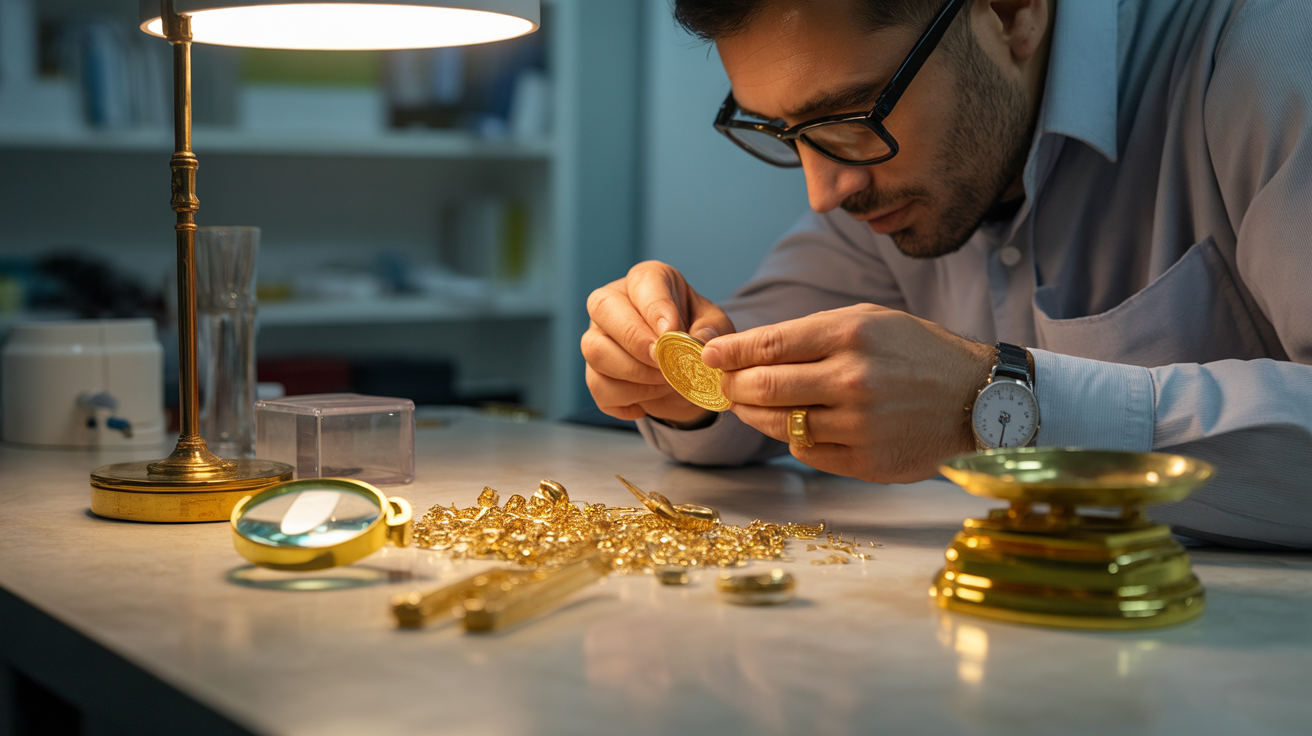
Gold buyer verification follows a standardized testing sequence designed to determine exact gold content before making purchase offers. The process accounts for hallmark inconsistencies and alloy variations common in scrap materials.
Visual inspection and sorting. Buyers separate items by apparent purity based on hallmarks, color, and construction. This preliminary sort groups similar items for batch testing.
Acid testing for purity verification. Small samples get filed from inconspicuous areas and tested with nitric acid solutions of different strengths. The acid dissolves base metals while leaving gold intact, revealing true purity levels.
XRF analysis for precise composition. X-ray fluorescence scanners measure exact gold percentages without damaging items. XRF testing provides accuracy within 0.1% for gold content analysis.
Weight verification and documentation. Items get weighed on calibrated scales before and after any cleaning or preparation. Weight records become part of the purchase documentation.
Final purity assessment and offer calculation. Buyers combine weight data with verified purity percentages to calculate melt value, then apply their payout percentage to determine the offer.
Hallmarks provide starting points but don’t guarantee purity for scrap items. Wear, repairs, and soldering operations can alter gold content below hallmarked levels. A ring marked 18ct might test at 16ct after years of repairs using lower-purity solder.
XRF testing has become the industry standard because it measures actual composition without destroying samples. The technology reads through surface plating and identifies specific alloy components, revealing exactly what percentage of an item consists of recoverable gold.
Common discrepancies between hallmarks and actual purity stem from manufacturing tolerances, repair work, and mixing of different purities during production. UK hallmarking allows slight variations from marked purities, and scrap buyers test for these differences.
What’s the Scrap Gold Refining Process and Why Does It Matter?
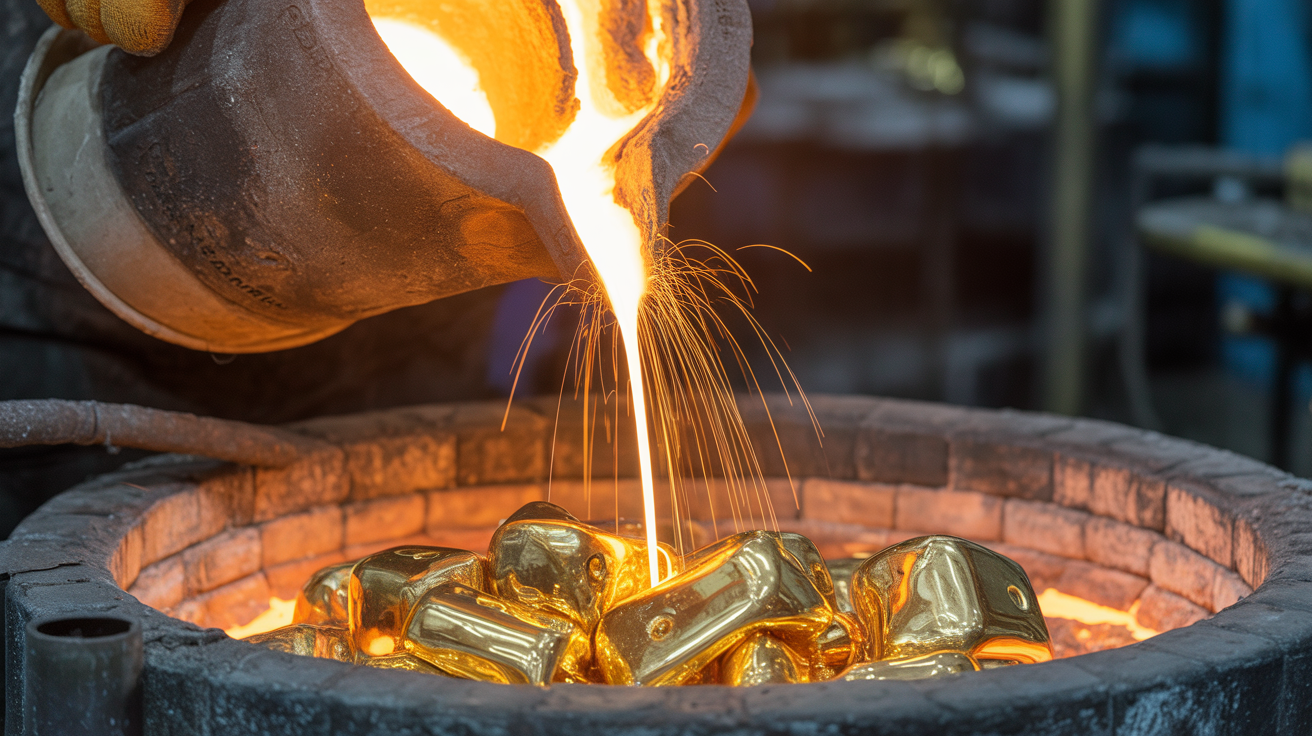
Scrap gold refining removes impurities and other metals to produce pure gold suitable for industrial use or new jewellery production. The process directly affects your payout because refineries recover less gold than the original weight of your items.
Refineries melt scrap gold items in high-temperature furnaces, separating gold from silver, copper, zinc, and other alloy metals through chemical processes. Acid treatments dissolve base metals while leaving gold in solution for recovery. The recovered gold gets purified to .999 fineness (99.9% pure) regardless of the original purity of your items.
Weight loss during refining ranges from 3-8% depending on item condition and alloy composition. Clean, high-purity items lose less weight than heavily tarnished or low-purity pieces. Dental gold typically shows minimal losses because of its high starting purity and clean condition.
The difference between assay results and final refined weight creates the gap between initial offers and final payouts. Buyers estimate refining losses when making initial offers, but actual losses only become known after processing. Reputable buyers guarantee their initial offers regardless of actual refining results.
Scrap gold valuation must account for these processing realities. A buyer offering 85% of spot price for 18ct scrap gold has already factored in estimated refining losses, processing costs, and profit margins. The percentage represents what you’ll actually receive, not a reduction from some theoretical maximum.
Refineries charge fees ranging from £15-40 per kilogram processed, plus percentage fees for smaller quantities. These costs get passed back to scrap gold buyers and ultimately affect the prices they can offer sellers.
How Much Will You Actually Get Paid for Your Scrap Gold?
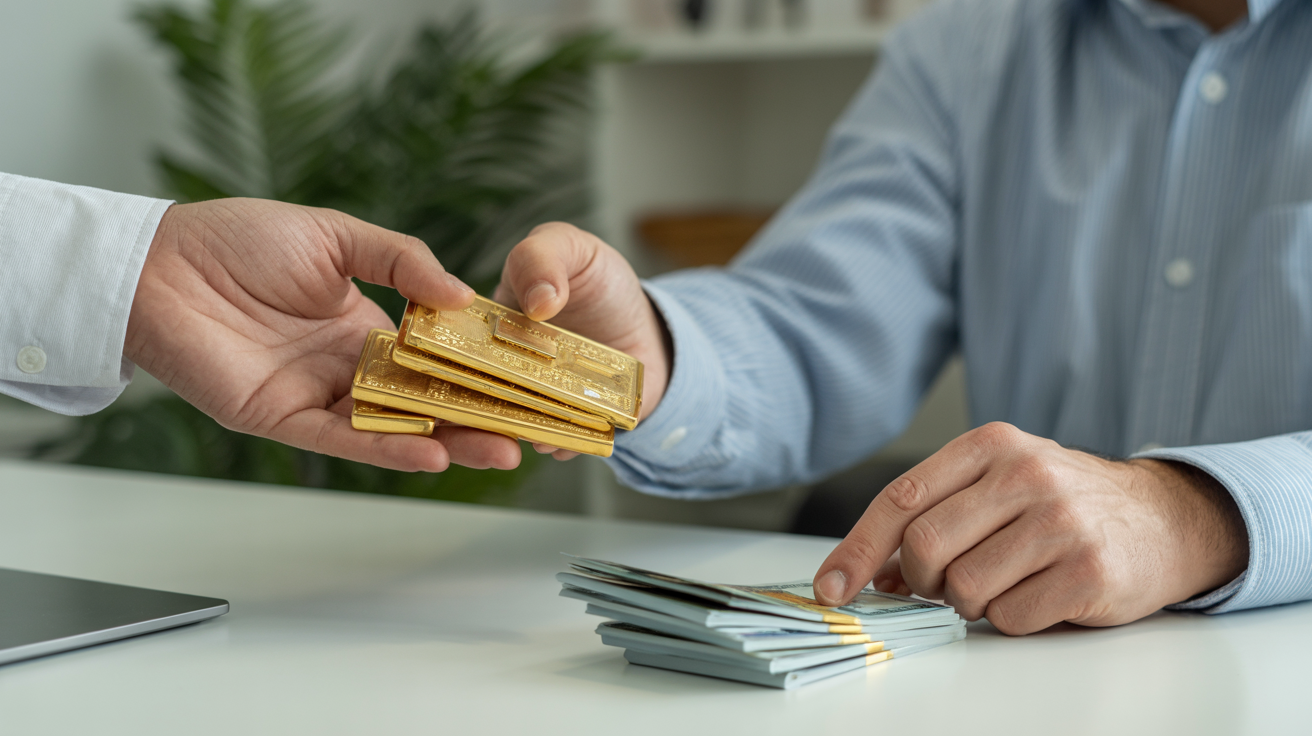
Scrap gold payouts range from 70% to 95% of melt value depending on item type, condition, gold purity, and buyer policies. The variation reflects different processing costs and profit margins across buyer categories.
| Item Type | Typical Payout Range | Gold Purity Range | Processing Factors |
|---|---|---|---|
| Dental gold | 85-92% of melt value | 16ct-22ct (66.7%-91.7%) | High purity, minimal processing |
| Broken jewellery | 75-85% of melt value | 9ct-18ct (37.5%-75%) | Standard processing, mixed purities |
| Industrial scrap | 70-80% of melt value | 14ct-24ct (58.3%-99.9%) | Separation costs, quantity requirements |
| Watch components | 75-85% of melt value | 9ct-18ct (37.5%-75%) | Disassembly required |
| Electronic scrap | 70-75% of melt value | 18ct-24ct (75%-99.9%) | Complex separation, base metal removal |
| Gold leaf/powder | 80-90% of melt value | 22ct-24ct (91.7%-99.9%) | Purity verification challenges |
Dental gold commands premium rates because of its high purity and clean condition. The gold purity runs consistently high, refining losses stay minimal, and processing costs remain low compared to mixed jewellery lots.
Broken jewellery represents the standard scrap category with moderate payouts reflecting mixed purities and standard processing requirements. A damaged 18ct chain might fetch £35-38 per gram when gold trades at £45 per gram, depending on the buyer’s margin structure.
Electronic and industrial scrap often pays lower percentages despite high gold purity because separation costs reduce buyer margins. Circuit boards containing 99.9% pure gold might pay only 70-75% of melt value because of the labor involved in extracting gold from the base components.
Buyer type affects payout percentages significantly. High-street shops typically pay 65-75% of melt value, postal buyers offer 75-85%, and specialist refineries may pay 85-95% for larger quantities. The trade-off involves convenience, speed, and minimum quantity requirements.
Market timing influences actual payouts as gold prices fluctuate throughout trading days. Buyers often fix their payout percentages against morning London Bullion Market Association (LBMA) prices, meaning afternoon sales might benefit from price increases or suffer from decreases depending on market movement.
Why Dental Gold Commands Premium Scrap Prices
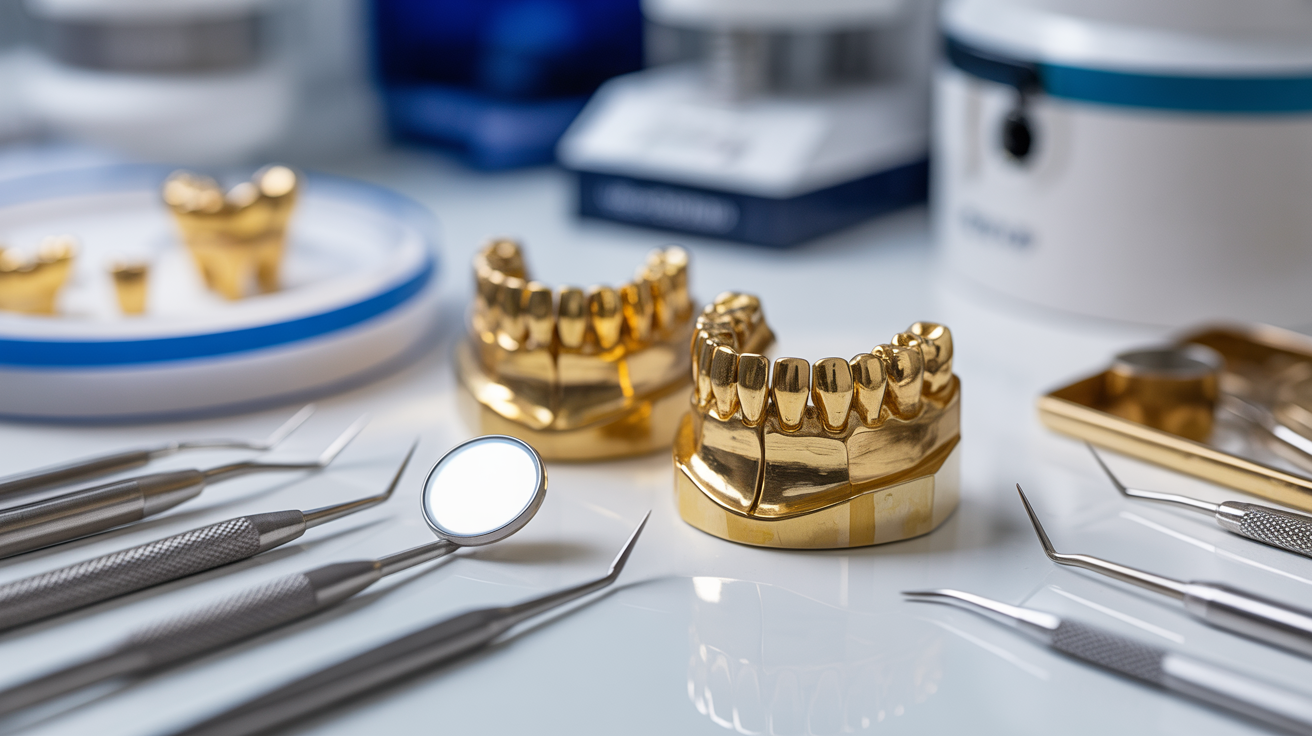
Dental gold alloy contains higher gold content than jewellery because mouth conditions demand superior corrosion resistance and biocompatibility. The engineering requirements result in gold purities ranging from 16ct-22ct (66.7%-91.7% pure gold) compared to 9ct-18ct for most jewellery.
Dentists specify high gold content to prevent tarnishing, corrosion, and allergic reactions in the mouth environment. Lower purities would require more base metals like copper or nickel, creating potential health issues for patients. The medical grade requirements drive up gold content and, consequently, scrap value.
Special handling requirements for dental gold reflect both its value and origin. Some buyers request documentation from dental practices to verify legitimate sourcing, though this requirement varies by buyer. The documentation process can delay sales but ensures regulatory compliance.
Verification challenges with dental gold stem from its unfamiliar appearance to many sellers. Gold teeth and crowns often look different from jewellery gold because of different alloy compositions and manufacturing processes. Buyers use XRF testing to verify actual gold content rather than relying on visual assessment.
The premium paid for dental gold, typically 85-92% of melt value, reflects the combination of high purity, minimal processing requirements, and consistent quality. When someone decides to sell my gold teeth, they’re accessing one of the highest-paying segments of the scrap market.
Dental gold also benefits from lower refining losses during processing. The clean, high-purity material requires less chemical treatment to achieve refined gold standards, reducing processing costs that get passed back to sellers through higher payout percentages.
Frequently Asked Questions
Do scrap gold buyers near me accept broken gold jewellery?
Yes, UK scrap gold buyers specifically target broken, damaged, and unwanted gold items. Broken jewellery often sells more easily than intact pieces because buyers focus on gold content rather than design or condition.
How much is my scrap gold worth per gram today?
Scrap gold value depends on purity and current gold prices, typically paying 70-95% of melt value. For 9ct gold, expect £18-24 per gram; for 18ct gold, expect £35-45 per gram based on current LBMA rates.
Can I sell scrap gold in the UK without minimum quantities?
Most UK scrap gold buyers require minimum quantities starting from 1 gram total weight. Some postal buyers accept smaller amounts but charge handling fees that make sales under 5 grams uneconomical.