

When you sell my gold chain, you need to know whether it’s hollow or solid before any buyer quotes you a price. Gold chains and necklaces make up 34% of all UK scrap gold sales, but most sellers have no idea whether their piece is hollow, solid, or worth more broken than intact.
Key Takeaways:
- Hollow chains typically contain 40-60% less gold than solid chains of the same appearance
- Broken gold chains sell for the same per-gram rate as intact chains, damage doesn’t reduce scrap value
- Chain clasps add 0.2-1.2 grams to total weight depending on style and can significantly impact final payout
How Much Gold Is Actually in Your Chain?
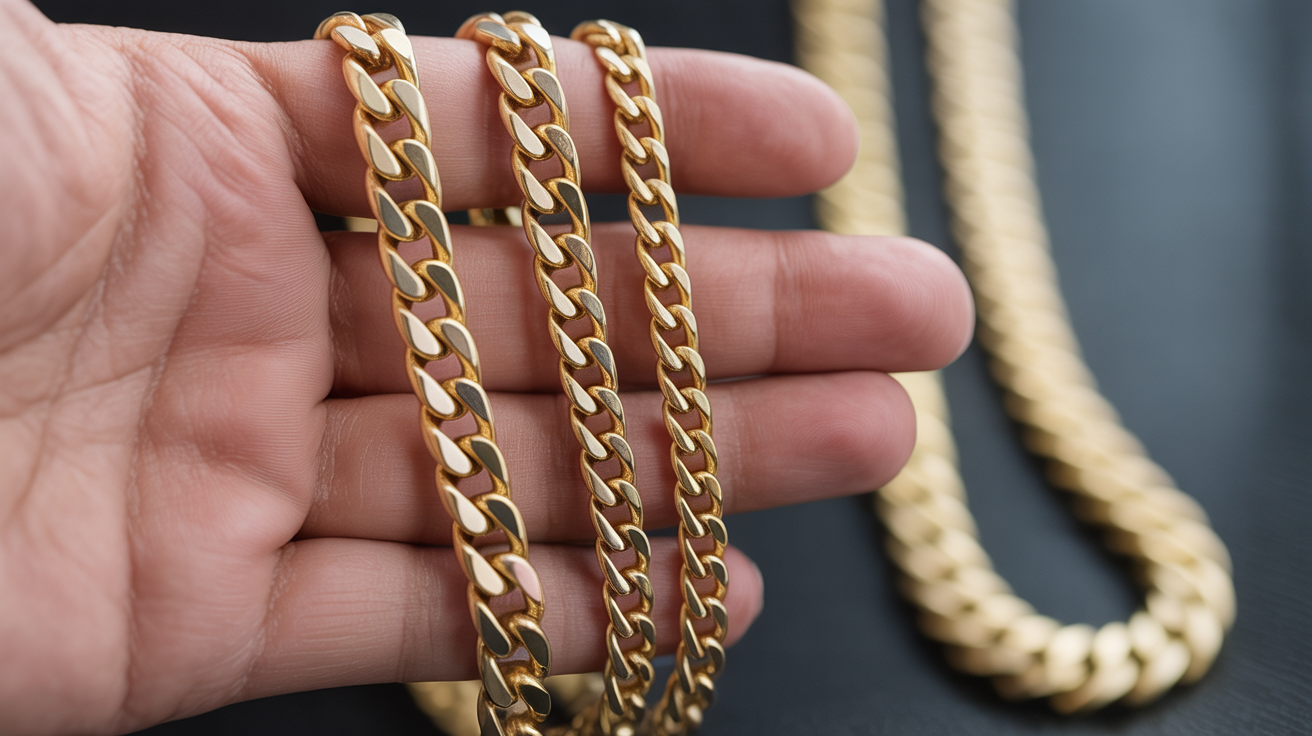
Hollow construction kills your chain’s value. Most buyers won’t tell you this upfront, but a hollow 9ct gold chain that looks identical to a solid version contains 40-60% less actual gold. You can’t tell by appearance alone.
The weight test reveals everything. Pick up your chain and feel its heft against its size. A 20-inch chain that feels surprisingly light for its thickness is almost certainly hollow. Solid chains feel dense and substantial relative to their visual bulk.
Hallmarks don’t indicate construction type. A 375 stamp tells you the gold purity but nothing about whether the chain is hollow, filled, or solid. You need to check the weight per inch to determine construction.
| Construction Type | Gold Content | Weight Difference |
|---|---|---|
| Solid 9ct chain | 37.5% pure gold | Full weight |
| Semi-hollow 9ct chain | 37.5% pure gold | 20-30% lighter |
| Hollow 9ct chain | 37.5% pure gold | 40-60% lighter |
Most UK chain styles use hollow construction to reduce material costs. Italian and Turkish chains sold in high street shops are typically hollow unless marked otherwise. Only antique chains or premium modern pieces tend to be solid throughout.
Jewellery item weight determines your payout, not visual size. A chunky-looking hollow chain might weigh 4 grams while a thinner solid chain weighs 8 grams. The solid chain pays twice as much despite looking smaller.
Gold purity stays consistent regardless of construction. Hollow 18ct gold contains the same percentage of pure gold as solid 18ct gold. The difference is total volume, not quality.
What Chain Styles Actually Weigh?
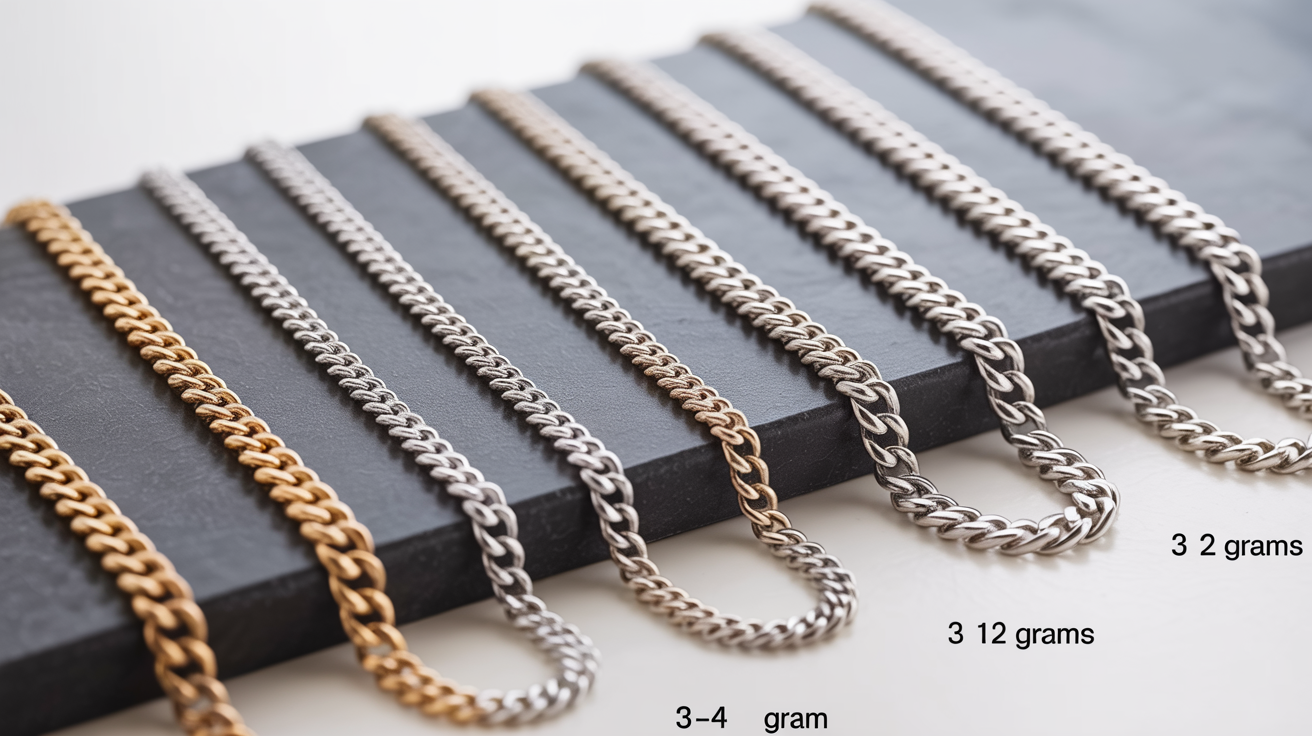
Curb chains dominate UK sales but vary wildly in weight. An 18-inch curb chain can weigh anywhere from 3 grams to 12 grams depending on link thickness and whether it’s hollow or solid. Visual appearance gives no reliable weight indication.
Rope chains pack more gold into less visual bulk. The twisted construction uses more material than curb or figaro styles, making rope chains heavier per inch of length. A 16-inch rope chain typically weighs 6-15 grams.
Snake chains feel deceptively light for their appearance. The flexible mesh construction is almost always hollow, with most snake chains weighing 2-6 grams regardless of length. They look substantial but contain minimal gold.
| Chain Style | Typical Weight (18-inch) | Construction |
|---|---|---|
| Curb chain | 3-12 grams | Usually hollow |
| Rope chain | 6-15 grams | Often solid |
| Figaro chain | 4-10 grams | Usually hollow |
| Snake chain | 2-6 grams | Always hollow |
| Box chain | 3-8 grams | Usually hollow |
Length affects total weight linearly. A 24-inch chain weighs roughly one-third more than an 18-inch version in the same style and thickness. But thickness changes weight exponentially, doubling thickness quadruples the weight.
Clasp weight matters more than most sellers realize. Spring ring clasps add 0.2-0.4 grams, lobster clasps add 0.4-0.8 grams, and magnetic or decorative clasps can add 1-1.2 grams. On lightweight chains, the clasp represents 10-20% of total weight.
Your chain’s country of origin affects construction standards. Italian chains tend toward hollow construction with decorative emphasis. Turkish chains often use semi-hollow methods. British hallmarked chains from older periods are more likely solid.
Does Chain Damage Kill Your Sale Price?
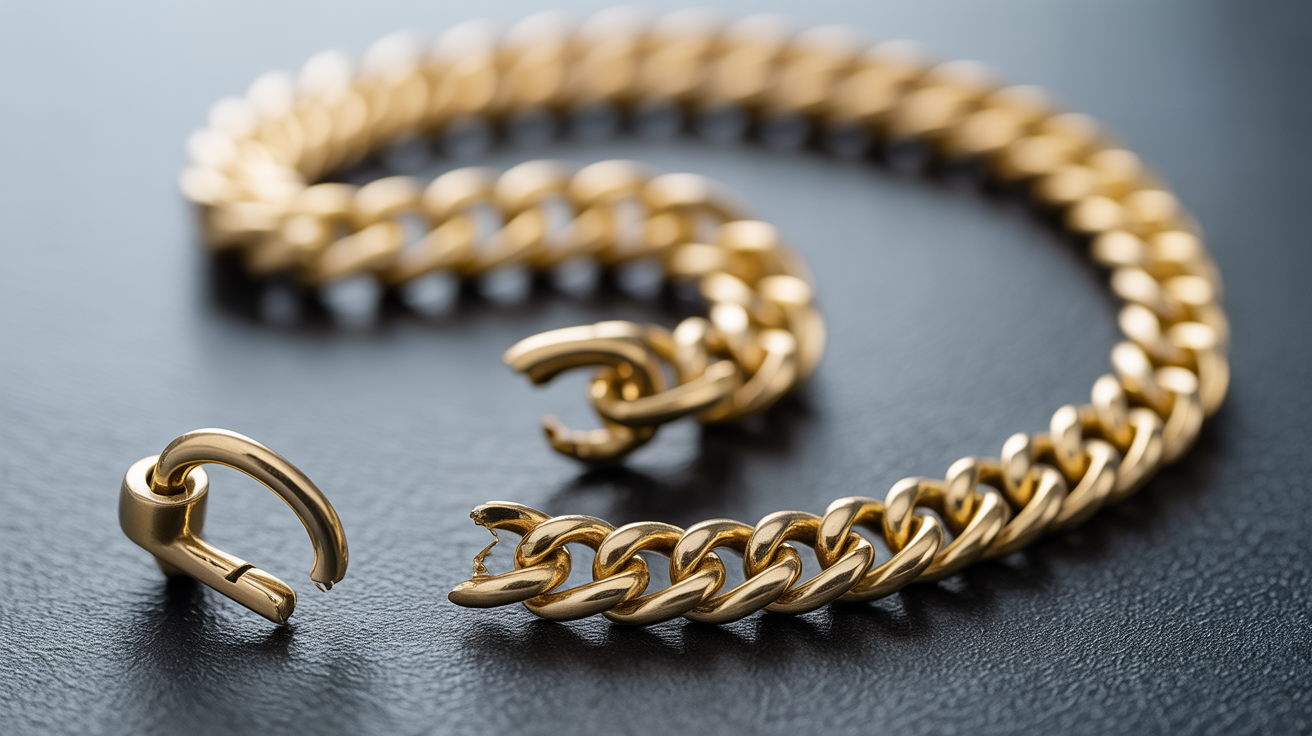
Broken chains sell for identical per-gram rates to intact chains at scrap buyers. The damage doesn’t reduce the gold content or change the metal’s fundamental value. A snapped link, missing clasp, or kinked section has zero impact on scrap pricing.
Scrap gold valuation ignores cosmetic condition entirely. Buyers weigh your chain, test its purity, and calculate payment based on those two factors. Whether the chain is pristine, tarnished, bent, or completely mangled makes no difference to the final payout.
Missing clasps reduce total weight but don’t affect per-gram rates. If your chain lost its clasp, you lose the 0.2-1.2 grams that clasp represented, but the remaining chain metal sells at full scrap value. The percentage loss is usually minimal.
Actually, repair rarely adds value when selling for scrap. Professional chain repair costs £15-40 depending on the issue. Unless your chain has significant antique or design value beyond its gold content, repair costs exceed any potential sale price increase.
One warning about selling broken chains: some unscrupulous buyers claim damage reduces value to justify lower offers. This is false. Damage affects wearability, not gold content. Any buyer who reduces offers due to cosmetic damage is trying to underpay you.
When you sell my gold jewelry, broken pieces face the same evaluation as perfect pieces. The testing methods, weight verification, and payout calculations remain identical regardless of condition.
How Do Buyers Actually Value Your Chain?
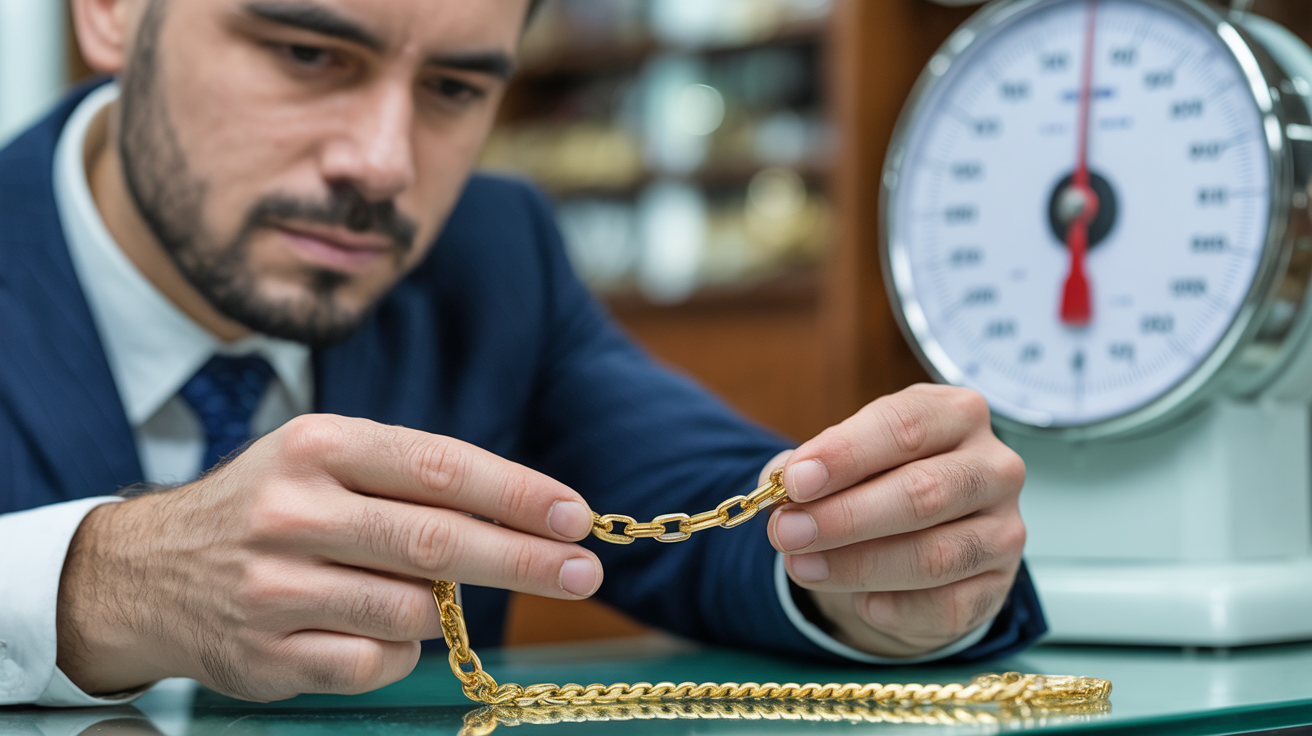
Visual inspection for hallmarks and construction clues. Buyers examine stamps, connection points, and overall build quality to estimate purity and construction type before testing.
Weight measurement on certified scales. Professional buyers use scales accurate to 0.1 grams, weighing your chain multiple times to verify consistency and detect any non-gold components.
Purity testing via acid test or XRF analysis. Most UK buyers use XRF testing for chains over 5 grams due to acid testing limitations on hollow pieces. XRF provides exact purity readings without damaging the metal.
Construction verification through density testing. Experienced buyers can identify hollow construction by comparing actual weight to expected weight based on dimensions and stated purity.
Final calculation using current gold prices. Buyers multiply your chain’s pure gold weight by their percentage of current LBMA spot price to determine their offer.
Gold buyer verification matters because testing methods vary significantly. Some high street buyers only use acid tests, which can give false readings on hollow chains or plated pieces. XRF testing provides more accurate results but requires expensive equipment.
The testing process takes 5-10 minutes with proper equipment. Buyers who rush through testing or skip weight verification entirely often make errors that cost you money. Watch the process and ask questions if something seems wrong.
Scrap gold valuation formulas are standardized, but buyer percentages vary wildly. Reputable buyers pay 65-85% of pure gold content value. Buyers offering over 90% are usually scams; buyers offering under 60% are simply greedy.
One thing I should mention: some buyers deduct weight for “findings” like clasps or jump rings, claiming these contain less gold. This practice has no basis in reality, hallmarked chains are consistent purity throughout.
Should You Sell Gemstone-Set Chains Differently?
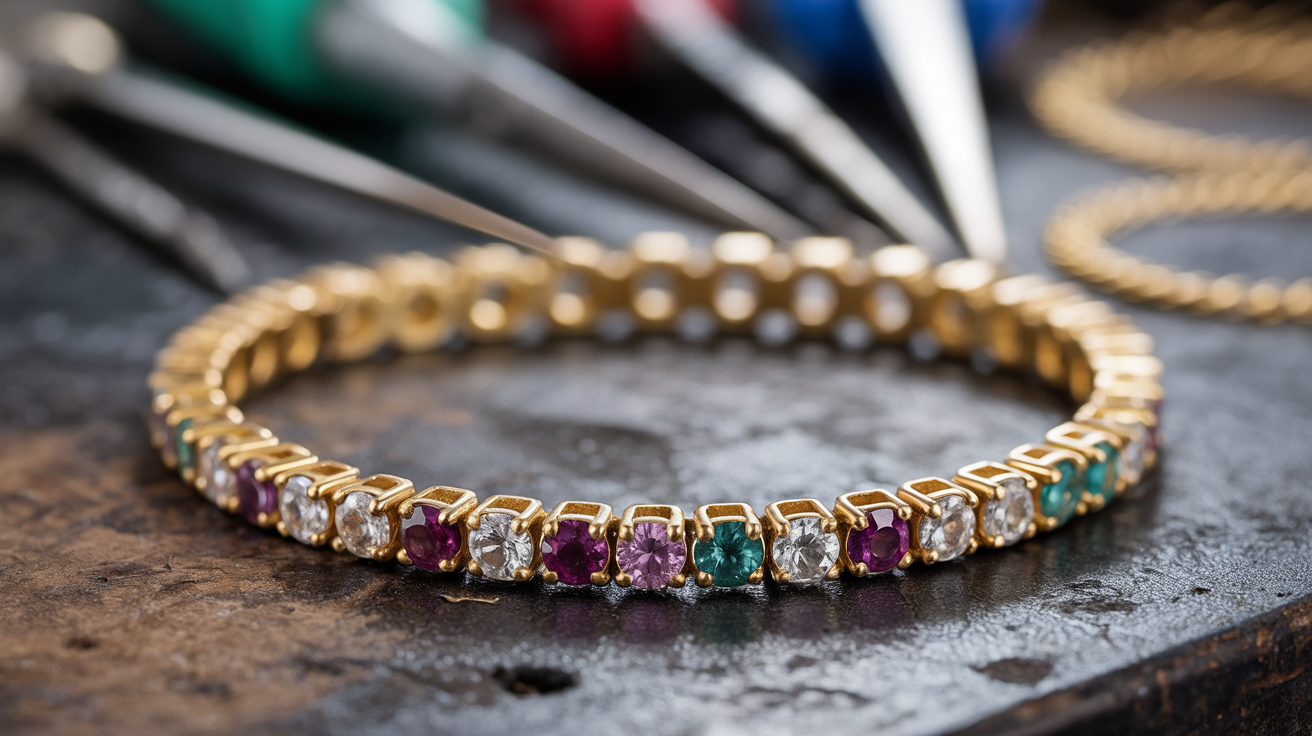
Gemstone removal may increase total sale value, but only if the stones have independent worth. Most chain-set stones are small, low-quality gems that add zero value beyond their gold settings. Removal costs often exceed any potential gains.
Diamonds under 0.25 carats in chains typically add zero resale value to scrap gold sales. These stones are usually low clarity, poor cut specimens chosen for their low cost rather than brilliance. The gold setting contains more value than the stone itself.
Colored stones in gold chains face similar issues. Unless you have documented proof of natural ruby, sapphire, or emerald stones, most chain-set colored gems are synthetic or heavily treated specimens worth pennies.
| Gemstone Type | Typical Chain Setting Value | Removal Worth It? |
|---|---|---|
| Diamonds under 0.25ct | £0-5 per stone | No |
| Synthetic colored stones | £0-2 per stone | No |
| Natural stones over 0.5ct | £10-100+ per stone | Maybe |
Gold jewellery design value rarely applies to chain-set pieces. Chains with stones are mass-produced items, not designer pieces with collector appeal. The setting style and stone arrangement add no premium to scrap buyers.
Actually, gemstone-set chains often sell better to specialized jewelry buyers than gold buyers. Some dealers focus specifically on diamond jewelry and may pay more for the complete piece than you’d get selling the gold and stones separately.
Finding buyers who value both components requires research. Check whether the stones warrant professional evaluation before deciding on removal versus selling as a complete piece. Photography the stones clearly and get multiple opinions on their quality and market value.
When considering whether your piece might have gold jewellery worth more than scrap, examine the craftsmanship, maker’s marks, and overall design quality. Mass-produced chain necklaces with small stones rarely exceed scrap value regardless of their original retail price.
Frequently Asked Questions
Where can I sell my gold chain near me?
UK gold chains can be sold at local jewellers, pawn shops, specialist gold buyers, or through online services. Online buyers often pay 3-8% more than high street shops due to lower overheads, but require posting your items via Special Delivery. Use a sell my gold calculator uk tool to estimate your chain’s value before visiting any buyer.
Can I sell my gold necklace if it’s not hallmarked?
Yes, non-hallmarked gold necklaces can still be sold as scrap gold. Buyers will test the purity using acid testing or XRF analysis instead of relying on hallmarks, though this may slightly slow the evaluation process. The choice between pawnshop vs gold dealer becomes more important with unmarked pieces, as testing expertise varies.
How much will I get for a broken gold chain?
Broken gold chains sell for exactly the same per-gram rate as intact chains when sold for scrap. The damage doesn’t reduce the gold content, so buyers pay based on weight and purity regardless of condition. Consider selling your gold earrings and sell my gold bracelet at the same time to maximize your total payout per transaction.