

What is scrap gold exactly? Most UK sellers assume their broken or unwanted gold jewellery is worthless junk, but when you sell scrap gold near me, buyers actively seek exactly these items for their gold content rather than appearance.
Key Takeaways:
• Scrap gold includes any gold item valued purely for its metal content, regardless of condition or missing parts
• UK buyers accept items as light as 0.5 grams, though many require 1-gram minimum per piece
• Damaged or incomplete items often sell for the same per-gram rate as perfect pieces when sold as scrap
What Actually Defines Scrap Gold?
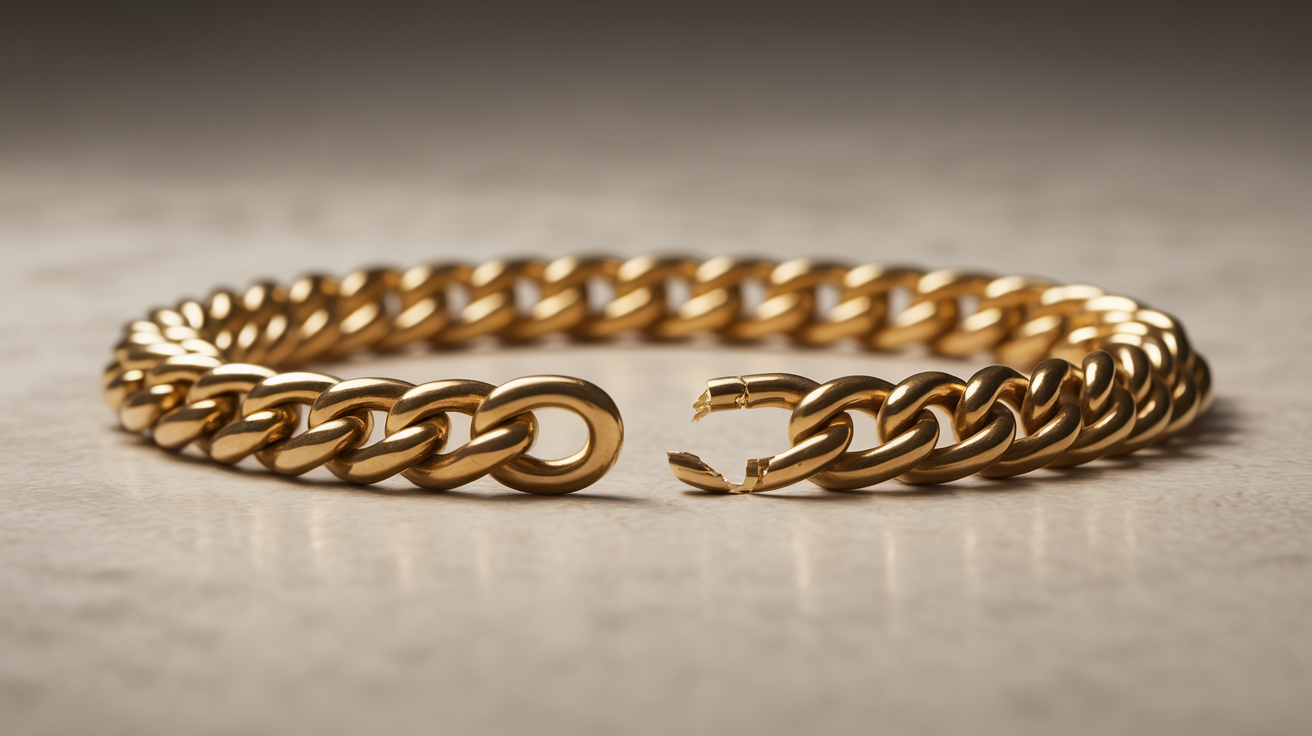
Scrap gold is any gold item valued exclusively for its metal content rather than its aesthetic, functional, or collectible worth. This means a snapped chain sells for the same per-gram price as an identical intact chain because buyers only care about the gold weight and purity.
The key distinction separates scrap gold from collectible pieces. Antique rings, vintage brooches, or designer jewellery might carry premium value beyond their gold content. But most everyday items,wedding rings, high street chains, department store earrings,fall into scrap territory once they’re unwanted or damaged.
Gold purity matters for classification. Scrap gold must contain at least 9ct gold fineness to qualify for UK buyers. Anything below 9ct lacks sufficient gold content for profitable refining. Gold-plated items don’t count as scrap gold because the actual gold layer weighs virtually nothing after separation from the base metal.
Condition becomes irrelevant for scrap pricing. Bent, tarnished, or missing stones don’t reduce the gold content. When you sell my gold through scrap channels, you’re selling atoms of gold that will be melted down and refined into pure bullion.
What Types of Gold Items Count as Scrap?
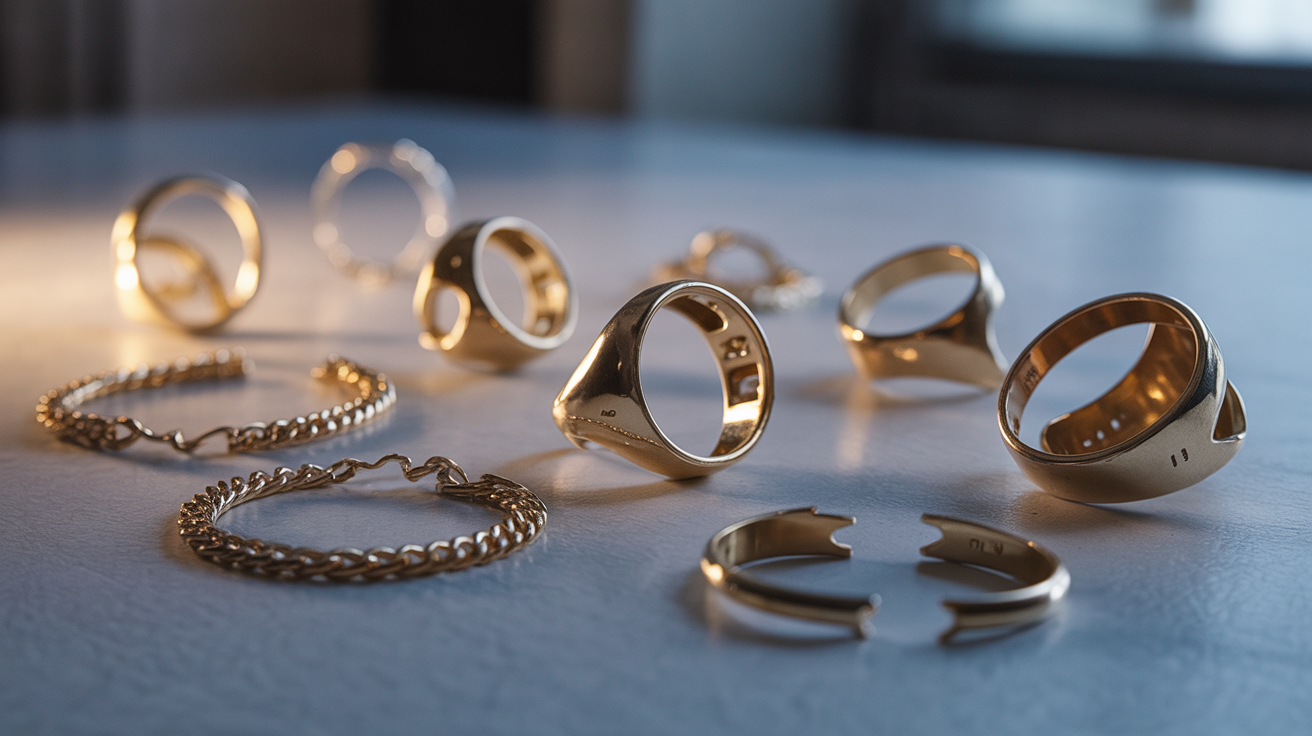
UK buyers accept a wide range of gold items for scrap processing:
Broken jewellery pieces – Snapped chains, bent rings, damaged clasps, and earrings missing their backs all qualify as scrap gold regardless of repair costs exceeding their value.
Single or mismatched items – Individual earrings from lost pairs, charm bracelets with missing charms, or wedding sets with only the band remaining sell at full scrap rates.
Dental gold – Gold crowns, bridges, and fillings contain dental gold alloy that buyers actively purchase, though removal should only be done professionally during legitimate dental procedures.
Watch components – Gold watch cases (not just gold-plated), gold bracelets, and solid gold bezels qualify, though the movement mechanism has no scrap value.
Decorative items – Gold picture frames, letter openers, pens, and ornamental objects count as scrap if they contain solid gold rather than plating.
Incomplete sets – Necklaces missing pendants, brooches with damaged pins, or cufflinks sold individually all maintain their per-gram scrap value.
Single earrings sell at the same per-gram rate as matching pairs when sold as scrap. The missing partner doesn’t affect the gold content in the remaining piece.
Do UK Gold Buyers Accept Items with Gemstones Attached?
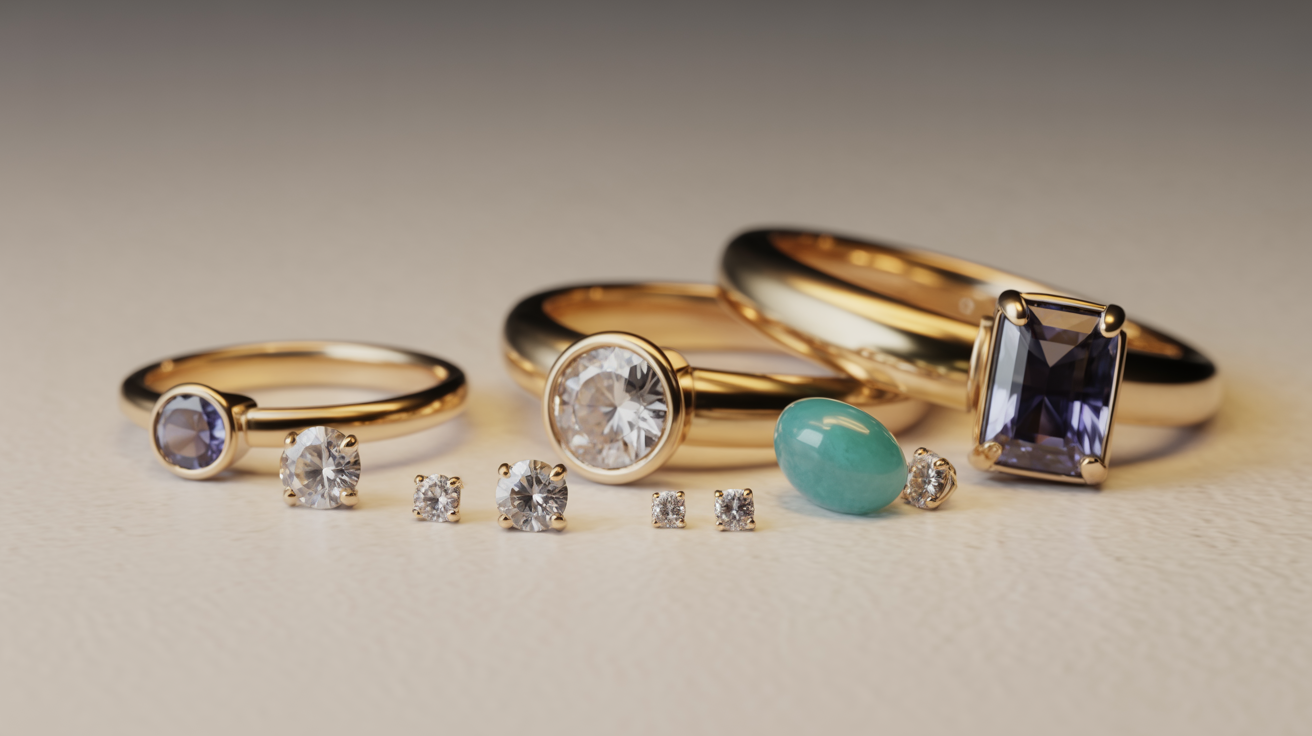
Most UK scrap gold buyers handle gemstone-set items but treat them differently based on stone value and removal complexity.
| Gemstone Situation | Buyer Response |
|---|---|
| Small diamonds under £20 value | Ignored, priced on gold weight only |
| Large valuable stones | Removed and valued separately |
| Cheap costume stones | Ignored or discarded during processing |
| Settings difficult to remove | Gold weight reduced to account for stones |
| Pearls or organic materials | Usually removed before weighing |
Gold buyers treat gemstone-set items based on whether stone removal costs exceed stone value. Most UK scrap gold buyers ignore gemstones worth under £20 and price the item based solely on gold weight. Stones get discarded during the refining process.
Valuable diamonds, emeralds, or sapphires receive separate assessment. Buyers either remove them before weighing the gold or deduct estimated stone weight from the total. This prevents you from getting paid for stone weight at gold prices.
Before selling, remove valuable stones yourself if possible. Loose stones can be sold separately to gem dealers for better returns than the nominal credit most gold buyers offer. However, don’t damage the setting during removal as this might reduce the gold weight more than leaving stones attached.
What Are the Minimum Weight Requirements for Scrap Gold?
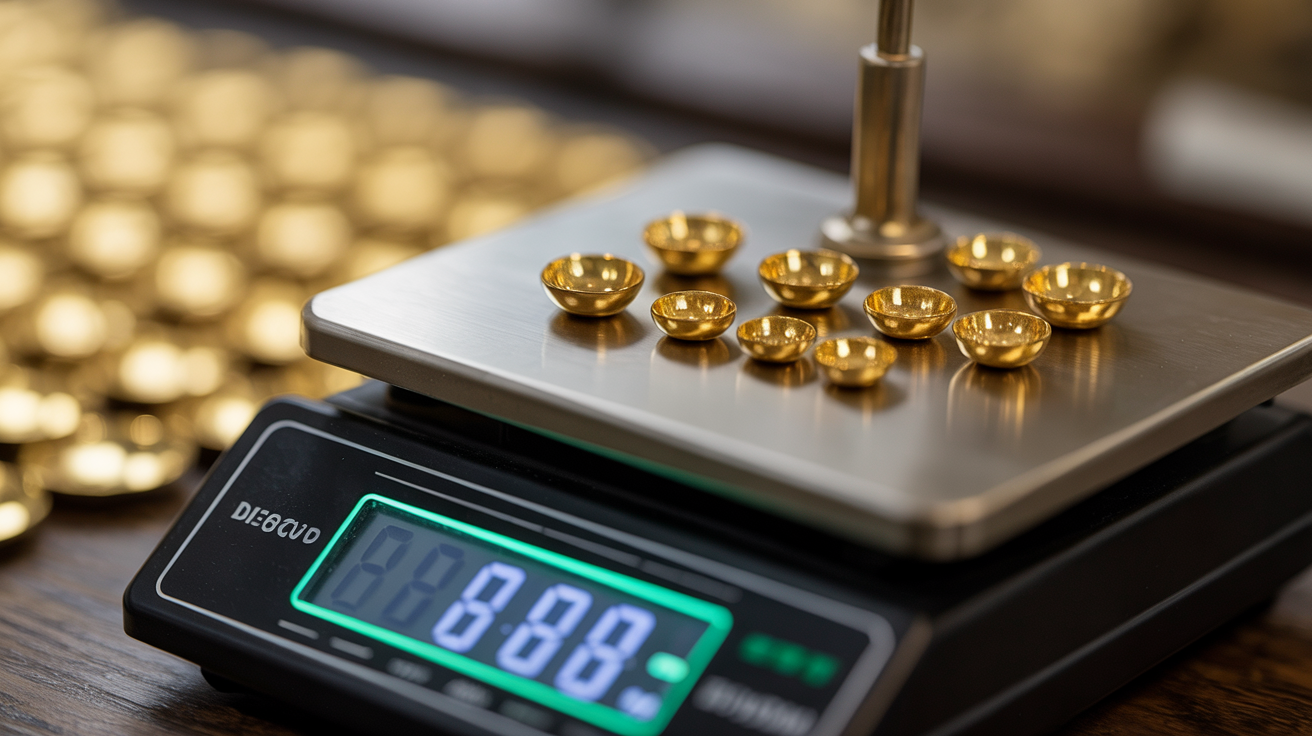
UK gold buyers impose minimum weight thresholds to ensure processing costs don’t exceed profit margins on tiny items.
| Buyer Type | Typical Minimum Weight | Reasoning |
| — | — |
|
Online postal buyers | 1 gram per item | Processing and postage costs |
| High street shops | 0.5 grams per item | Lower overheads, immediate assessment |
| Specialist refiners | 0.1 grams for large lots | Volume processing efficiency |
| Dental gold buyers | 0.3 grams per piece | Specialized handling requirements |
Minimum weight thresholds exist because testing, weighing, and processing costs remain fixed regardless of item size. Online buyers typically require 1-gram minimum per item while local shops often accept 0.5-gram pieces due to lower overhead costs.
Very light items like thin chains, small charms, or delicate earrings might fall below minimum thresholds. Gold buyer verification processes cost the same whether testing a 0.2-gram charm or a 20-gram bracelet, making tiny items unprofitable for many buyers.
Combining multiple small items into a single lot helps meet minimum requirements. Three 0.4-gram rings submitted together might qualify where each individual ring wouldn’t. Some buyers waive minimums for customers selling larger quantities of mixed items.
How Do Buyers Actually Process Your Scrap Gold?
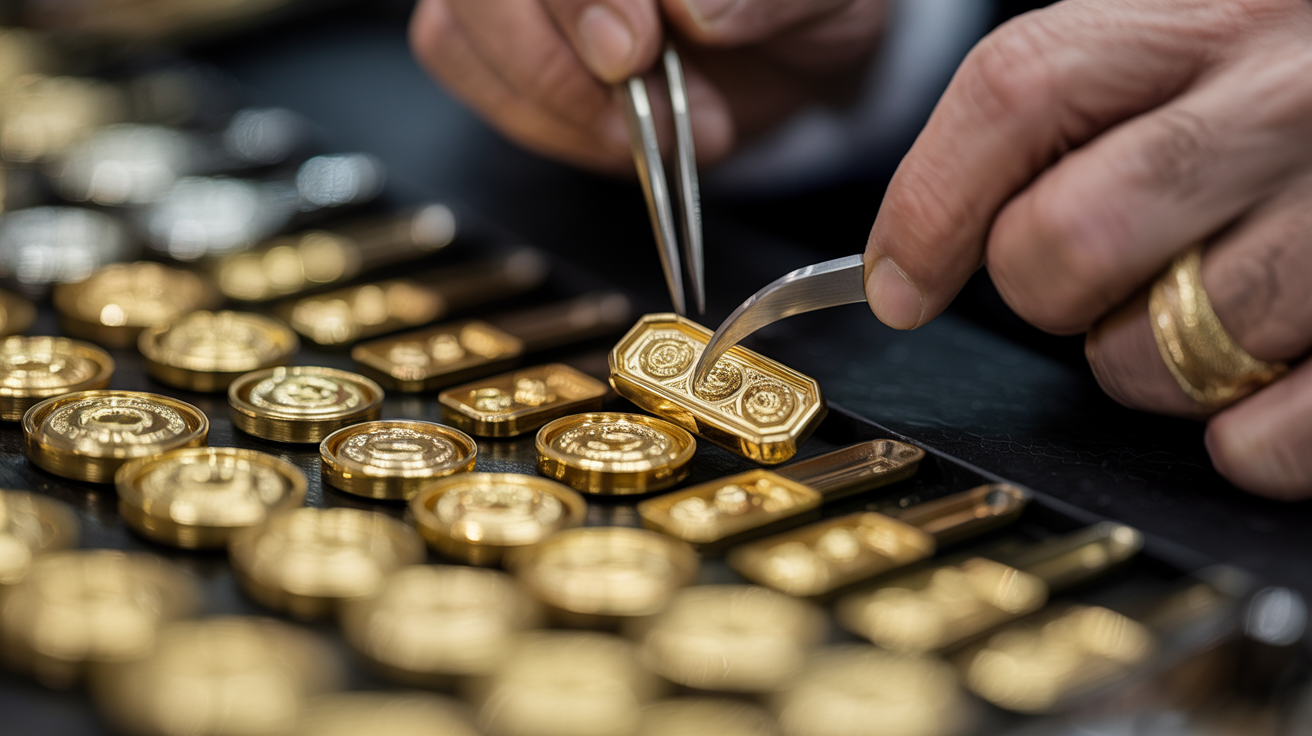
UK buyers follow standard refining procedures to extract pure gold from mixed scrap items:
Initial sorting and assessment – Items get sorted by apparent purity based on hallmarks, then weighed and photographed for records before processing begins.
Acid testing for purity verification – Each batch gets tested using nitric acid solutions to confirm actual gold content matches hallmarks or estimates for pricing accuracy.
Mechanical preparation – Items get cut or crushed into smaller pieces to increase surface area for chemical processing, with stones and non-gold components removed.
Chemical dissolution process – Gold gets dissolved using aqua regia (nitric and hydrochloric acid mixture) while other metals remain solid or form different compounds.
Precipitation and purification – Pure gold gets precipitated out of solution using reducing agents, then washed and dried to remove chemical residues.
Final melting and casting – Purified gold powder gets melted into bars or ingots for sale to industrial users, jewellery manufacturers, or bullion dealers.
Scrap gold refining extracts 99.9% pure gold from mixed metal items regardless of their original condition. UK refineries can extract pure gold from scrap items regardless of their original condition, which explains why a tarnished broken ring pays the same per-gram rate as a pristine matching piece.
This industrial process connects directly to your payout calculation. Refiners pay based on recovered gold weight after processing, not the original item weight. If you want to read gold hallmarks to verify purity before selling, this helps you estimate final recovery rates.
Frequently Asked Questions
Can I sell broken gold jewellery in the UK?
Yes, UK gold buyers actively purchase broken jewellery including snapped chains, single earrings, and damaged rings. Broken items sell for the same per-gram rate as intact pieces when sold as scrap gold. The condition doesn’t affect the gold content that buyers are purchasing.
What gold items can I sell if they’re not jewellery?
UK buyers accept dental gold, gold-filled spectacle frames, gold watch cases, decorative gold items, and when you sell my gold bar or coins. Any item containing at least 9ct gold qualifies as scrap, regardless of its original purpose. Industrial gold items and electronic components with gold content are also accepted by specialist buyers.
Do scrap gold buyers accept items without hallmarks?
Most UK scrap gold buyers accept unhallmarked items but will test the gold purity independently using acid testing or electronic methods. If you need to sell my gold teeth or other dental items, these often lack hallmarks but contain verified gold alloys. Expect slightly lower offers on unhallmarked pieces as buyers factor in purity uncertainty.