

Most people stare at their gold jewellery for years without realising they’re holding a complete technical report stamped right into the metal. To read gold hallmarks properly, you need the right magnification and knowledge of where assay offices place these crucial stamps.
Key Takeaways:
- UK hallmarks require 10x magnification to read clearly, your naked eye won’t cut it for most stamps
- Each jewellery type has 2-3 predictable hallmark locations where assay offices always place stamps
- The three compulsory marks (fineness, sponsor, assay office) appear within 5mm of each other on every piece
Where Exactly Are Hallmarks Located on Different Types of Jewellery?
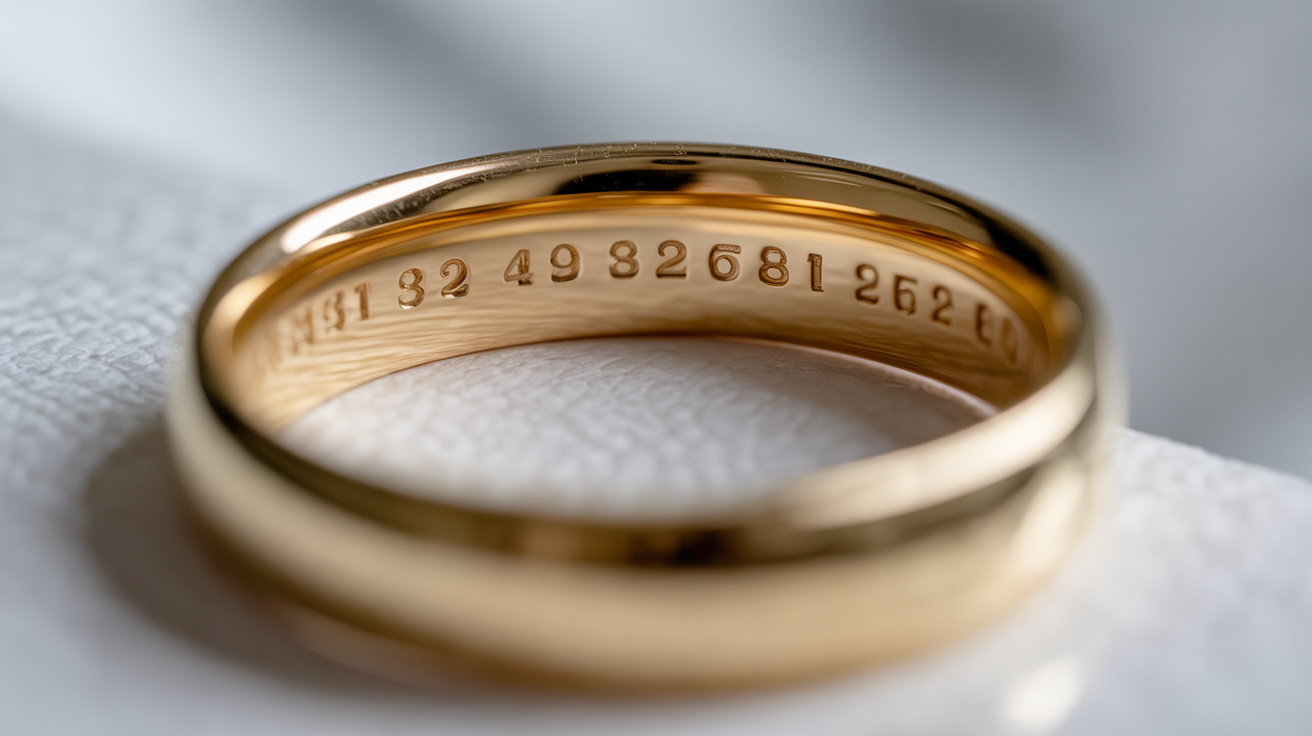
Hallmark locations vary by jewellery type because assay offices choose positions that won’t weaken the structure or interfere with wear. Rings show hallmarks on the inner band 2-3mm from the shank join in 90% of cases. This position stays hidden during wear but remains accessible for verification.
Chains and necklaces carry hallmarks near the clasp mechanism. You’ll find stamps on the jump ring connecting the clasp, on the clasp plate itself, or the first link adjacent to the fastening. Some manufacturers add a small tag near the clasp specifically for hallmarks.
Bracelets follow similar patterns to chains, with stamps appearing on the catch plate or safety chain attachment point. Earrings present the biggest challenge because most posts and backs are too small for standard hallmarks. When present, look on the post back or the flat surface behind decorative elements.
| Jewellery Type | Primary Location | Secondary Location |
|---|---|---|
| Rings | Inner band near shank | Inside of wide settings |
| Chains/Necklaces | Jump ring at clasp | Attached tag near clasp |
| Bracelets | Catch plate | Safety chain attachment |
| Earrings | Post back | Behind decorative element |
| Pendants | Bail area | Back surface if flat |
Pendants typically show hallmarks in the bail area where the chain passes through, or on the back surface if the design provides enough flat space. Assay offices avoid curved or decorative surfaces that might distort the stamp impression.
What Magnification Do You Actually Need to Read Gold Hallmarks?
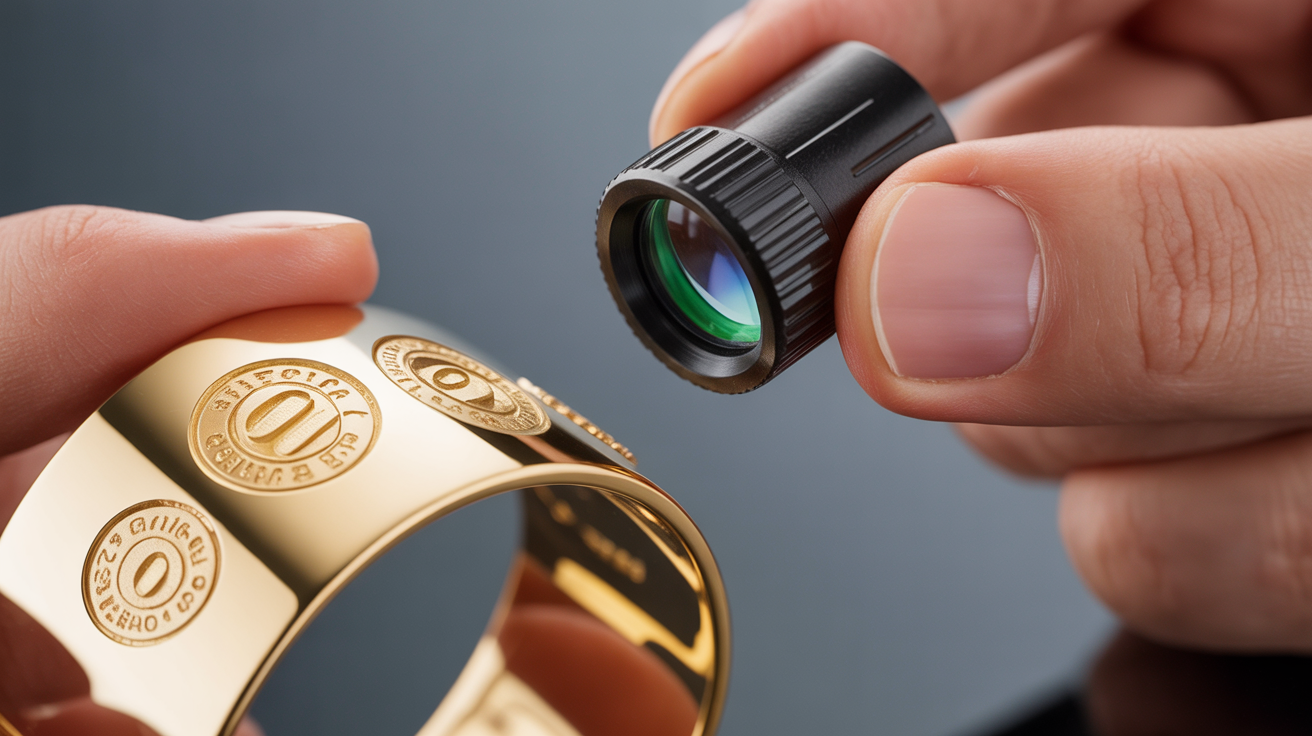
A jeweller’s loupe is the standard tool for hallmark reading. This is a small magnifying lens, typically 10x magnification, designed specifically for examining precious metal stamps. UK assay office stamps measure 0.5-2mm in height, requiring minimum 10x magnification for clear reading.
Your naked eye can spot the general hallmark location but cannot decode the specific symbols or numbers needed for verification. Smartphone macro lenses work for larger stamps on newer pieces, but older or smaller hallmarks need proper optical magnification.
Magnifying glasses from hardware stores often lack the clarity and magnification power needed. They’re designed for reading text, not decoding tiny metal impressions. A proper jeweller’s loupe costs £15-30 and provides the optical quality necessary for accurate hallmark identification.
One thing I should mention: lighting matters as much as magnification. Position your piece under bright, direct light to create shadows that define the stamp edges. LED desk lamps work better than overhead room lighting for this task.
How Do You Identify the Three Compulsory UK Hallmark Symbols?
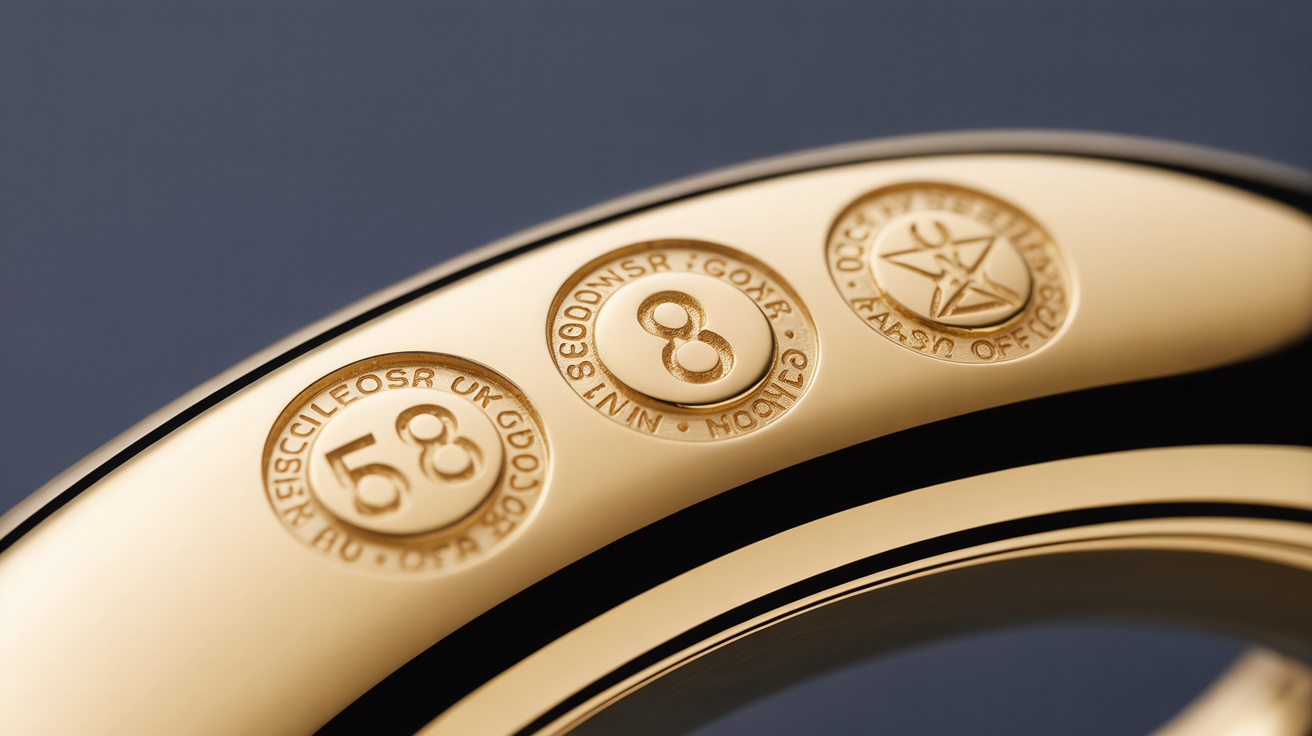
Three compulsory marks consist of fineness number, sponsor mark, assay office symbol. These appear within 5mm of each other on every hallmarked piece. Here’s how to locate and identify each one systematically:
Find the fineness number first. Look for stamped numbers 375, 585, 750, or 916. These represent 9ct, 14ct, 18ct, and 22ct gold respectively in UK hallmarking. The number appears as the clearest, most readable stamp.
Locate the sponsor’s mark next. This appears as a unique symbol or letters registered to the manufacturer or importer. It might be initials, a geometric shape, or a small pictorial mark. Every company has a different sponsor’s mark.
Identify the assay office symbol. Four UK assay offices currently operate: Birmingham (anchor), London (leopard’s head), Edinburgh (castle), Sheffield (rose). This mark confirms which office tested and approved the gold content.
Check the arrangement. All three marks appear in a line or cluster, never scattered across the piece. If you find marks in different areas, you’re probably looking at maker’s marks or foreign stamps mixed with UK hallmarks.
The reading order doesn’t matter, but the fineness number is usually the easiest starting point because numbers are more recognizable than symbols under magnification.
What Do Common Hallmark Symbols Actually Mean?

Assay office symbols indicate testing location and standards applied during verification. Each UK assay office uses a distinctive symbol that’s remained consistent for decades. Understanding these symbols tells you where your gold was tested and confirms it meets UK standards.
| Assay Office | Symbol | Location | Notes |
|---|---|---|---|
| Birmingham | Anchor | Birmingham | Most common UK hallmark |
| London | Leopard’s Head | London | Oldest assay office (1327) |
| Edinburgh | Castle | Edinburgh | Scottish hallmarking |
| Sheffield | Rose | Sheffield | Established 1773 |
Date letters appear as small alphabet characters that change annually, allowing precise dating of manufacture. These aren’t compulsory but help identify vintage pieces. The letter style and typeface follow specific patterns that jewellers use to determine exact years.
Optional marks include quality symbols (crown for gold), commemorative marks for special events, and imported marks for foreign-made items meeting UK standards. These appear alongside the three compulsory marks but aren’t required for legal sale.
Foreign marks follow different systems entirely. European pieces show three-digit numbers (750 for 18ct), while US items display karat stamps (18K) or maker’s marks. These indicate gold content but don’t guarantee the same testing standards as UK hallmarking.
Why Can’t You Find Hallmarks on Some Gold Jewellery?
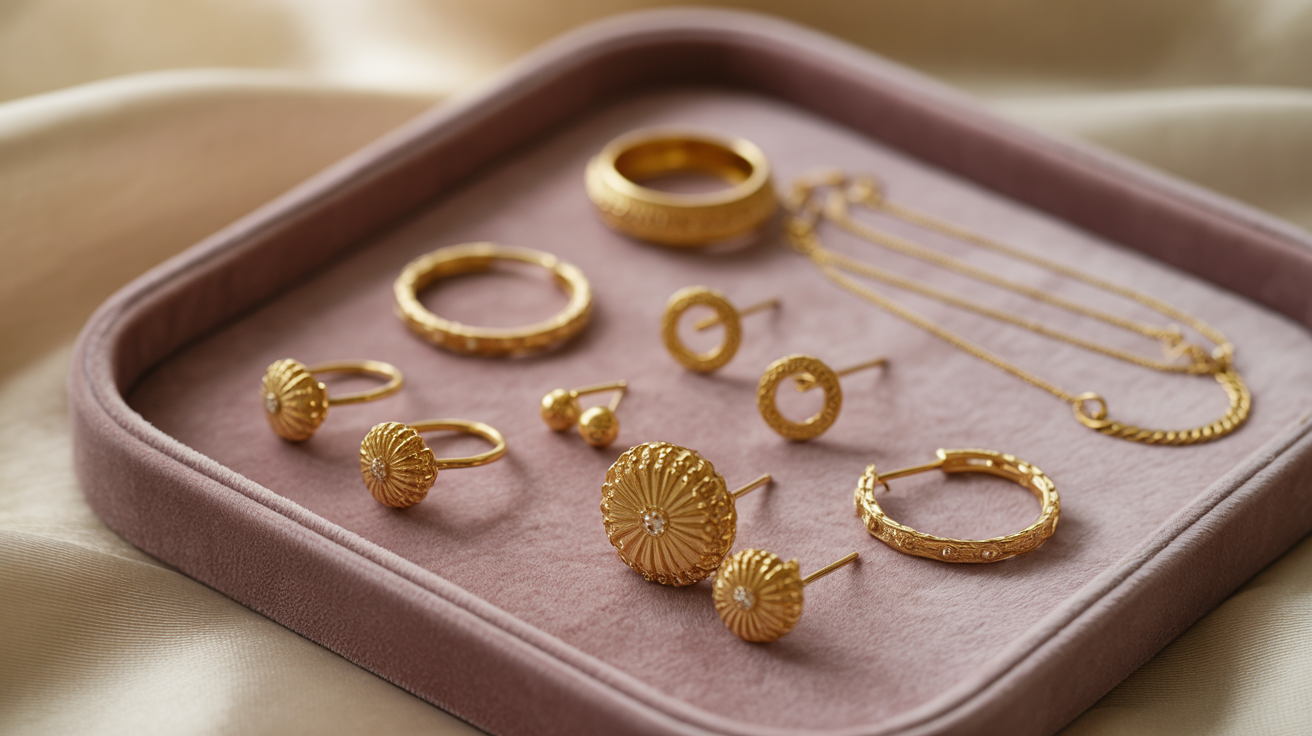
Missing hallmarks indicate exempt items or foreign manufacture under UK law. Several categories escape hallmarking requirements, affecting both value and buyer verification processes:
- Weight exemptions: Gold items under 1 gram are legally exempt from UK hallmarking requirements, including most earring studs and delicate chain links
- Age exemptions: Items made before 1973 weren’t subject to current hallmarking laws and may carry older marking systems or no marks at all
- Imported pieces: Foreign-made jewellery often carries different marking systems and may not meet UK hallmarking standards despite containing real gold
- Wedding ring exemptions: Plain wedding rings under specific weight and width criteria may be exempt, though most manufacturers hallmark them anyway
- Repair work: Items that have been extensively repaired or resized may have damaged or removed original hallmarks
Unhallmarked pieces aren’t automatically worthless or fake, but they require different verification methods. When you sell unhallmarked gold UK buyers typically use XRF gold testing to determine purity instead of relying on stamps. This affects pricing because buyers can’t immediately verify content without testing equipment.
Actually, this creates opportunities if you understand what gold jewellery worth more than scrap contains. Some unhallmarked antique pieces or designer items carry premiums that exceed their raw gold value, even without hallmarks confirming purity.
Frequently Asked Questions
Can you identify gold hallmark stamps without a magnifying glass?
No, UK hallmarks measure 0.5-2mm and require minimum 10x magnification for accurate reading. Your naked eye can spot the general location but cannot decode the specific symbols or numbers needed for verification.
Where should I look for hallmarks on a gold chain or necklace?
Check near the clasp mechanism, typically stamped on the jump ring, clasp plate, or the first link adjacent to the fastening. Some chains also carry hallmarks on a small tag attached near the clasp.
What if my gold ring has symbols I don’t recognise as UK hallmarks?
Foreign gold often carries different marking systems – European pieces show three-digit fineness numbers (750 for 18ct), while US items may show karat stamps (18K) or maker’s marks. These indicate gold content but follow different standards than UK hallmarking.