Where to Sell Gold Earrings for the Best Price
Sell my gold earrings at the wrong place and you’ll face the same disappointment as thousands who discover their single pieces get rejected by three different high-street buyers for being under 2 grams.
Key Takeaways:
- Stud earrings under 1.5 grams typically get rejected by 70% of high-street gold buyers due to minimum weight policies
- Single earrings sell for 60-80% of scrap value while pairs command 90-95% at specialist dealers
- Drop earrings with genuine gemstones can exceed scrap gold value by 40-200% at auction houses versus pawn shops
Why Do Most Gold Buyers Reject Lightweight Earrings?

Minimum weight policy is a buyer’s threshold below which they refuse gold items due to processing costs exceeding profit potential. This means your 0.8-gram stud earrings get turned away before anyone even tests the gold purity.
Most high-street buyers set their minimum at 1.5-2 grams per item. Processing lightweight pieces costs the same as heavy ones—acid testing, documentation, storage—but the profit margin disappears. A 1-gram 18ct gold earring worth £35 in scrap might cost £12 to process and document. Remove their 20% margin and you’re left with pennies.
Pawn shops typically accept anything over 1 gram, but their rates drop to 40-60% of spot price for small items. Cash-for-gold shops often refuse items under 2 grams entirely. Jewellery stores buying for resale want matching pairs in good condition, rejecting singles regardless of weight.
The jewellery item weight becomes critical because buyers calculate profit per transaction, not per gram. Your beautiful vintage studs might contain quality 22ct gold, but if they weigh under the threshold, most buyers won’t even look. Some will accept multiple lightweight items as a batch, but you need at least 5-10 grams total to meet their minimums.
Where Should I Sell Single Gold Earrings?

Single earrings command lower prices at traditional buyers who price them as incomplete sets rather than individual pieces. Most buyers apply a 20-40% penalty for missing the matching piece, even when the gold content remains identical.
| Buyer Type | Single Earring Policy | Typical Payout | Minimum Weight | Processing Time |
|---|---|---|---|---|
| High Street Pawn | Accepts singles | 40-60% spot | 1g | Same day |
| Cash4Gold Shops | Usually refuse | 30-50% spot | 2g | Same day |
| Online Gold Buyers | Accept with penalty | 60-80% spot | 0.5g | 3-5 days |
| Specialist Dealers | Best single rates | 70-85% spot | 0.1g | 1-2 days |
| Auction Houses | Vintage/designer only | 90%+ if notable | No minimum | 2-6 weeks |
Online specialists like The Gold Company or Cash Your Gold handle singles better than high-street buyers. They process higher volumes, making small items profitable through economies of scale. These platforms typically offer 70-80% of spot price for singles versus 60-70% at local shops.
Gold buyer verification matters when choosing online services. Check for proper licensing, insurance coverage, and transparent pricing policies. Legitimate buyers publish their current rates, provide trackable postage, and guarantee item return if you reject their offer.
Actually, auction houses work best for designer or vintage singles. A single Tiffany stud might fetch 120-150% of scrap value, while a plain gold stud gets standard rates. The key lies in recognizing when design value exceeds gold content value.
How Much Are My Gold Earrings Actually Worth?

Earring value depends on weight and purity combination, with both factors requiring precise measurement for accurate valuation. You need 0.1 gram precision scales for lightweight earring assessment, as standard kitchen scales can’t register small pieces accurately.
Weigh each earring separately using jewelry scales accurate to 0.1 grams, as pairs often vary by 0.2-0.5 grams due to manufacturing tolerances.
Identify the hallmark using a magnifying glass to read stamps like “375” (9ct), “585” (14ct), “750” (18ct), or “916” (22ct) usually found on the post or back.
Calculate base scrap value by multiplying weight × purity percentage × current gold spot price (check London Bullion Market daily rates).
Apply buyer discount ranging from 10-40% depending on venue, with online specialists typically offering better rates than local shops.
Account for single penalties if selling one earring, expect 10-20% reduction from the calculated value due to incomplete pair status.
Scrap gold valuation becomes straightforward once you understand the math. A 2-gram 18ct earring contains 1.5 grams of pure gold (75% purity). At £50 per gram gold price, that’s £75 in pure gold content. Buyers typically pay 70-90% of this figure, so expect £52-67 for the piece.
One thing to remember—gold purity affects value more than weight for small items. A 1-gram 22ct earring often fetches more than a 1.5-gram 9ct piece despite weighing less.
Do Stud Earrings Get Different Prices Than Drop Earrings?

Drop earrings typically weigh more than stud earrings, making them more attractive to buyers who prefer higher-value transactions. The weight difference alone can determine whether you get accepted or rejected at many venues.
| Earring Type | Typical Weight Range | Design Premium | Buyer Acceptance | Average Payout Rate |
|---|---|---|---|---|
| Plain Studs | 0.8-1.2g per piece | None | Often rejected | 60-70% spot |
| Diamond Studs | 0.5-1.0g per piece | Variable | Depends on stones | 50-150% spot |
| Hoop Earrings | 1.5-3.0g per piece | Minimal | Good acceptance | 70-80% spot |
| Drop Earrings | 2.0-4.0g per piece | Sometimes | Best acceptance | 75-85% spot |
| Chandelier Style | 3.0-6.0g per piece | Often significant | Excellent | 80-90% spot |
Gold jewellery design value comes into play more with drops than studs. Vintage or designer drop earrings might command premiums above scrap value, while plain studs rarely exceed gold content worth. Collectors and resellers prefer drops because they display better and have more presence.
Drop earrings perform better at auction houses and specialist dealers who appreciate craftsmanship. A pair of Art Deco drops might sell for double scrap value, while equivalent-weight studs get standard rates. The visual impact and design complexity matter to buyers targeting retail resale.
Weight distribution also affects handling costs. Drops require more careful packaging and storage than compact studs, but their higher individual value justifies the extra effort for most buyers.
Should I Remove Gemstones Before Selling My Gold Earrings?
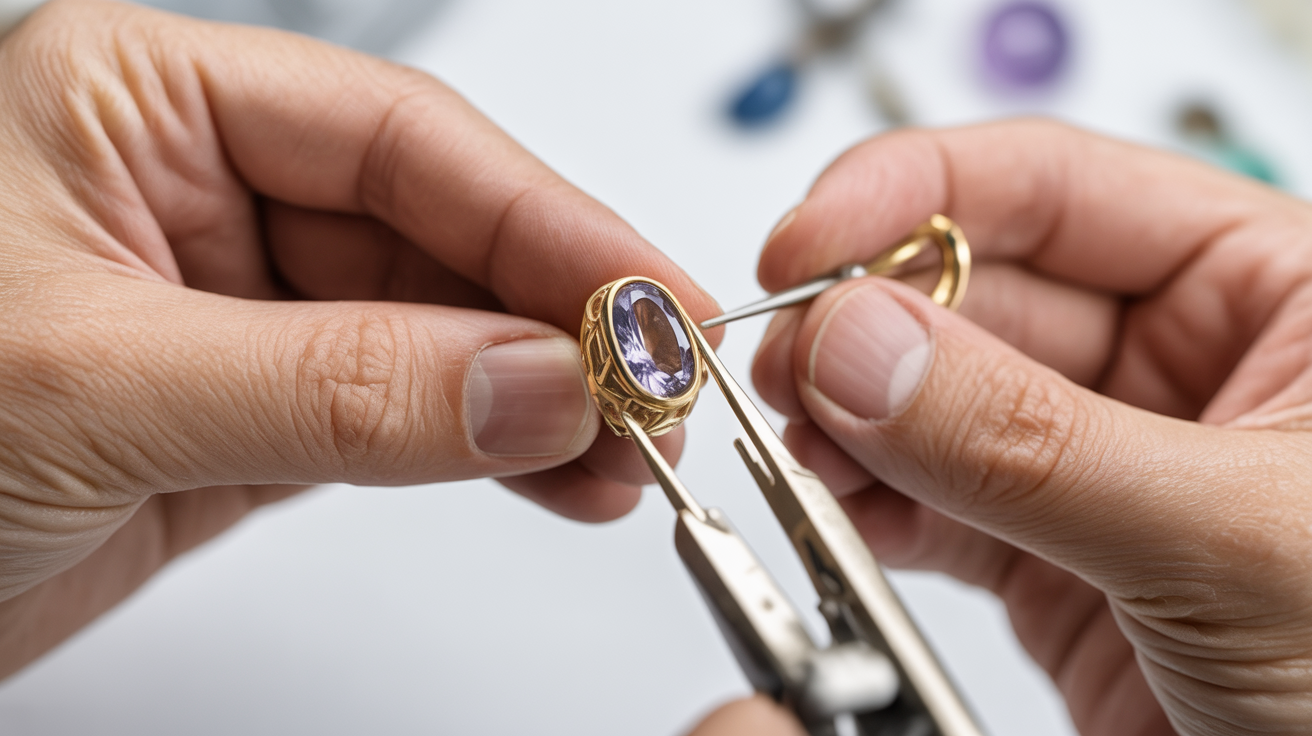
Gemstone removal can increase total selling price when stones have independent value exceeding the labor cost of professional extraction. However, this strategy only works for quality stones worth more than £30-50 each.
• Remove high-value stones like diamonds over 0.25 carats, sapphires, rubies, or emeralds that certified jewelers can verify and resell separately
• Keep low-value stones attached including cubic zirconia, small diamonds under 0.10 carats, or synthetic stones that cost more to remove than they’re worth
• Consider professional extraction costing £15-30 per pair for complex settings, but only when stone values justify the expense
• Evaluate setting damage as aggressive removal can reduce gold weight by 10-20% if prongs or bezels get damaged during extraction
• Check stone authenticity first using a local jeweler’s testing service before paying for removal, as many older pieces contain glass or synthetic materials
Gemstone-set gold creates a valuation dilemma. Scrap buyers typically ignore stone value entirely, paying only for gold content. Specialist dealers might add 10-20% for quality stones, but rarely approach full gemstone retail value.
Professional stone removal makes sense when dealing with certified diamonds or precious stones. A 0.50-carat diamond might worth £300-500 independently, while the same earring sells for £80 as scrap gold. Remove the stone for £25, sell it separately for £400, and get £70 for the remaining gold—total £445 versus £80 intact.
Actually, some antique pieces gain value from original stones remaining in period settings. Victorian or Edwardian earrings often fetch premiums at auction houses when sold complete, even with lower-grade stones.