

Finding the best place to sell my diamond ring starts with understanding that UK diamond sellers lose an average of £2,847 per carat by choosing the wrong buyer. Here’s exactly where each selling channel makes financial sense.
Key Takeaways:
• Specialist diamond dealers pay 15-25% more than general jewellers for certified stones over 0.5 carats
• Auction houses require minimum values of £1,500-£3,000 but can achieve 60-80% of retail for quality pieces
• Online diamond buyers offer convenience but typically pay 20-30% less than in-person specialist dealers
What Type of Diamond Selling Channel Actually Suits Your Stone?

The diamond resale market operates through five distinct channels, each targeting different stone qualities and seller priorities. Specialist diamond buyers focus on certified stones above 0.5 carats and offer the highest payouts to sellers who can wait 1-2 weeks for professional evaluation. Auction houses handle premium pieces worth £1,500 or more but require 6-12 week sales cycles with no guarantee of sale. Online postal services process any diamond quickly but cap their offers at trade prices minus handling costs.
Diamond selling channels determine payout percentages based on stone quality, with the hierarchy running from specialist dealers at the top down to general jewellers at the bottom. The decision criteria boil down to three factors: your stone’s certified value, your time constraints, and your risk tolerance.
Certified diamonds over 1 carat with GIA or similar documentation suit specialist dealers or auction houses. Uncertified stones under 0.5 carats work better through online services or local buyers who can offer immediate payment. Antique or designer settings add complexity that only specialists can properly value.
Minimum carat weights matter more than most sellers expect. Auction houses won’t touch stones under 0.75 carats unless they’re part of a significant piece. Specialist dealers prefer 0.3 carats and above for loose stones, though they’ll consider smaller diamonds in premium settings. Online buyers accept any size but their flat-rate pricing penalises quality stones.
The diamond buyer expertise gap between channels creates these price differences. Specialists invest in proper grading equipment and maintain relationships with trade buyers worldwide. General jewellers lack both the tools and market knowledge to offer competitive prices for quality diamonds.
UK Specialist Diamond Dealers: Who They Are and What They Pay

Specialist diamond buyers offer highest payouts for certified stones because they understand current market pricing and maintain direct trade relationships. These dealers concentrate in London’s Hatton Garden, Birmingham’s Jewellery Quarter, and Manchester’s diamond district, though most now accept postal submissions for initial evaluation.
| Feature | Hatton Garden Dealers | Birmingham Specialists | Manchester Traders |
| — | — | — |
| Minimum value | £200-500 | £150-300 | £100-400 |
| Typical payout | 25-40% of retail | 20-35% of retail | 22-38% of retail |
| Certification required | GIA/IGI preferred | Any recognised cert | Flexible on certification |
| Geographic coverage | National postal | Midlands focused | Northern England |
| Turnaround time | 3-5 business days | 2-4 business days | 1-3 business days |
The payout differential exists because Hatton Garden dealers handle higher-value inventory and can afford to pay more for quality stones. Birmingham specialists focus on volume and offer competitive rates for mid-range diamonds. Manchester traders operate with lower overheads and pass some savings to sellers.
RapNet diamond pricing forms the baseline for professional valuations, with specialists typically offering 60-75% of current RapNet prices for certified stones. This translates to 25-40% of retail value, depending on the stone’s specifications and market demand.
Gemologist valuation becomes crucial for stones over 1 carat or those with unusual characteristics. Proper dealers employ certified gemologists or maintain relationships with independent grading services. They’ll explain exactly how they reached their valuation and provide documentation of the stone’s specifications.
Most specialists require high-resolution photographs before scheduling in-person appointments. They’ll request images of the stone from multiple angles, plus any existing certification documents. This pre-screening saves time and ensures they can offer meaningful quotes during the appointment.
Should You Sell Your Diamond Through Auction Houses?

Auction house option requires minimum values and extended timeframes, but can achieve 60-80% of retail for exceptional pieces. Major UK auction houses like Bonhams, Christie’s, and Sotheby’s handle diamond jewellery, though their entry requirements and commission structures vary significantly.
| Feature | Christie’s | Bonhams | Regional Auctioneers |
| — | — | — |
| Minimum hammer value | £3,000 | £1,500 | £500-1,000 |
| Seller’s premium | 10-15% | 12-18% | 15-25% |
| Reserve policies | 70-80% of estimate | 60-80% of estimate | 50-70% of estimate |
| Sale frequency | Monthly jewellery sales | Quarterly specialised | Variable schedule |
| Success rate | 75-85% sell | 70-80% sell | 60-75% sell |
The diamond auction market works best for pieces with historical significance, exceptional quality, or designer provenance. A 2-carat D-colour flawless diamond in a Cartier setting might achieve £15,000-18,000 at auction, compared to £8,000-10,000 from a specialist dealer.
Consignment periods typically run 3-4 months from initial submission to final payment. The auction house photographs your piece, researches its provenance, writes catalogue descriptions, and markets the sale to registered bidders. If the lot doesn’t sell, you can either lower the reserve for the next sale or withdraw the item.
Commission structures vary but generally include a seller’s premium of 10-25% plus photography, insurance, and catalogue fees. High-value lots may negotiate reduced commission rates. The house guarantees payment within 35 days of the sale, regardless of whether the buyer pays immediately.
Quality requirements eliminate most engagement rings and standard jewellery pieces. Auction houses want stones over 2 carats, period pieces from recognised designers, or items with documented history. A standard 1-carat engagement ring rarely meets their criteria unless it features exceptional colour and clarity grades.
How Does Diamond Consignment Actually Work in Practice?

Consignment selling involves extended sales periods with higher potential returns, but requires patience and accepts the risk that items may not sell. The process demands careful contract review and realistic pricing expectations.
Initial evaluation and photography: Submit detailed photographs and any existing certificates to the auction house or dealer. They’ll provide preliminary estimates and confirm whether your piece meets their consignment criteria.
Contract negotiation and terms: Review the consignment agreement carefully, paying attention to commission rates, minimum sale prices, insurance coverage, and withdrawal policies. Most contracts run 6-12 months with automatic renewal clauses.
Professional cataloguing and marketing: The consigner photographs your piece professionally, researches comparable sales, writes detailed descriptions, and includes it in their marketing materials. This process takes 4-6 weeks.
Pricing strategy and reserve setting: Work with the consigner to set realistic estimates and reserve prices. Reserves typically sit at 60-80% of the low estimate, protecting you from extremely low sales while encouraging bidding.
Sale execution and settlement: If your piece sells, payment arrives 30-45 days after the sale date, minus all commissions and fees. If it doesn’t sell, you can adjust the price, move to a different sale, or withdraw the item.
Post-sale collection or re-consignment: Unsold items can be collected within 90 days or re-consigned to future sales, often with reduced estimates to encourage buyers.
Average consignment periods run 8-12 weeks for specialist diamond dealers and 3-6 months for auction houses. Success rates vary by stone quality, with certified diamonds over 1 carat selling 70-80% of the time, while uncertified or lower-grade stones achieve 50-60% success rates.
Gemologist valuation during consignment provides independent verification of your stone’s characteristics, protecting both you and the consigner from disputes. Most professional consigners require this documentation before accepting high-value pieces.
Online Diamond Buying Services: Convenience vs Payout Reality

Online diamond buying services offer lower payouts but faster transactions, typically processing sales within 5-7 business days. These services target sellers who prioritise convenience over maximum return and don’t want to visit dealers in person.
| Feature | WeBuyDiamonds | DiamondBuyers | CashForDiamonds |
| — | — | — |
| Turnaround time | 3-5 days | 2-4 days | 1-3 days |
| Typical payout | 15-25% of retail | 12-22% of retail | 10-20% of retail |
| Minimum value | No minimum | £50 | £25 |
| Insurance coverage | £2,500 standard | £5,000 standard | £1,000 standard |
| Certification required | Not required | Preferred | Not required |
Diamond postal selling eliminates travel costs and appointment scheduling but reduces your negotiating power. You send your diamond through insured post, they evaluate it using their own criteria, and you either accept their offer or have the stone returned.
The payout reduction compared to in-person sales reflects their business model. Online buyers need wider profit margins to cover postal insurance, processing costs, and the risk of handling uncertified stones. They also serve customers who value speed over price optimisation.
Gemologist valuation at online services varies significantly. Established companies employ certified gemologists and use proper grading equipment. Smaller operators may rely on basic testing methods that miss important quality factors, leading to lower offers.
Most online diamond buyers provide free insured shipping labels and return policies if you reject their offer. However, you lose control over the evaluation process and can’t ask questions or negotiate in real-time like you would with in-person dealers.
Why Pawnshops and General Jewellers Usually Underpay for Diamonds
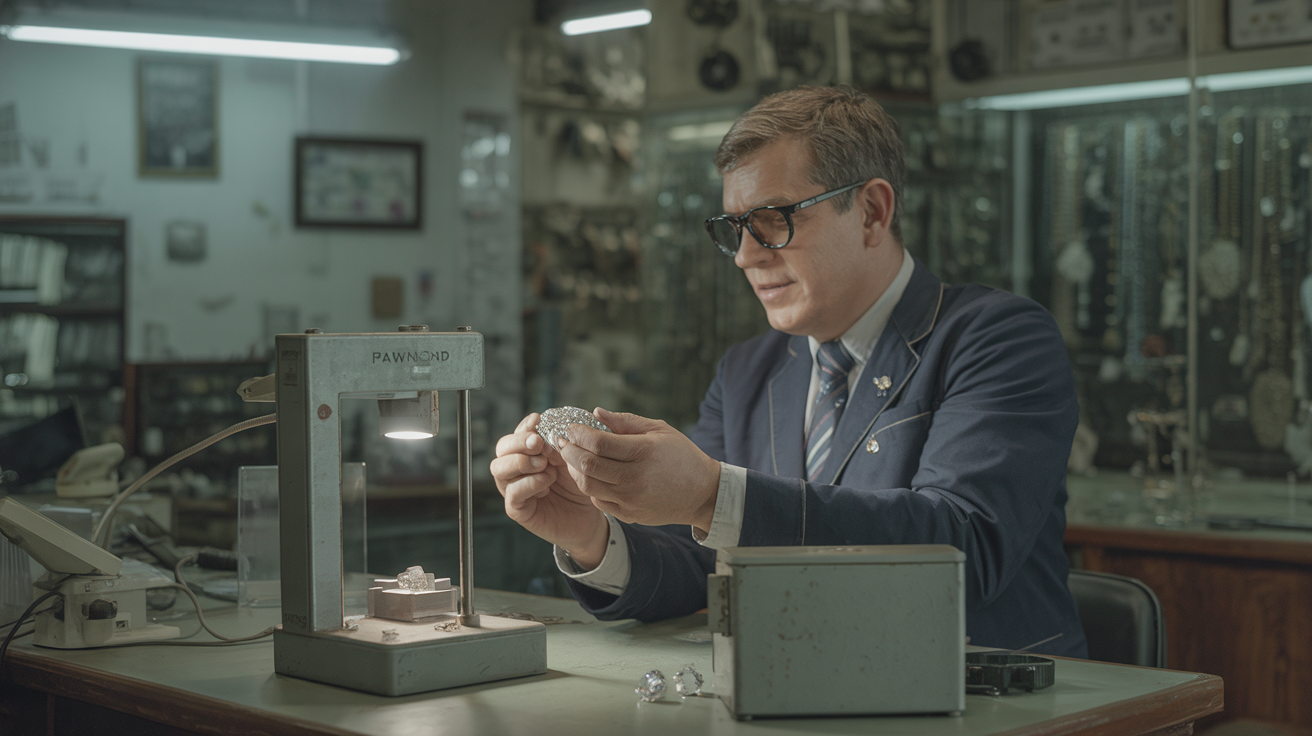
Pawnshop limitations result from lack of specialist diamond expertise, leading to significantly lower payouts than dedicated diamond buyers. General jewellers face similar constraints despite handling more jewellery than pawnshops.
• Limited grading equipment: Most pawnshops use basic diamond testers that only distinguish diamonds from simulants. They can’t evaluate colour, clarity, or cut quality accurately, so they offer conservative prices that protect their margins.
• Lack of diamond market knowledge: Pawnshop staff rarely understand current diamond pricing or market trends. They rely on outdated valuation guides or make percentage offers based on old retail prices rather than current wholesale values.
• Lower profit margins on resale: Pawnshops need quick inventory turnover and can’t wait months to find the right buyer. They offer prices that allow immediate resale to trade buyers, typically 30-50% below specialist dealer rates.
• Insurance and licensing constraints: Pawnshops operate under different regulations than diamond dealers and may have insurance limits that prevent them from handling high-value stones, forcing them to make low offers on quality pieces.
• Volume processing over quality assessment: General jewellers often treat diamond buying as a side business to their retail operations. They lack the time and expertise for proper evaluation, defaulting to low offers that guarantee profitability.
Diamond buyer expertise makes the difference in accurate valuation. Specialists invest in proper equipment, maintain current market knowledge, and employ trained staff. Pawnshops and general jewellers can’t match this level of specialisation.
Typical payout percentages from pawnshops run 8-15% of retail value, compared to 25-40% from specialist diamond dealers. The gap widens for certified stones over 1 carat, where pawnshops may offer £500 for a diamond worth £2,000 to a specialist.
Gemologist valuation becomes impossible at most pawnshops and general jewellers. They rely on visual inspection and basic testing, missing quality factors that significantly impact value. This limitation particularly affects sellers with high-grade certified diamonds.
Frequently Asked Questions
How do I find diamond buyers near me?
UK specialist diamond dealers concentrate in London’s Hatton Garden, Birmingham’s Jewellery Quarter, and Manchester’s Northern Quarter. Most accept appointments and postal services, so location matters less than expertise and payout rates. Search for “diamond buyers” plus your city name, but verify their credentials and specialisation before visiting.
Should I sell my diamond online or visit dealers in person?
In-person sales to specialist dealers typically pay 15-25% more than online services, but online buyers offer faster turnaround and eliminate travel costs. The decision depends on your stone’s value and urgency. Stones over £1,000 usually justify the effort of visiting specialists in person.
What makes a diamond buyer the best choice?
The best diamond buyer combines specialist expertise, proper grading equipment, and competitive payout rates based on current RapNet pricing. They should offer transparent testing, detailed explanations, and no-obligation quotes. Look for certified gemologists on staff and membership in trade organisations like the National Association of Goldsmiths.