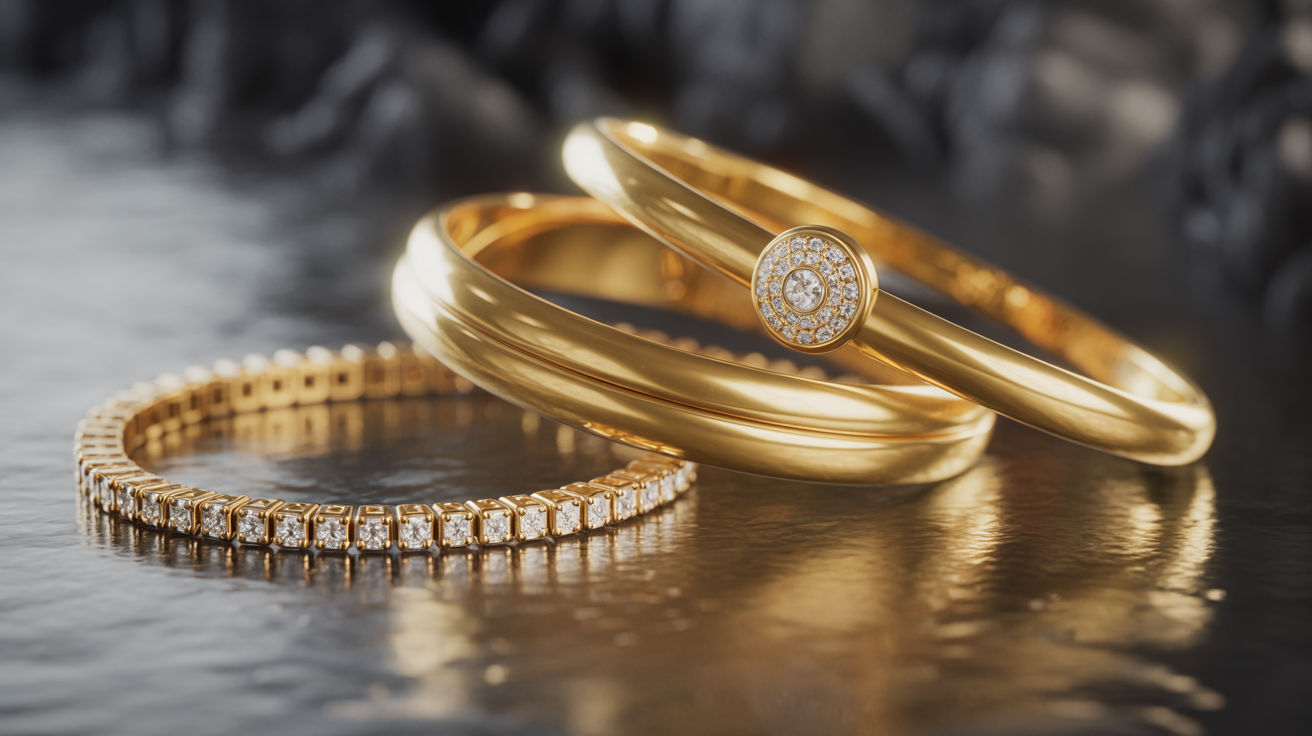
Sell my gold bracelet decisions get complicated because these pieces weigh more than most jewellery. Your bracelet sits heavier than rings or earrings, making it worth significantly more per item when scrap prices hit £50+ per gram.
Key Takeaways:
- Solid gold bangles weigh 15-45 grams compared to 3-8 grams for chain bracelets, making them worth £750-£2,250 at current scrap rates
- Charm bracelets contain mixed purities, the chain might be 9ct while charms are 18ct, requiring separate valuations
- Tennis bracelets with diamonds sell for scrap gold value only unless stones are certified and over 0.25 carats each
What Type of Bracelet Are You Actually Selling?

Bracelet types determine selling approach. A solid gold bangle follows a different path than a charm bracelet with mixed components. You need to identify your specific type before contacting any buyer.
Bangles are solid, continuous circles of gold without clasps or joints. Chain bracelets connect individual links with a clasp mechanism. Charm bracelets feature a base chain with removable decorative elements attached. Tennis bracelets contain a continuous line of gemstones set in gold.
| Feature | Gold Bangle | Charm Bracelet | Tennis Bracelet |
|---|---|---|---|
| Weight Range | 15-45 grams | 12-35 grams | 8-25 grams |
| Testing Method | Single purity test | Component separation | Gold weight focus |
| Value Driver | Gold weight only | Mixed purity complexity | Stone certification |
| Best Buyer Type | Refineries | Specialist dealers | Scrap gold buyers |
ID bracelets fall between bangles and chain bracelets. They feature a nameplate or engraving section connected by chain links. The engraving reduces resale value since buyers cannot reuse personalized pieces. Most ID bracelets sell for scrap gold weight regardless of sentimental value.
You want to measure thickness and check for hollow construction. Solid bangles feel heavy for their size. Hollow bangles sound different when tapped, a higher pitch indicates air space inside. This affects weight calculations and final payouts.
When you sell gold jewelry, bracelet identification becomes the first step. Different types need different handling approaches, and buyers specialize in specific categories.
How Much Gold Weight Is Actually in Your Bracelet?

Bracelet weight determines scrap value. You need accurate measurements before getting quotes from any buyer. Here’s the step-by-step weighing process:
- Use digital kitchen scales accurate to 0.1 grams, bathroom scales won’t work for jewellery weights.
- Clean the bracelet first to remove dirt or soap residue that adds false weight.
- Remove any non-gold components like leather straps, fabric elements, or steel findings before weighing.
- Record the total weight, then check for hollow construction by gently squeezing thick sections.
- Note any clasps or jump rings that might be lower purity than the main bracelet.
Solid bangles average 25-40 grams while hollow versions weigh 8-15 grams. The construction method makes a massive difference in final value. A 30-gram solid 18ct bangle contains £1,200+ worth of gold at current prices. The same size in hollow construction might contain £400 worth.
Chain bracelets vary wildly by link style. Curb chains feel heavier than rope chains of the same length. Figaro patterns use alternating link sizes that affect weight distribution. Box chains contain more gold per length than cable chains.
One thing I should mention: magnetic clasps and safety chains often use different metals. Check these components separately. They might be steel or silver-plated base metal that adds weight without gold value.
You can estimate gold content by multiplying total weight by purity percentage. An 18ct bracelet weighing 20 grams contains 15 grams of pure gold (75% purity). Always account for findings and non-gold elements in your calculations.
Why Charm Bracelets Need Special Handling

Charm bracelets are collections of individual components with different gold purities. This means each piece requires separate testing and valuation.
70% of charm bracelets contain at least two different gold purities requiring separate testing. The base chain might be 9ct gold while individual charms range from 14ct to 18ct. Some charms might be gold-plated silver or base metal with no gold content at all.
Buyers separate charm bracelets into components during valuation. They test the chain first, then evaluate each charm individually. Charms with gemstones or enamel work get tested for their gold content only, decorative elements rarely add value.
Vintage charm bracelets present additional challenges. Charms collected over decades might include different gold standards, foreign purities, or commemorative pieces with minimal gold content. Italian charms often use different purity markings than UK hallmarks.
You should photograph each charm before selling. Document any hallmarks, maker’s marks, or unusual features. Some vintage charms have collector value beyond their gold content, but this applies to fewer than 5% of charm bracelets in the UK market.
When you sell my gold chain pieces attached to charm bracelets, buyers will price them separately from the charms. The chain component usually represents 60-80% of the total gold weight in most charm bracelets.
Do Tennis Bracelets and Gemstone-Set Pieces Add Value?

Gemstone-set bracelets sell for gold weight only in 95% of cases. The stones get ignored unless they meet specific criteria for size, quality, and certification.
| Feature | Gemstone-Set Gold |
|---|---|
| Diamond Value Threshold | 0.25 carats minimum per stone |
| Certification Required | GIA, IGI, or similar lab report |
| Setting Recovery | Stones removed, gold melted |
| Price Calculation | Gold weight × purity × spot price |
| Stone Resale Rate | Less than 5% retain stone value |
Tennis bracelets disappoint most sellers. These pieces contain continuous lines of small diamonds or gemstones set in gold links. The diamonds are usually 0.10-0.20 carats each, too small for resale value. Buyers extract the stones and sell the gold for scrap.
95% of tennis bracelets sell for gold weight only unless diamonds are certified and exceed 0.25 carats each. Even certified stones lose 60-80% of their retail value in resale markets. The gold content typically represents the entire selling price.
Semi-precious stones like sapphires, rubies, or emeralds need exceptional size and quality to add value. Most are synthetic or low-grade natural stones worth pennies per carat. Buyers remove them and discard them during processing.
One exception: branded tennis bracelets from Cartier, Tiffany, or similar luxury houses might retain design value. This applies to fewer than 1% of tennis bracelets sold in the UK. The brand authentication process costs more than most pieces are worth.
You want realistic expectations for gemstone-set pieces. Focus on the gold content and treat any stone value as a bonus. Most sellers overestimate stone values by 300-500% based on insurance appraisals or retail prices.
Which Buyers Actually Want Your Specific Bracelet Type?

Different buyers prefer specific bracelet types based on their processing capabilities and profit margins. You need to match your bracelet type with the right buyer category.
- Solid bangles over 30 grams: Precious metal refineries offer the best rates because they process large quantities efficiently and can afford tight margins on heavy pieces
- Charm bracelets: Specialist gold dealers handle mixed-component pieces better than high-street buyers who lack the time for individual charm testing
- Tennis bracelets: Scrap gold buyers focus on metal content and ignore stone complications, making them ideal for gemstone-set pieces
- ID bracelets with engraving: Online gold buyers accept personalized pieces without the awkward face-to-face interaction that local shops create
- Vintage or designer pieces: Antique dealers might pay design premiums, but only for pieces with proven collector interest and original documentation
You should avoid pawnshop vs gold dealer confusion when selling bracelets. Pawnshops offer loans against jewellery value and want pieces they can resell intact. Gold dealers buy for scrap processing and focus purely on metal content.
ID bracelet engraving impact varies by buyer type. High-street buyers often dock 10-20% for personalized pieces because they cannot resell them. Online buyers and refineries don’t care about engravings since they melt everything anyway.
When you sell my gold watch alongside bracelet pieces, some buyers offer bundle discounts for multiple items. Others prefer to handle each piece separately. Ask about multi-item policies before committing to any buyer.
You can check gold buyer legitimate UK credentials before sending anything. Verify their precious metals dealer license, read recent customer reviews, and confirm their testing methods match your bracelet type. Different bracket styles need different expertise levels.
Using a sell my gold calculator UK tool helps you estimate bracelet values before getting quotes. These calculators account for current spot prices and typical buyer margins, giving you realistic expectations for different bracelet types.
Frequently Asked Questions
Can I sell a gold bangle that’s not hallmarked?
You can sell unmarked bangles, but buyers will test them as lower purity until proven otherwise. UK buyers must verify gold content independently, so missing hallmarks result in conservative estimates that reduce your payout by 10-15%.
Should I remove charms before selling my charm bracelet?
Only remove charms if you can identify different gold purities by hallmarks or color differences. Mixed-purity charm bracelets need component-by-component testing, and buyers will separate them anyway during the valuation process.
How much will I get for my tennis bracelet?
Tennis bracelets sell for their gold weight value only, which ranges from £400-£1,200 depending on the gold content and current spot prices. The diamonds rarely add resale value unless they’re certified stones over 0.25 carats each.