

Can you sell jewellery before probate is granted? Executors facing funeral bills or urgent estate costs often discover they cannot access the deceased’s bank accounts for months while waiting for probate to be granted. Many don’t realize they can sell inherited jewellery immediately to cover essential expenses.
Key Takeaways:
• Executors can legally sell estate jewellery before probate is granted, but must record all sales and values on HMRC form IHT407
• All beneficiaries must consent in writing to pre-probate jewellery sales or risk personal liability claims later
• Professional valuations are required within 12 months of death for inheritance tax calculations, regardless of when items are sold
Can Executors Legally Sell Estate Jewellery Before Probate Is Granted?

Executor authority is the legal power to manage and dispose of estate assets from the moment of death, not when probate is granted. This means executors can legally sell estate jewellery immediately, even before receiving the grant of probate.
Under the Administration of Estates Act 1925, executors derive their authority directly from the will itself. They don’t need court permission to act. The grant of probate simply provides public confirmation of what already exists. Executors have legal power to manage estate assets immediately upon death.
This differs from administrators who must wait for letters of administration before they can act. If there’s no will, or if the named executors can’t or won’t act, you need court appointment first.
The practical reality is more complex than the legal position. While you have the power to sell my gold or other estate assets before probate, you also have significant duties. You must act in the best interests of all beneficiaries, keep detailed records, and potentially face personal liability if you get it wrong.
Most gold buyers understand this distinction. They’ll accept executor identification without requiring the grant of probate, provided you can prove your appointment through the will and death certificate.
What Documentation Must You Keep When Selling Before Probate?

Executors must record all pre-probate jewellery sales meticulously. HMRC requires all estate asset disposals to be recorded on IHT407 within 12 months of death. Here’s exactly what you need to document:
Obtain professional valuations before any sale. Get written appraisals from qualified jewellers or precious metals dealers showing the date-of-death value for each item.
Photograph all items before sale with hallmarks visible. This creates an unchangeable record of what existed in the estate. Learn to read gold hallmarks to identify carat weights and origins accurately.
Keep all sale receipts and buyer identification details. Record the buyer’s name, address, license number, and payment method for every transaction.
Complete HMRC form IHT407 for each disposal. This form captures the date of death value, sale date, sale price, and buyer details for inheritance tax purposes.
Maintain separate estate bank account records. Deposit all sale proceeds into the estate account, never your personal account, with clear transaction references.
Document the reasons for pre-probate sale. Write a brief note explaining why the sale was necessary before probate, such as funeral costs or estate administration expenses.
This documentation protects you from both HMRC challenges and beneficiary disputes. Without proper records, you could face personal liability for any losses or perceived mismanagement.
Do You Need Beneficiary Consent to Sell Estate Jewellery Early?

Beneficiary consent protects executors from personal liability claims, even though it’s not always legally required. The extent of consent needed depends on the specific circumstances and will provisions.
If the will gives you express power to sell assets at your discretion, you can act without consent. However, getting written agreement from all beneficiaries is still advisable. This prevents later disputes about whether the sale was necessary or achieved fair value.
When selling items specifically bequeathed to named beneficiaries, you must get their written consent. Selling someone’s inherited ring without permission exposes you to personal liability for the full value, regardless of your good intentions.
Executors face unlimited personal liability for asset disposal without proper beneficiary agreement. If a beneficiary later claims the jewellery was worth more than you received, or that the sale wasn’t necessary, they can sue you personally for the difference.
Get consent in writing, even for urgent sales. Email agreements work, but include all relevant details: item descriptions, intended buyer, approximate values, and reasons for pre-probate sale. This protects you if relationships deteriorate later.
Where beneficiaries disagree about pre-probate sales, you may need court direction. This delays the process but protects you from personal liability claims from dissenting beneficiaries.
How Does Selling Before Probate Affect Inheritance Tax Calculations?

Pre-probate sales must be valued at date of death prices for inheritance tax purposes, regardless of the actual sale amount received. Estate jewellery must be valued at date of death prices for IHT, regardless of actual sale price achieved.
| Valuation Aspect | Sale Price Impact | Probate Valuation Requirement |
|---|---|---|
| IHT calculation | No effect on tax due | Uses date-of-death value only |
| Professional valuation | Required within 12 months | Must reflect market value at death |
| HMRC form IHT407 | Records both values | Shows disposal price vs probate value |
| Nil-rate band usage | Based on death values | Sale proceeds don’t reduce IHT liability |
| Dispute potential | Large differences trigger review | May require independent revaluation |
This creates an important distinction for sell inherited jewellery decisions. You might sell a gold bracelet for £500 to cover funeral costs, but if its probate valuation is £800, the inheritance tax calculation uses £800. The estate pays tax on the higher figure.
Professional valuations become essential evidence if HMRC challenges your figures. They want to see that items were valued properly at death, not undervalued to reduce inheritance tax liability.
The inheritance tax threshold applies to the total estate value at death, including jewellery at its probate valuation. Quick sales to cover immediate costs don’t reduce this figure, though they might affect whether you can pay the tax bill on time.
Timing matters for valuation accuracy. Gold and diamond prices fluctuate daily, so professional appraisals should be dated as close to the death date as possible. This prevents HMRC arguing that you used a more favorable price from weeks later.
Which Gold Buyers Accept Estate Jewellery Without Full Probate Documentation?
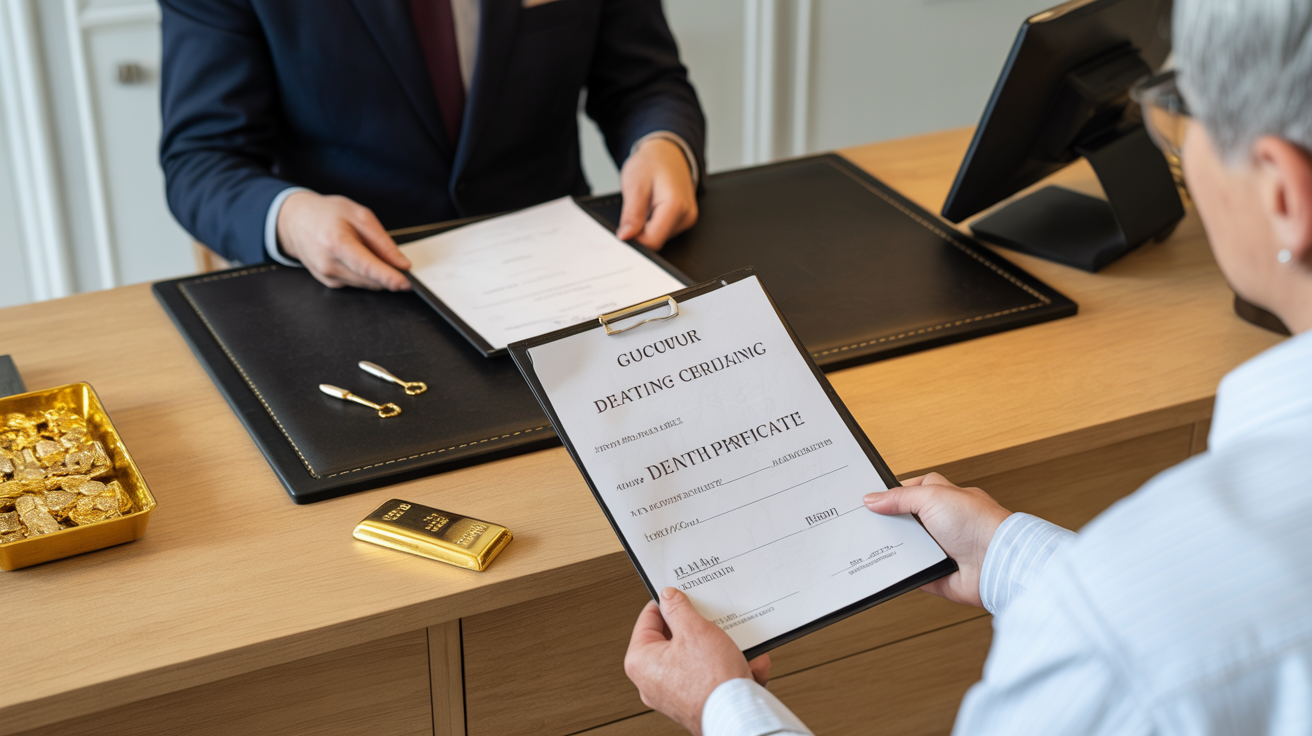
Licensed gold buyers accept executor identification and death certificates without requiring full probate documentation. UK anti-money laundering rules require them to verify your authority to sell, but they understand the probate timeline.
• High street gold dealers verify executor status through death certificate plus will extract or letters of administration application. Most accept photocopies with original sight verification.
• Postal gold services typically require posted copies of death certificate, will pages showing executor appointment, and executor identification documents. Some request beneficiary consent letters.
• Specialist estate buyers often have streamlined processes for probate sales, accepting executor statutory declarations alongside standard identification documents.
• Hatton Garden dealers generally understand estate sales procedures and accept executor identification packages without requiring probate grants, though they may offer lower rates for urgent sales.
• Licensed precious metals dealers must comply with Proceeds of Crime Act requirements but can verify executor authority through death certificate and will evidence combination.
Gold buyer verification processes focus on preventing money laundering rather than probate completion. They need to establish you have legitimate authority to sell, which executor appointment provides.
Some buyers offer estate-specific services with faster verification and payment processes. These might be worth considering if you’re handling multiple items or need quick settlement to cover estate costs.
Avoid unlicensed buyers or those who don’t request proper identification. Legitimate dealers want to see your authority clearly documented. Those who don’t ask questions might not provide the audit trail you need for HMRC compliance.
Remember that what is scrap gold includes many estate items that buyers will accept, even if they’re not in perfect condition.
What Happens if Estate Jewellery Values Are Disputed Later?

Professional valuations protect executors from HMRC challenges and beneficiary disputes about asset values. HMRC challenges estate valuations in approximately 5% of probate cases where assets were sold before grant.
HMRC investigations typically focus on whether items were undervalued to reduce inheritance tax liability. They compare your stated values against comparable sales data and industry pricing benchmarks. Significant discrepancies between probate values and sale prices often trigger detailed reviews.
The investigation process involves HMRC requesting detailed documentation about valuation methods, sale circumstances, and buyer selection. They may commission independent appraisals to verify your figures. This can delay probate completion by months and create additional professional costs.
Executor protection comes through contemporary professional appraisals from qualified valuers. These demonstrate that you took reasonable steps to establish accurate values at the time of death. Courts and HMRC give significant weight to professional opinions over retrospective challenges.
Retroactive valuation penalties can be substantial if HMRC determines you understated values deliberately. Interest charges accrue from the original payment date, and penalties range from 20% to 100% of additional tax due, depending on whether they consider the undervaluation deliberate.
Beneficiaries can also challenge valuations if they believe you undersold assets to their detriment. Professional valuations provide evidence that sales achieved fair market value, protecting you from personal liability claims.
The key is contemporaneous evidence. Valuations obtained months after death carry less weight than those dated close to the death date, especially for items like gold where prices fluctuate significantly.
Frequently Asked Questions
Can I use jewellery sale proceeds to pay funeral costs before probate?
Yes, executors can use estate asset sale proceeds to pay reasonable funeral expenses and administration costs before probate is granted. However, you must keep detailed records of all transactions and expenditure for HMRC and beneficiary accountability.
What if the jewellery sells for less than its probate valuation?
The sale price has no effect on inheritance tax calculations, which use the date-of-death valuation regardless of what you actually receive. If there’s a significant difference, HMRC may investigate whether the original valuation was accurate or whether the sale was at arm’s length.
Do I need probate to prove I own inherited jewellery when selling?
No, UK gold buyers accept a death certificate combined with will evidence or letters of administration as proof of executor authority. The grant of probate is not required to demonstrate legal ownership of estate assets to licensed buyers.