Sell my gold ring decisions affect thousands of UK households every year, yet most people have no idea what their rings are actually worth. Gold rings sit in jewellery boxes across the UK worth billions in raw material value that owners never unlock.
Key Takeaways:
• Plain gold wedding bands typically yield 85-95% of their scrap gold value
• Sovereign rings command 10-40% premiums over scrap value due to collector demand
• Engraved rings lose 15-25% of potential value when sold to standard gold buyers
What Type of Gold Ring Are You Actually Selling?
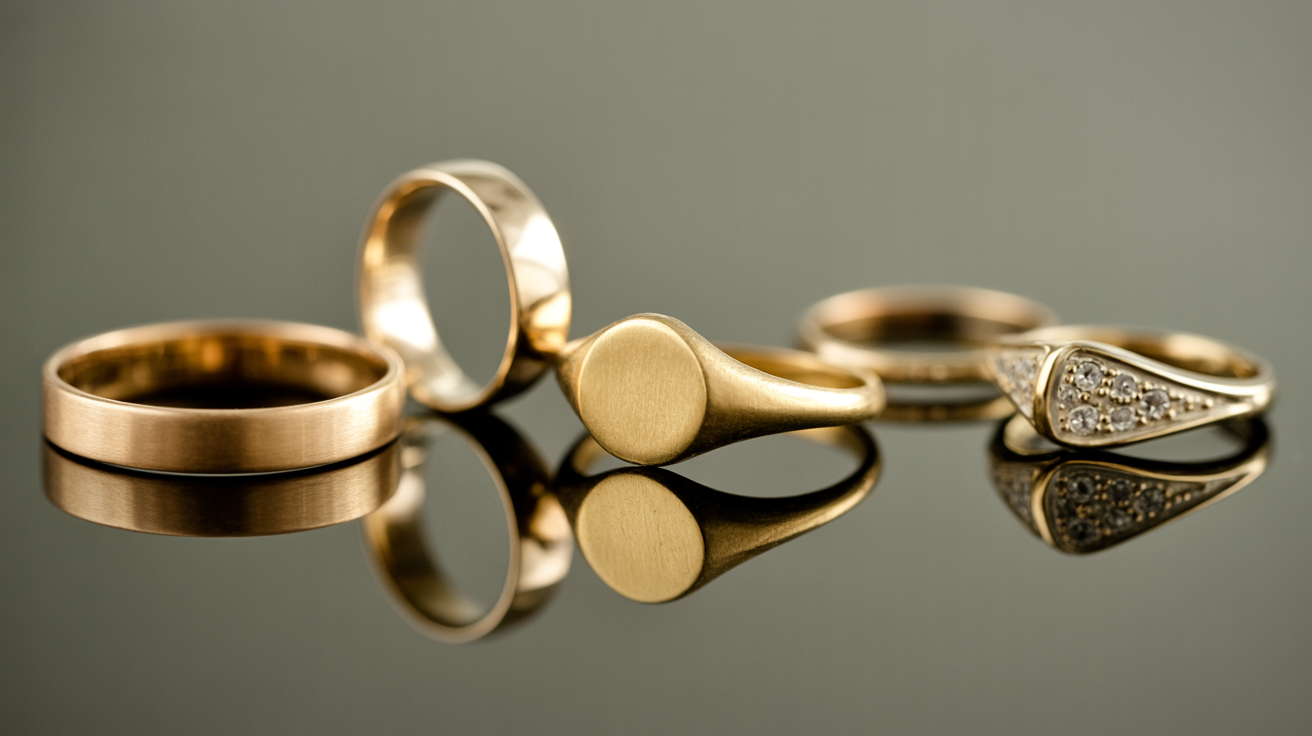
Ring type determines valuation method. Your approach changes completely based on whether you’re holding a plain wedding band, vintage signet ring, or costume piece with gold plating.
A wedding band is a plain gold ring without stones or complex designs. This means buyers evaluate it purely on gold content and weight. Plain bands consistently achieve 85-95% of scrap value because there’s no design complexity to assess.
A signet ring is a gold ring with engraved family crests, initials, or decorative elements. This means valuation depends on both gold content and design appeal. Vintage signet rings from established makers can command premiums, but modern versions typically sell for scrap value.
A sovereign ring is a ring incorporating actual gold sovereign coins or sovereign-style designs. This means collectors pay premiums for the coin content separate from the ring’s gold weight. Sovereign rings retain 10-40% premium over scrap value depending on the coin’s date and condition.
A costume ring is gold-plated or low-carat gold (under 9ct) with minimal intrinsic value. This means most UK gold buyers won’t purchase these pieces, as the gold content falls below profitable thresholds.
The critical point: identify your ring type before approaching any buyer. Wedding bands follow scrap pricing. Sovereign rings need coin-specialist evaluation. Costume pieces need alternative disposal methods.
How Much Is Your Gold Ring Actually Worth?
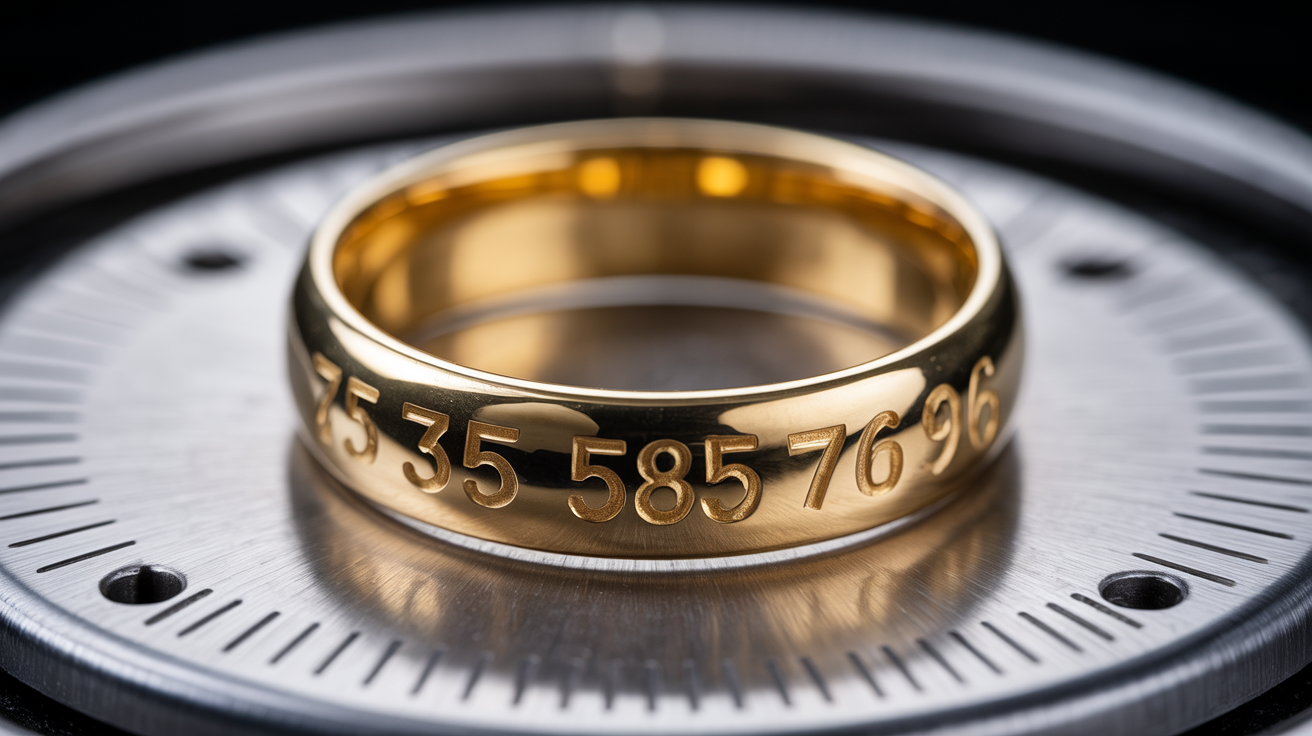
Ring weight multiplied by purity percentage gives you the baseline scrap value calculation.
Your ring’s hallmark tells you the gold purity. UK rings show 375 (9ct), 585 (14ct), 750 (18ct), or 916 (22ct). Higher numbers mean more gold content per gram.
The LBMA gold price provides the daily benchmark. At £50 per gram of pure gold, here’s what common rings yield:
| Ring Weight | 9ct Value | 14ct Value | 18ct Value | 22ct Value |
|---|---|---|---|---|
| 2g | £14.38 | £22.50 | £28.75 | £35.00 |
| 5g | £35.94 | £56.25 | £71.88 | £87.50 |
| 10g | £71.88 | £112.50 | £143.75 | £175.00 |
These figures represent 90% of scrap value – a realistic buyer payout after their margin. Actual prices fluctuate with daily gold markets, but the proportion holds steady.
Weigh your ring on digital scales accurate to 0.1g. Kitchen scales won’t cut it. Jewellers’ scales or postal scales give proper readings. Weight determines your baseline value before any design premiums or penalties.
Remember: this is scrap value only. Design elements, maker’s marks, or vintage appeal can increase or decrease the final price significantly.
Does Your Ring’s Design Add Value or Kill It?
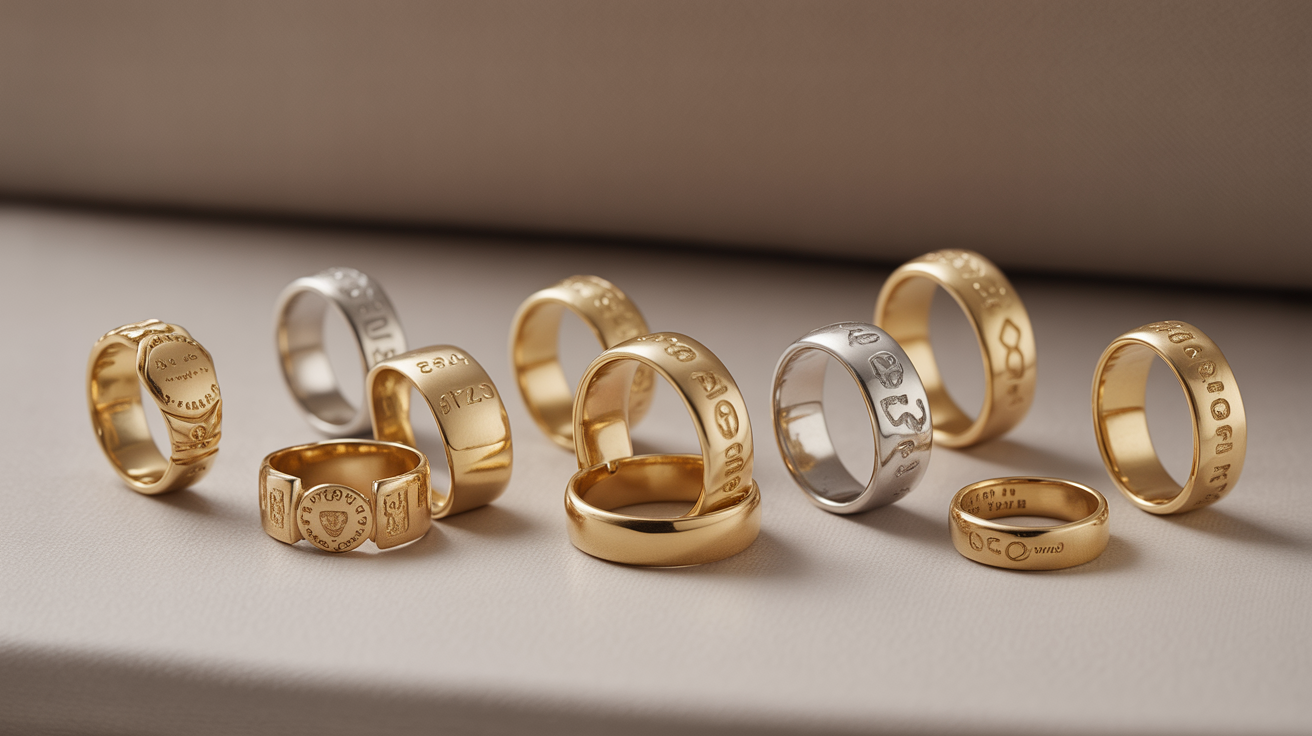
Design features either increase or decrease resale value depending on buyer appeal and modification difficulty.
| Feature | Effect on Value |
|---|---|
| Personal engravings | Reduces by 15-25% |
| Vintage hallmarks (pre-1970) | Increases by 5-15% |
| Designer stamps (Tiffany, Cartier) | Increases by 20-50% |
| Repair work/soldering | Reduces by 10-20% |
| Family crests | Neutral to negative |
| Original box/papers | Increases by 5-10% |
Personal engravings kill value because buyers can’t resell engraved rings to other customers. “Happy Anniversary Sarah” means nothing to future buyers, so the ring becomes scrap-only material.
Vintage hallmarks add value when they indicate historical significance or superior craftsmanship. Pre-1970 Birmingham or London marks often attract collector interest, especially on signet rings.
Designer stamps command premiums only when authenticated. Fake stamps are common, so buyers discount unverified pieces. Original purchase receipts or certificates prove authenticity.
Repair work reduces value because professional buyers spot soldering, sizing, or stone replacement immediately. Modified rings sell for less than original condition pieces.
Engraved rings typically receive 15-25% less than equivalent plain bands because the personalization eliminates design premium potential. If your ring has sentimental engravings, expect scrap-only pricing from most UK gold buyers.
Should You Remove Gemstones Before Selling Your Ring?
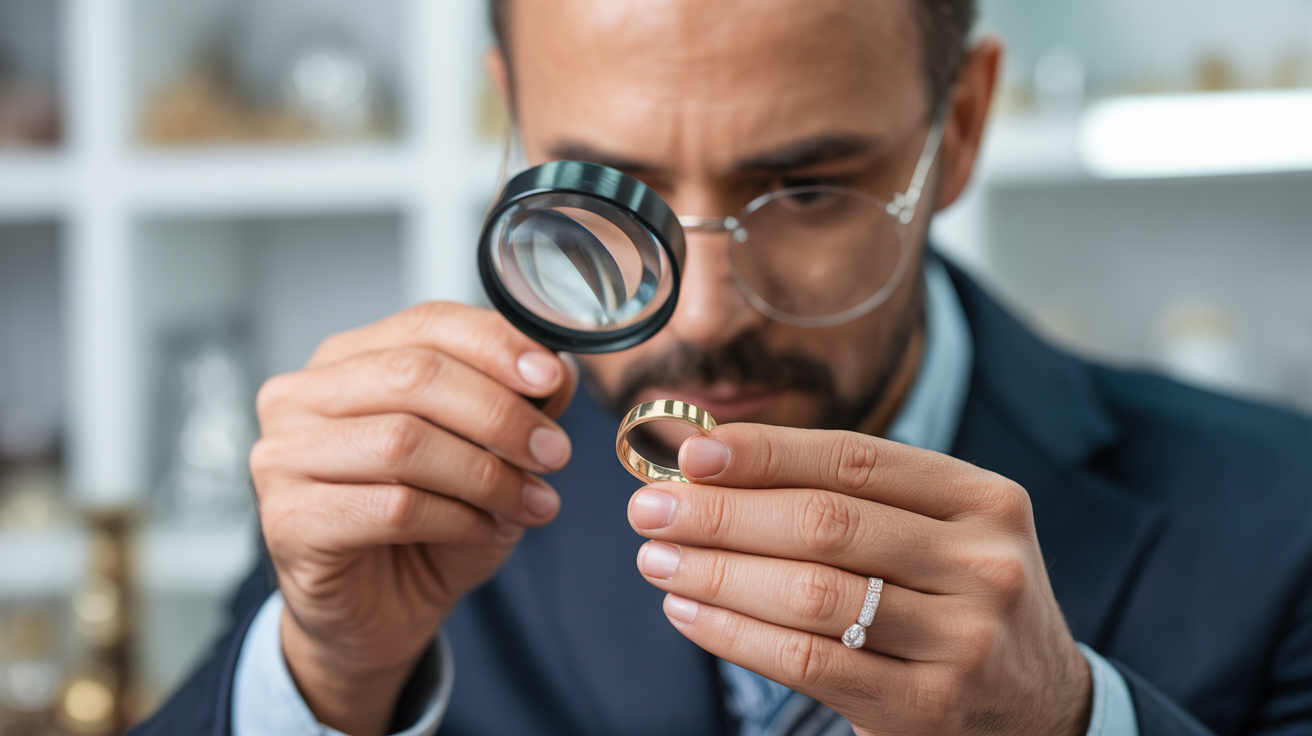
Gemstone removal depends on stone value vs removal cost calculation.
Identify the stone type first. Diamond, ruby, sapphire, and emerald have resale potential. Cubic zirconia, glass, or synthetic stones have zero value. A jeweller can identify stones for £10-20.
Assess removal feasibility. Prong-set stones come out easily. Bezel-set or channel-set stones require professional extraction. Channel-set removal often damages the gold setting.
Calculate separate values. Get quotes for the ring with stones, ring without stones, and stones alone. Compare the totals. Sometimes keeping stones attached yields more money.
Factor in removal costs. Professional stone removal costs £15-40 per ring depending on setting complexity. The stones must be worth more than removal costs plus the gold value reduction.
Consider stone certification. Uncertified diamonds under 0.25 carat sell for very little in the UK market. Certified stones above 0.50 carat have genuine resale value.
Diamonds under 0.25 carat rarely justify removal costs in UK market conditions. The removal fee plus reduced gold value often exceeds any stone sale proceeds.
Actually, I should mention one exception: if your ring contains obviously valuable stones (large, clear, brilliant-cut diamonds), get professional gemological assessment before selling to any gold buyer. Some gold buyers ignore stone value entirely.
Where Can You Actually Sell Your Gold Ring?
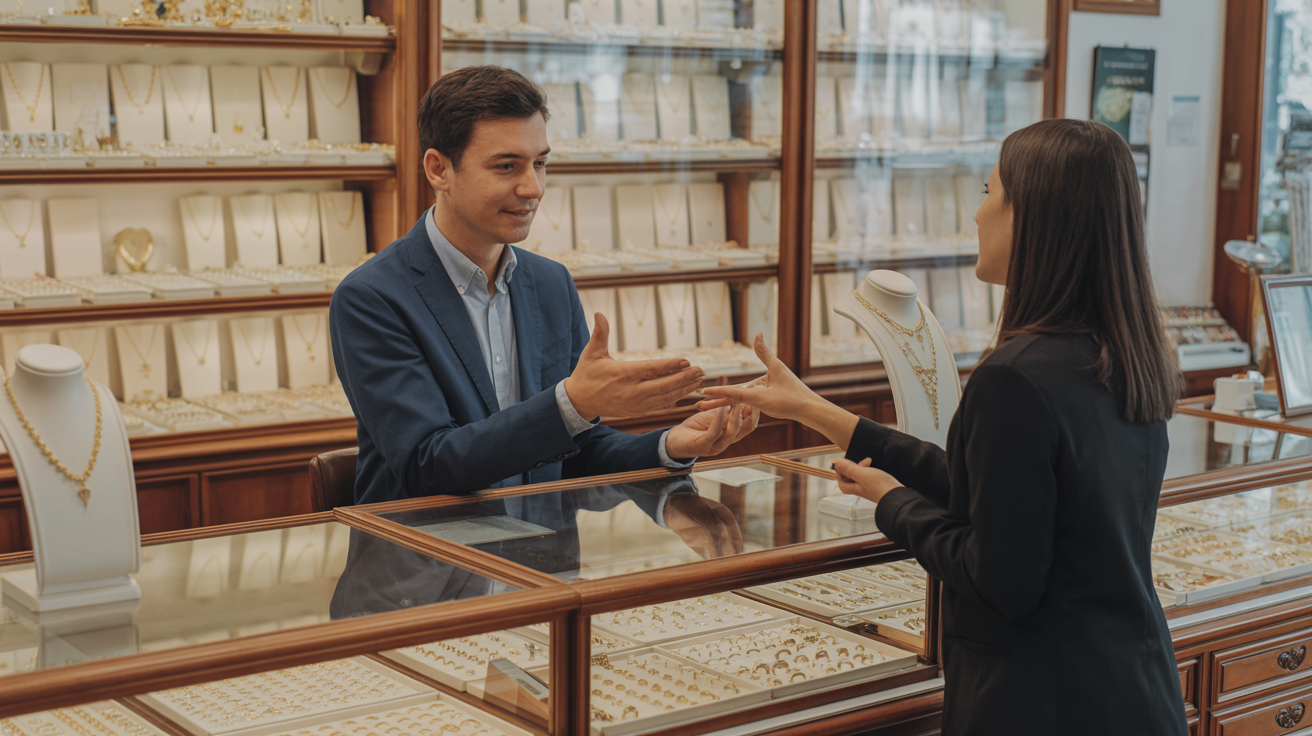
Selling channel determines final payout percentage for your specific ring type.
• Local independent jewellers pay 70-80% of scrap value for plain bands, often higher for designer pieces. They buy for resale, so design matters. Turnaround: same day. Best for: rings with resale appeal.
• Specialist gold dealers pay 80-90% of scrap value consistently. They focus on gold content, not design. Turnaround: 24-48 hours. Best for: plain bands, damaged rings.
• Pawn shops pay 60-75% of scrap value but negotiate actively. They want quick turnaround inventory. Turnaround: immediate. Best for: urgent cash needs.
• Online gold buyers pay 75-85% after postal evaluation. Convenience factor high, but you lose control during evaluation. Turnaround: 3-5 days. Best for: standard rings, bulk sales.
• Auction houses take 15-25% commission but reach collector markets. Only worthwhile for genuinely valuable vintage or designer pieces. Turnaround: 6-12 weeks. Best for: proven designer rings.
• Coin dealers pay premiums for sovereign rings and handle the collector market properly. They understand coin values separate from gold content. Turnaround: same day. Best for: sovereign rings specifically.
Gold buyer verification becomes critical when dealing with online services or unfamiliar local buyers. Check their actual business address, read recent reviews, and verify they’re registered for precious metals dealing.
Frequently Asked Questions
Can I sell my gold wedding ring if it’s engraved?
Yes, but engraved rings typically sell for 15-25% less than plain bands because buyers treat them as scrap gold only. Personal engravings cannot be removed cost-effectively, so the ring loses any design premium.
How do I find gold ring buyers near me?
Local jewellers, pawn shops, and specialist gold dealers all buy rings, but payout rates vary significantly. Independent comparison services can show you which local buyers offer competitive rates before you visit.
Is my old signet ring worth more than its gold content?
Potentially yes – vintage signet rings with family crests or maker’s marks can command premiums over scrap value. However, most modern signet rings sell for scrap gold value only.