

You want to sell diamond without certificate but worry nobody will buy it. Most diamond sellers discover their valuable stone lacks certification paperwork only when they’re ready to sell, and panic about whether anyone will buy it.
Key Takeaways:
- You can sell uncertified diamonds, but expect 25-40% lower prices than certified stones
- GIA certification costs £150-300 but can add £500+ value to diamonds over 0.75 carats
- Only 60% of UK diamond buyers accept uncertified stones, limiting your selling options
Can You Actually Sell a Diamond Without Certification?
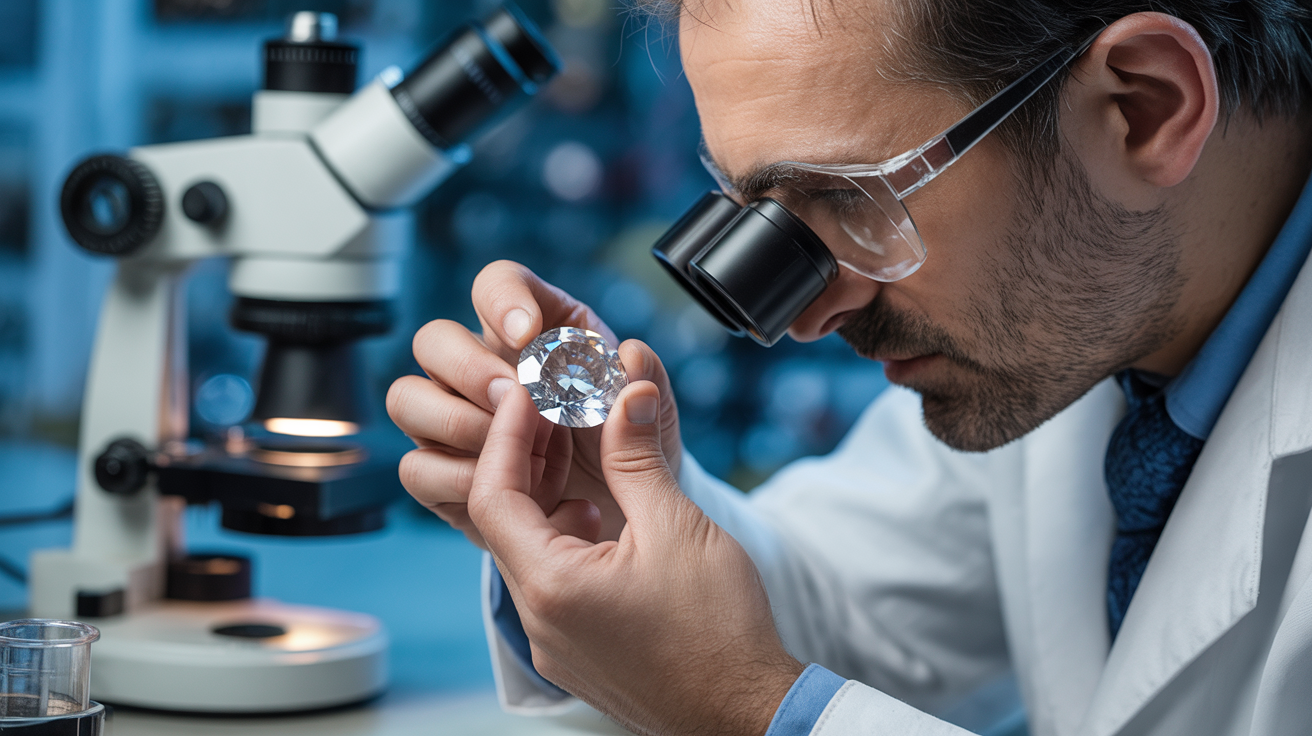
Diamond certification is an independent laboratory report that grades a stone’s quality using standardised criteria. This means buyers can verify exactly what they’re purchasing without relying on the seller’s claims.
You can sell uncertified diamonds. The challenge is finding buyers who will take them and accepting the price discount that comes with uncertainty.
Uncertified diamonds can be sold through specific buyer channels. Scrap gold dealers, some independent jewellers, and certain online platforms will purchase stones without paperwork. However, these buyers apply significant discounts to protect themselves against quality uncertainty.
The lack of certification creates a trust problem. Without a GIA, AGS, or other recognised lab report, buyers cannot verify your diamond’s exact colour, clarity, cut, or carat weight. They must either trust your assessment or conduct their own testing, both risky propositions.
Sixty percent of UK diamond buyers accept uncertified stones. This means 40% won’t even consider your diamond, immediately limiting your options and reducing competition for your business.
The buyers who do accept uncertified diamonds fall into three categories: those with in-house testing capabilities, those buying primarily for scrap value, and those specialising in estate jewellery where provenance matters less than immediate cash flow.
Actually, one thing I should mention: some buyers claim they can grade diamonds themselves, but their assessments rarely match professional laboratory standards.
How Much Value Do You Lose Without Diamond Certification?
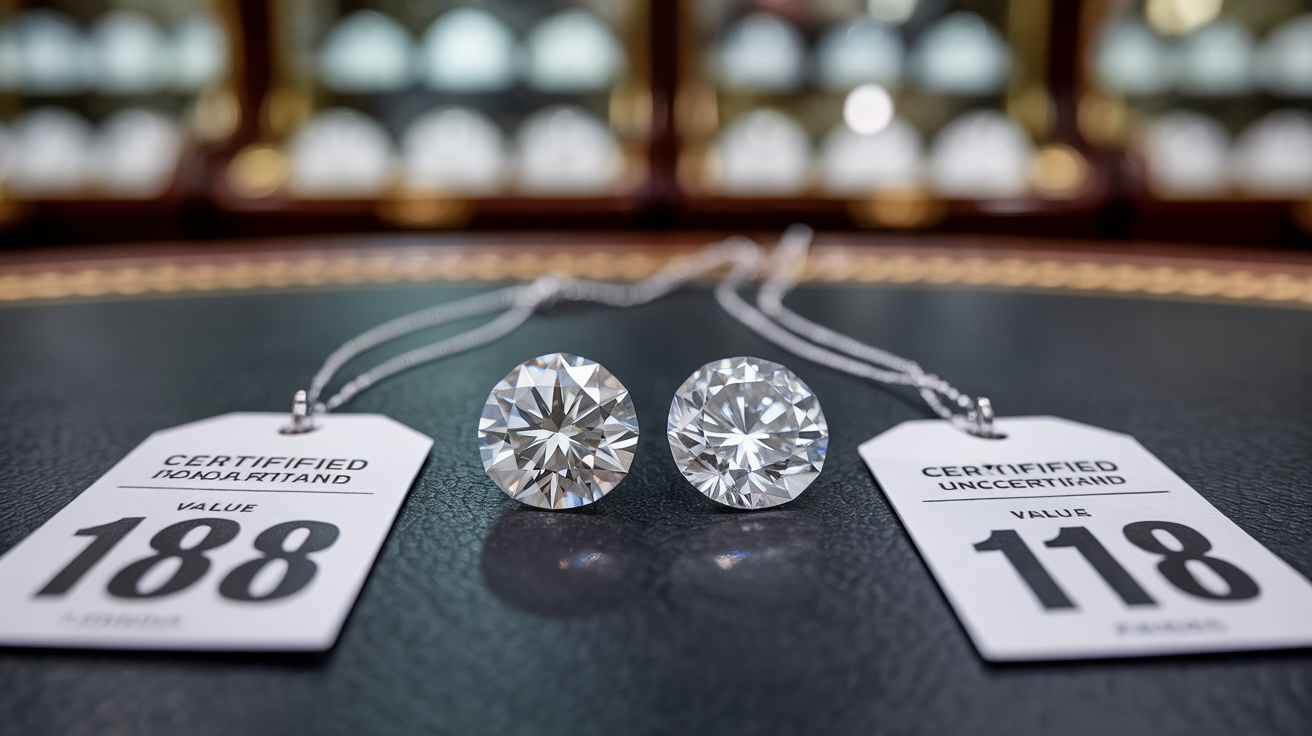
Price discounts range from 25-40% for uncertified diamonds compared to identical certified stones. The exact discount depends on your diamond’s size, quality, and the buyer’s confidence in their own testing abilities.
Larger diamonds face steeper penalties. A 1-carat uncertified diamond might sell for £1,200 when a certified equivalent would fetch £2,000. The £800 difference far exceeds the £200 certification cost.
| Diamond Size | Certified Price | Uncertified Price | Discount |
|---|---|---|---|
| 0.25 carats | £400 | £320 | 20% |
| 0.50 carats | £800 | £560 | 30% |
| 0.75 carats | £1,500 | £1,050 | 30% |
| 1.00 carats | £2,000 | £1,200 | 40% |
| 2.00 carats | £6,000 | £3,600 | 40% |
The diamond resale gap widens with higher quality stones. A flawless D-colour diamond without certification might sell for the same price as a heavily included H-colour stone because buyers cannot distinguish between them without laboratory analysis.
Several factors worsen the discount. Unusual cuts like marquise or pear shapes face higher penalties because buyers struggle to assess their proportions visually. Older diamonds cut before modern standards also suffer because their quality cannot be compared to contemporary grading scales.
Mount settings complicate valuations. If your diamond remains in its original ring or pendant, buyers must estimate whether removal might damage the stone, adding another layer of uncertainty to their pricing.
Which UK Diamond Buyers Accept Uncertified Stones?
Diamond buyer types have different policies for uncertified stone purchases. Understanding each category helps you target the right buyers for your situation.
Scrap gold dealers with diamond expertise, These buyers focus primarily on gold content but will evaluate loose diamonds or those in settings. They typically offer 40-60% of estimated diamond value using basic testing equipment and visual assessment.
Independent estate jewellers, Experienced jewellers who specialise in pre-owned pieces often accept uncertified diamonds based on their own grading skills. They may offer better prices than scrap dealers but still apply 20-35% discounts for quality uncertainty.
Online diamond buying services, Several UK-based online platforms accept uncertified stones, requiring you to post your diamond for evaluation. They use standardised testing procedures but cannot match laboratory precision, resulting in conservative valuations.
Auction houses for lower-value lots, Regional auction houses sometimes include uncertified diamonds in mixed jewellery lots, though they rarely accept individual stones under £500 value. Buyers at auction understand they’re purchasing unverified stones.
Pawnshops with diamond expertise, Some pawnshops employ trained staff who can assess diamond quality, but their offers typically reflect quick-sale values rather than market rates. Expect 30-50% below retail equivalent prices.
Scrap gold dealers typically offer 40-60% of estimated diamond value for uncertified stones. Their primary business model focuses on metal content, treating diamonds as secondary value rather than the main attraction.
Should You Get Your Diamond Certified Before Selling?

Certification investment pays off when value increase exceeds certification costs. The mathematics change dramatically based on your diamond’s size and estimated quality.
GIA certification costs £150 for standard service or £300 for express processing. If certification adds more than these amounts to your sale price, the investment makes financial sense.
| Diamond Size | Certification Cost | Typical Value Increase | Net Benefit |
|---|---|---|---|
| Under 0.50ct | £150 | £100-200 | £0-50 loss |
| 0.50-0.75ct | £150 | £200-400 | £50-250 profit |
| 0.75-1.00ct | £150 | £400-800 | £250-650 profit |
| Over 1.00ct | £150-300 | £800+ | £500+ profit |
Time factors affect your decision. GIA certification takes 2-3 weeks for standard service, delaying your sale. If you need immediate cash, the certification delay might outweigh the price benefit.
Break-even points vary by quality. High-quality diamonds benefit most from certification because the price gap between certified and uncertified stones widens with better grades. A VVS1 clarity diamond gains more from certification than an SI2 stone.
Retrospective GIA certification requires removing your diamond from its setting if mounted. Professional removal costs £50-100, adding to your total investment. Factor this expense into your cost-benefit analysis.
Actually, here’s something important: if your diamond shows obvious inclusions or poor colour, certification might hurt rather than help by confirming low grades that buyers might otherwise overlook.
How Do Buyers Test Uncertified Diamonds?
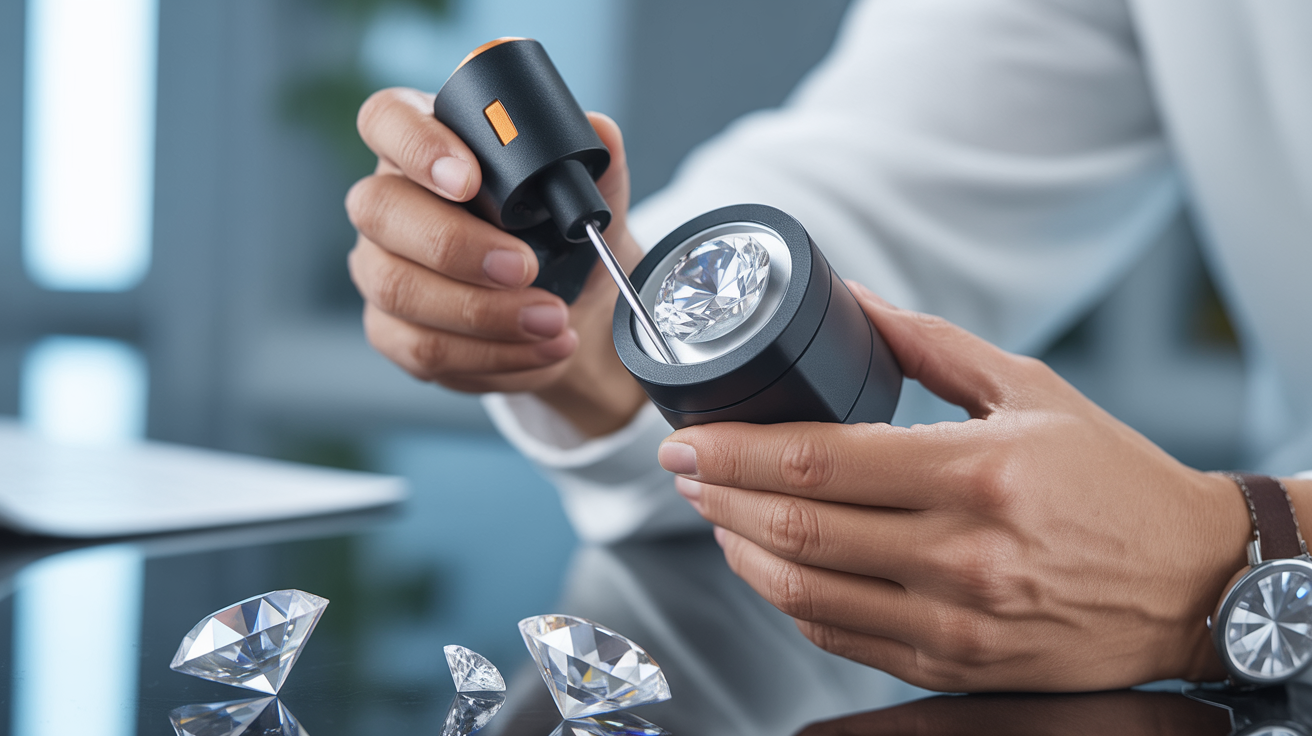
Diamond testing process involves multiple verification methods to determine authenticity and quality. Understanding these steps helps you prepare for the evaluation process.
Authenticity verification using diamond testers, Buyers first confirm your stone is genuine diamond rather than cubic zirconia or moissanite. Electronic testers measure thermal conductivity, with diamonds conducting heat differently than simulants.
Visual inspection under 10x magnification, Jeweller’s loupes reveal inclusions, surface blemishes, and cut quality. Buyers assess clarity grades and identify any structural weaknesses that might affect durability or appearance.
Weight measurement using precision scales, Accurate carat weight determines baseline value. Professional scales measure to 0.001 carats, with buyers recording exact weights rather than rounded estimates.
Colour grading under standardised lighting, Buyers compare your diamond to master stones under daylight-equivalent bulbs. Without laboratory conditions, they can only estimate colour grades within 2-3 grade ranges.
Cut assessment measuring proportions, Digital callipers measure diameter, depth, and table percentage. Buyers calculate cut grades based on these measurements, though they cannot assess light performance without specialised equipment.
Final valuation combining all factors, Buyers apply their findings to current market pricing, typically using RapNet or similar trade platforms. They then apply discounts for uncertainty and profit margins.
Diamond 4Cs grading requires laboratory conditions for precision. Basic diamond testers can verify authenticity but cannot determine precise clarity or colour grades within the narrow ranges that significantly impact value.
Buyers’ equipment has limitations. They cannot measure fluorescence, assess internal stress patterns, or determine if diamonds have undergone clarity enhancement treatments, all factors that affect value.
Frequently Asked Questions
How long does it take to get a diamond certified?
GIA certification typically takes 2-3 weeks for standard service or 3-5 business days for express service. The diamond must be unmounted from its setting, which adds time if you need professional removal.
Can I sell my diamond ring without any paperwork?
Yes, you can sell diamond rings without original paperwork, but you’ll need photo ID and proof of address under UK anti-money laundering rules. The lack of certification will significantly reduce your sale price.
Do all diamonds need certificates to have value?
No, diamonds have intrinsic value based on their physical properties regardless of certification. However, certificates provide independent verification of quality grades, which buyers use to determine fair market prices.