
Does diamond have resale value? Diamond retailers tell you diamonds are forever, diamond sellers discover they’re worth 20-50% of retail price the moment you walk out the shop.
Key Takeaways:
• Most diamonds lose 50-80% of their retail value immediately after purchase
• Only diamonds above 1 carat with excellent certification hold meaningful resale value
• The average diamond engagement ring sells for 30-40% of its original purchase price
What Is Diamond Resale Value Really?
Diamond resale value is the actual cash price you’ll receive when selling your diamond on the secondary market. This means accepting a figure dramatically below what you paid, regardless of sentimental attachment or original retail price.
The diamond resale gap exists because retail jewellers mark up diamonds by 200-400% above wholesale prices. When you sell, you’re entering the wholesale market where dealers pay based on commodity pricing, not retail emotion. A £3,000 engagement ring might fetch £800-1,200 from a diamond buyer.
Diamonds fail as investments because they lack liquidity, standardised pricing, and transparent markets. Unlike gold, which trades on global exchanges with published spot prices, diamond pricing depends on subjective grading and dealer margins. Most diamonds never recover their purchase price, even after decades.
The diamond investment merit approaches zero for stones under 1 carat or without proper certification. Smaller diamonds are essentially worthless beyond their metal setting. Even large, certified diamonds rarely appreciate enough to offset the initial retail markup and selling costs.
Common misconception: “My diamond will hold its value because it’s a GIA-certified, excellent cut.” Certification helps, but retail markup still destroys most investment potential.
Do Diamonds Actually Hold Their Value Over Time?
Natural diamond value retention depends on size, certification, and market conditions, but these factors rarely overcome the initial retail markup disadvantage.
Diamond prices have increased roughly 3% annually over the past 20 years, according to industry tracking. However, this wholesale price appreciation becomes irrelevant when you’ve paid retail prices marked up 300% above wholesale. Your £5,000 diamond needs to triple in wholesale value just to break even.
The diamond 4Cs grading system determines which stones perform better on resale. Diamonds scoring excellent grades in cut, clarity, colour, and carat weight retain higher percentages of their retail value. A 2-carat, D-colour, flawless, excellent-cut diamond certified by GIA might retain 40-50% of retail value after five years.
Smaller diamonds face steeper depreciation. Diamonds under 0.5 carats, regardless of quality, typically sell for 15-25% of retail price. The fixed costs of certification, handling, and dealer margins consume most of the stone’s value.
Market demand patterns also influence retention. Round brilliant cuts remain most liquid on resale, while fancy cuts like marquise or heart shapes often sell for even lower percentages. Vintage or antique diamonds sometimes command premiums, but only exceptional pieces from recognisable periods.
What Factors Actually Increase Diamond Resale Value?
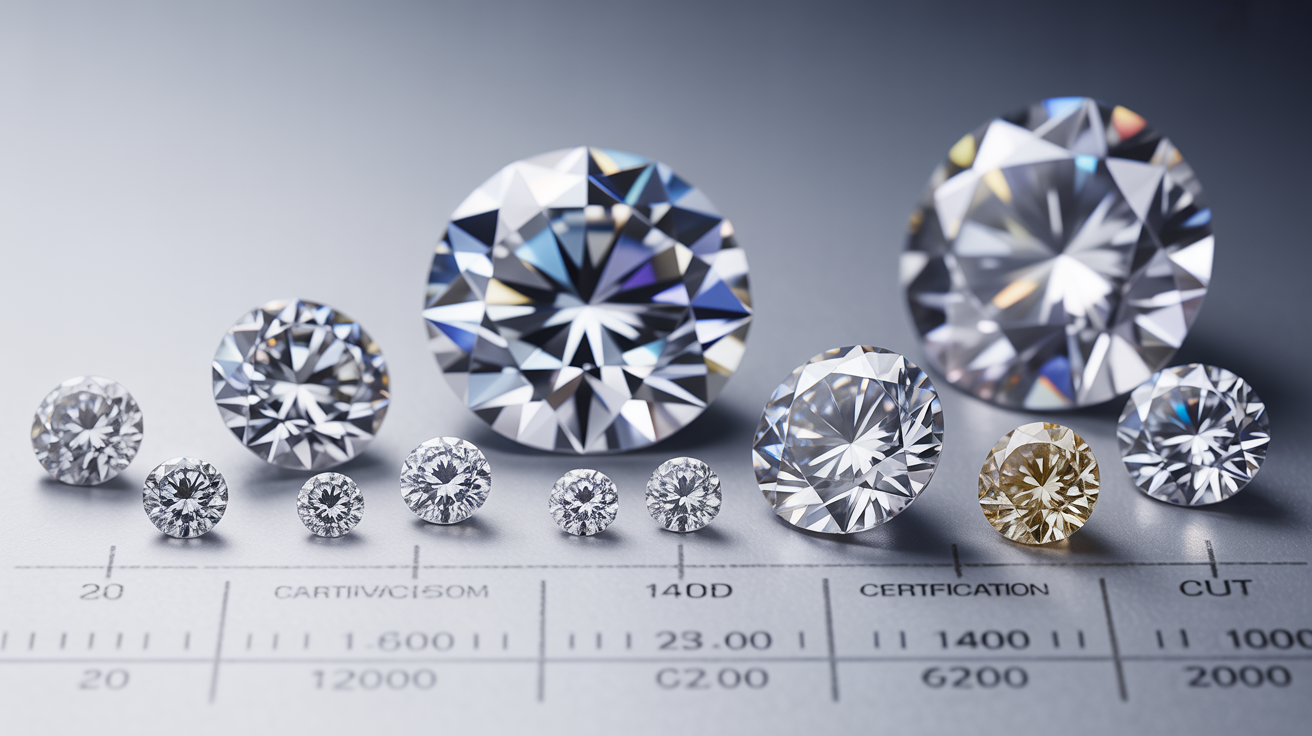
Factors that increase resale include carat weight, certification quality, and cut grade, but only when these elements align in exceptional stones.
Carat weight above 1.0: Diamonds over 1 carat enter a different market tier where collectors and dealers pay higher percentages. Stones above 2 carats can retain 40-60% of retail value with proper certification.
GIA or similar certification: A GIA grading report provides standardised quality assessment that buyers trust. Uncertified diamonds, regardless of apparent quality, sell for scrap-like prices because buyers can’t verify claims.
Excellent cut grades: Cut quality affects brilliance and market desirability. Excellent or ideal cut diamonds command premiums over good or fair cuts, sometimes adding 10-15% to resale value.
D-F colour grades: Near-colourless to colourless diamonds retain value better than lower colour grades. The difference between G colour and J colour can be £500-1,000 on a 1-carat stone.
VS1 or higher clarity: Eye-clean diamonds with minimal inclusions appeal to more buyers. SI2 or lower clarity grades face steeper discounts unless the stone is exceptionally large.
Brand recognition: Tiffany, Cartier, or other luxury brand diamonds sometimes retain slightly higher percentages due to brand cachet, though the premium rarely justifies the original markup.
Diamonds over 1 carat with GIA certification typically retain 40-60% of retail value versus 20-30% for smaller stones.
How Much Are Different Diamond Types Worth on Resale?
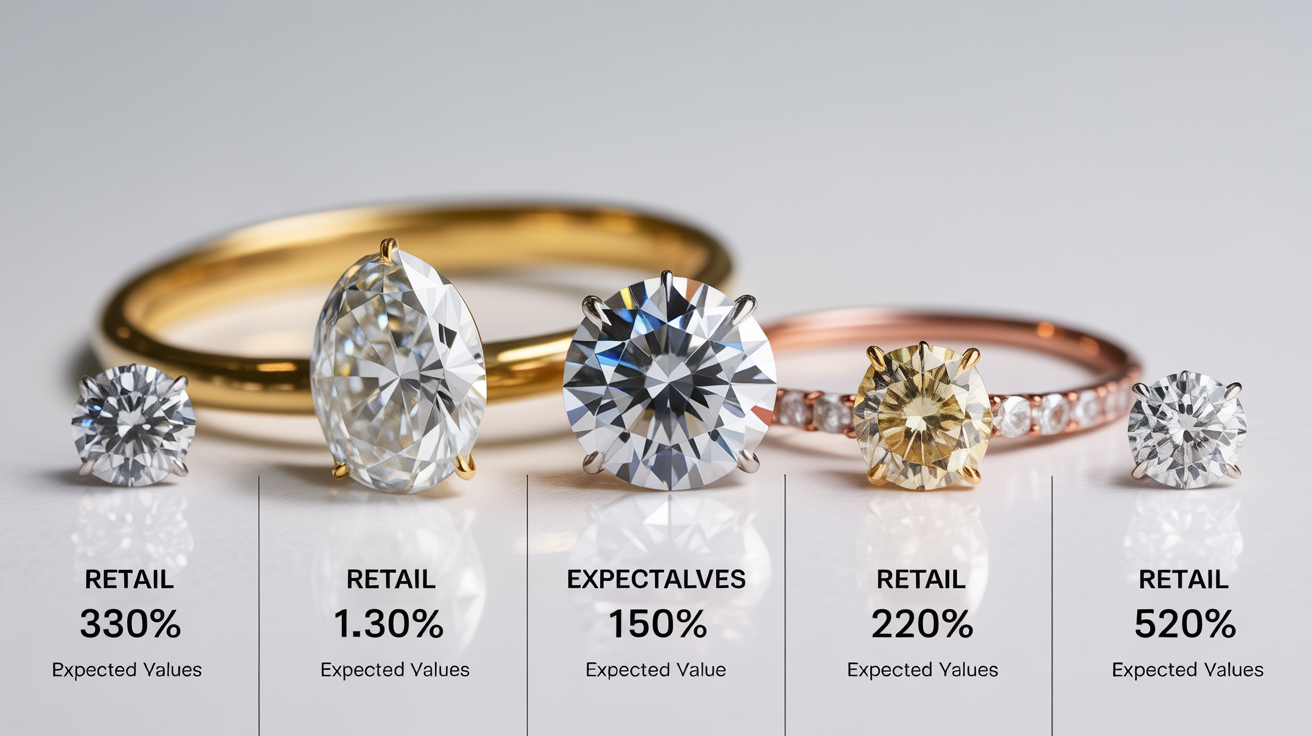
| Diamond Type | Typical Retail Price | Resale Percentage | Resale Value |
|,-|,-|,-|,-|
| 0.5ct Engagement Ring | £1,500-3,000 | 15-25% | £225-750 |
| 1.0ct Engagement Ring | £3,000-8,000 | 30-40% | £900-3,200 |
| 2.0ct Engagement Ring | £8,000-20,000 | 40-50% | £3,200-10,000 |
| Diamond Stud Earrings (1ctw) | £2,000-5,000 | 20-30% | £400-1,500 |
| Diamond Tennis Bracelet | £5,000-15,000 | 25-35% | £1,250-5,250 |
| Loose Certified Stone (1ct+) | £3,000-12,000 | 35-45% | £1,050-5,400 |
Diamond types command different resale percentages based on market demand and liquidity factors. Engagement rings face emotional baggage that reduces buyer enthusiasm, while loose stones appeal to jewellers seeking inventory.
Diamond appraisal methods vary between retail insurance valuations and resale assessments. Insurance appraisals often inflate values by 50-100% above retail to account for replacement costs, creating false expectations for sellers.
RapNet diamond pricing provides wholesale market data that professional buyers reference. These prices typically run 60-80% below retail, explaining why resale values cluster in the 30-50% range for quality stones.
The setting metal also affects total value. Platinum or 18ct gold settings might contribute £200-800 to total resale value, sometimes exceeding the diamond’s contribution in smaller pieces.
When Do Diamonds Actually Appreciate in Value?
Diamond appreciation occurs under specific rare circumstances involving exceptional stones, famous provenance, or supply market disruptions.
Exceptional diamonds above 5 carats with D colour, flawless clarity, and excellent cut grades sometimes appreciate at auction. These investment-grade stones represent less than 0.1% of all diamonds sold and typically require six-figure purchase prices.
Vintage Art Deco or Victorian diamonds occasionally command premiums due to period craftsmanship and collector demand. However, the premium applies to the setting and historical significance, not the diamond itself.
Famous provenance creates value in rare cases. Diamonds from celebrity estates or historical collections might sell above typical resale percentages, but this applies to perhaps 50 stones per year globally.
Supply disruptions in specific diamond categories can create temporary price increases. The closure of major mines or sanctions on diamond-producing countries might affect pricing, but these impacts rarely reach individual sellers.
Less than 5% of diamonds ever sell for more than their original purchase price, and most of those involve decades of holding periods.
The diamond investment merit remains negative for typical consumers. Even “appreciating” diamonds rarely outperform basic index funds or property investments when transaction costs and holding periods are factored.
Should You Keep Your Diamonds or Sell Them?
| Factor | Keep Diamond | Sell Diamond |
|,-|,-|,-|
| Emotional Value | High sentimental attachment | Neutral or negative associations |
| Financial Need | Comfortable financially | Need immediate cash |
| Diamond Size | Under 0.5 carats | Over 1 carat with certification |
| Market Timing | Diamond prices rising | Need funds for better investments |
| Storage/Insurance | No cost concerns | Expensive insurance/storage |
| Opportunity Cost | No better investment options | Can invest proceeds at higher returns |
Emotional vs financial value determines whether selling makes financial sense for most diamond owners. If the piece carries significant sentimental value and you don’t need cash, keeping makes sense regardless of poor investment performance.
Selling makes financial sense when you need liquidity and can invest the proceeds in assets offering better returns. A £2,000 diamond sale invested in index funds historically outperforms holding the diamond over 10+ year periods.
Opportunity cost analysis favours selling in most cases. Diamond investment merit trails stocks, bonds, property, and even cash savings accounts over long periods. The average holding period for engagement rings before sale is 7 years post-divorce, suggesting emotional factors drive most selling decisions.
Keep diamonds when:
• Sentimental value exceeds financial considerations
• Stone is too small to generate meaningful sale proceeds
• You have no immediate financial needs or better investment opportunities
Sell diamonds when:
• You need cash for debt, emergencies, or better investments
• Emotional associations are neutral or negative
• Stone is large enough (1+ carat) to generate significant proceeds
Frequently Asked Questions
Are diamonds worth selling if they’re small?
Diamonds under 0.5 carats typically sell for 15-25% of retail price, making them barely worth the effort unless you have multiple pieces. The transaction costs and low resale values mean small diamonds are better kept for sentimental reasons.
Do second hand diamonds have any value at all?
Second hand diamonds do have value, but it’s dramatically lower than retail prices. Well-certified diamonds over 1 carat can retain 30-50% of their original value, while smaller or poorly documented stones may only be worth 10-20%.
What’s the truth about diamond resale value?
The truth is that diamonds are luxury purchases, not investments. Most lose 50-80% of their value immediately due to retail markup, and only exceptional stones ever appreciate in price over time.